English
 Arabic
 French
 Spanish
 Portuguese
 Deutsch
 Turkish
 Dutch
Dutch
 Italiano
 Russian
 Romaian
 Portuguese (Brazil)
 Greek
Greek

Colour Plane A Contemporary Approach to Personal Style
Artificial Intelligence & Machine Learning |
2026-09-29 10:45:29
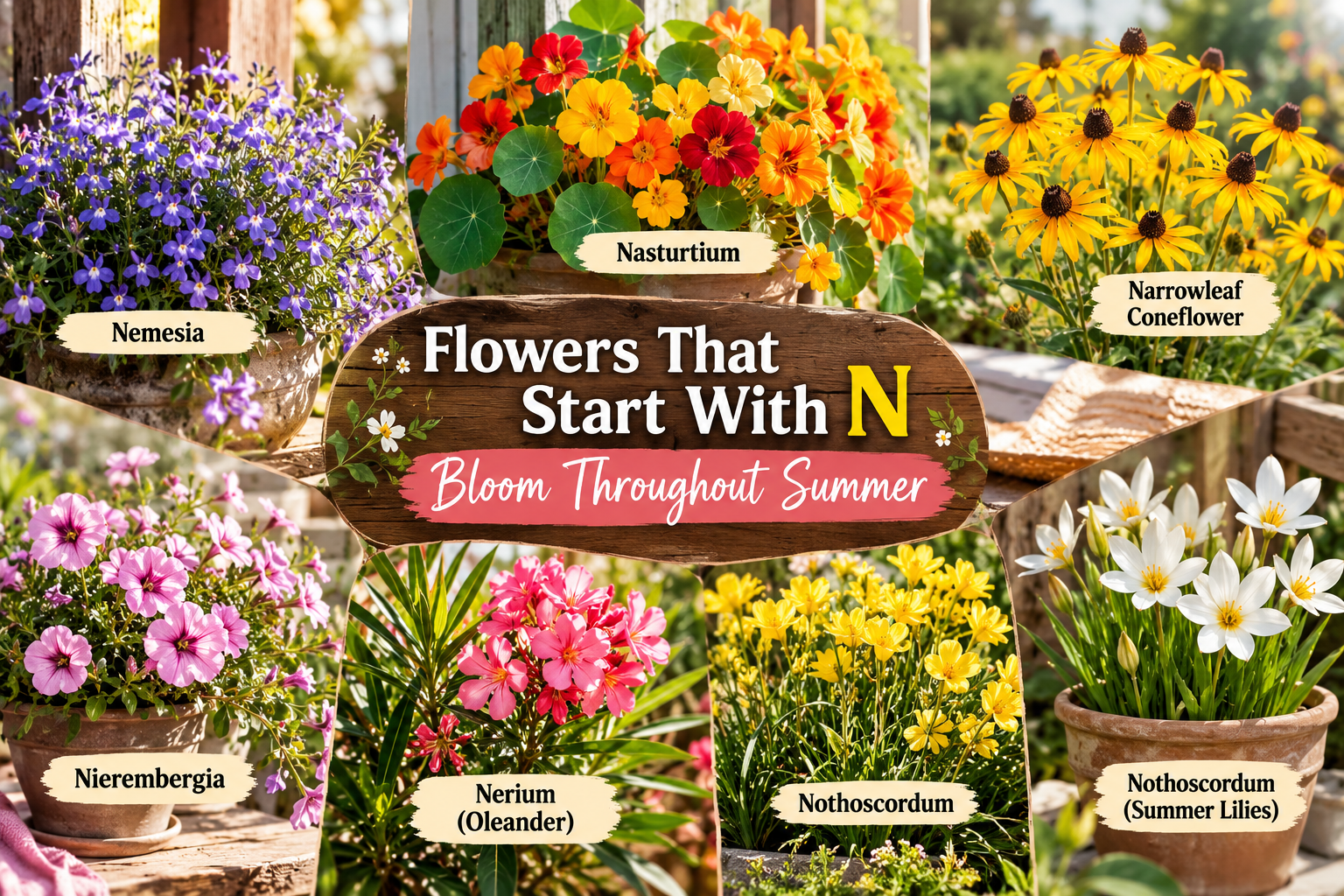
Summer gardens need color that lasts. Some plants flower for a week and fade. Others keep going from early June until the first cool nights of autumn. So which flowers that start with n can handle the long, hot season?
The good news is that several can. This guide covers the best summer performers, how long each one blooms, and how to keep them flowering. You will also find a simple care routine at the end.
Before the list, it helps to know what separates a long bloomer from a short one. Three things matter most.
First, the plant must handle heat. Second, it should keep making new buds instead of stopping after one round. Third, it needs a little help from you, mainly water, food, and regular trimming.
Many flowers that start with n meet these needs. Some even get better as the weather warms up.
Nasturtium is one of the easiest summer flowers you can grow. The blooms come in bright orange, red, yellow, and cream. The round leaves look like tiny lily pads.
It flowers from early summer until frost. It also grows fast, so you see results within weeks. Bees love it, and you can eat both the flowers and the leaves. They taste peppery, a bit like radish.
Care tip: Do not feed it much. Rich soil gives you more leaves and fewer flowers. Poor, dry soil gives you more blooms.
Nemesia is a small plant with big color. The flowers look like tiny orchids. They come in pink, purple, orange, white, and many two-tone mixes. Some also smell sweet, like vanilla.
Nemesia blooms for a long stretch, but it prefers mild weather. In very hot places, it may slow down in midsummer. Do not worry. Cut it back by a third, and it will bounce back with fresh flowers.
Care tip: Water often, but never let the pot sit in a puddle.
Nicotiana has star-shaped flowers on tall stems. Colors include white, lime green, pink, and red. Many types open their scent in the evening, so the garden smells lovely at dusk.
It blooms from early summer well into autumn. Some varieties self-seed, which means new plants may pop up next year without any effort.
Care tip: Pick off old flowers every week. This tells the plant to make more.
Nierembergia grows low and wide. It makes a soft mat of tiny leaves covered in cup-shaped flowers. The blooms are usually white, lavender, or violet, often with a yellow center.
This plant loves summer. It handles heat better than many garden favorites. It also works well in hanging baskets and along the edges of paths.
Care tip: Give it full sun and water it during dry weeks.
Nolana is a trailing plant with bell-shaped blooms in blue and lilac. The center of each flower is white with a touch of gold. It comes from dry coastal areas, so it copes well with heat.
It flowers from late spring through early autumn. It looks best spilling over the sides of a pot or basket.
Care tip: Water lightly. Too much water causes weak, floppy stems.
Nigella has soft, feathery leaves and blue star-like flowers. It is a favorite in cottage gardens. After the petals fall, it makes striped seed pods that look great in dried bouquets.
Here is the catch. A single sowing blooms for about four to six weeks. But you can plant new seeds every three weeks to keep flowers coming all summer.
Care tip: Sow seeds where you want them to grow. Nigella dislikes being moved.
At the yourhomify community, we enjoy sharing easy, practical ideas that help people grow a brighter and happier home.
Nepeta is a tough, easy plant with spikes of blue-purple flowers. It starts blooming in late spring and keeps going through summer. If you trim it after the first wave, it flowers again.
Bees and butterflies crowd around it. Cats enjoy it too, so expect a few furry visitors. The gray-green leaves smell fresh and minty.
Care tip: After the first flush fades, cut the whole plant back by half. New growth and new flowers follow within weeks.
Here is a simple way to compare the seven plants:
Even the best plants need some help. These habits make a big difference.
If you mix several flowers that start with n, you can cover the whole season. Nolana and Nemesia start early. Nasturtium and Nicotiana carry the middle. Nepeta and Nierembergia finish strong.
You do not need a big budget or years of experience to enjoy a garden full of color all summer. Many flowers that start with n are tough, easy, and generous with their blooms.
Start with two or three. Try nasturtium for quick results, add nepeta for a lasting border, and use nolana in a basket. Water them well, trim them when needed, and enjoy the show until autumn.
Which flowers that start with n bloom the longest in summer?
Nasturtium, nicotiana, and nierembergia are the best choices. They often flower from early summer until the first frost.
Do these flowers need full sun?
Most do best in full sun or light shade. In very hot climates, a little afternoon shade helps Nemesia and Nicotiana.
Can I grow summer-blooming N flowers in pots?
Yes. Nolana, Nemesia, Nierembergia, and Nasturtium all grow well in containers. Just make sure the pot has drainage holes.
Why did my plant stop flowering midsummer?
Heat, dry soil, or old flowers are the usual causes. Water deeply, remove spent blooms, and trim the plant lightly.
Which ones attract bees and butterflies?
Nepeta, nasturtium, and nigella are great for pollinators. Nicotiana also draws moths in the evening.