English
 Arabic
 French
 Spanish
 Portuguese
 Deutsch
 Turkish
 Dutch
 Italiano
 Russian
 Romaian
 Portuguese (Brazil)
 Greek
North America ICP-MS Market Outlook: Advancements in Precision Analytical Technologies
Health |
2026-10-09 08:34:27
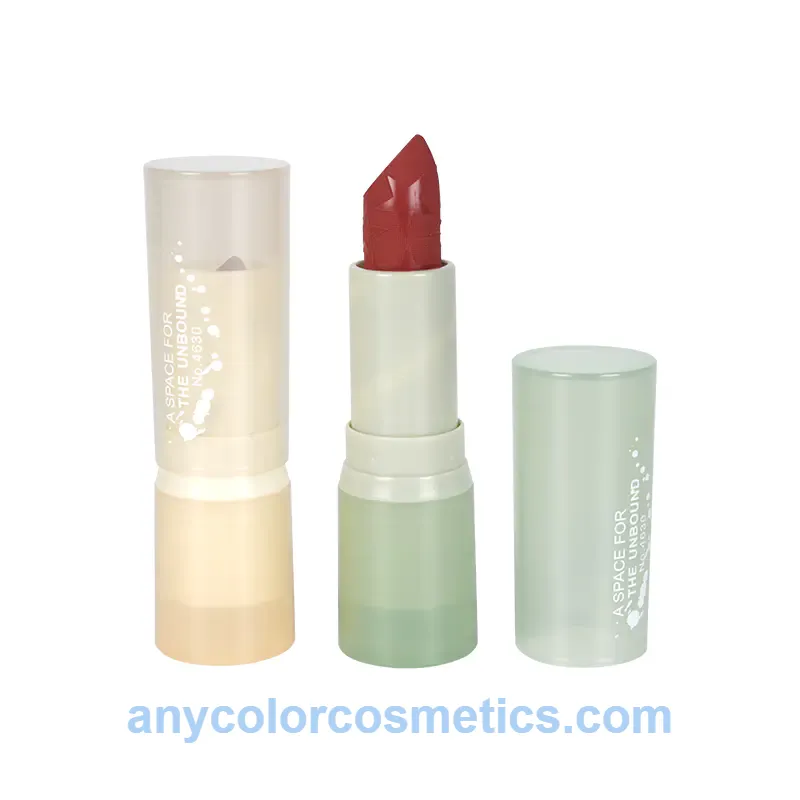
Last winter the bullet of my everyday lipstick snapped at the neck while I was applying it in a cold hallway, and the broken half rolled under a radiator, which irritated me enough to go and read about how a lipstick factory gets a soft, coloured stick to stay upright inside a metal tube. I had always assumed the stuff was simply poured and left to set, but it turns out that the mixture is a balancing act between waxes that hold the shape and oils that let the colour glide over skin, and a break like mine can point to the proportions or the cooling rather than to clumsy hands.
The first stage happens well away from the filling area, where powdered pigment is worked into a portion of the oil so the particles spread out evenly instead of clumping into specks. A roller mill is often used for this, a set of steel cylinders turning at slightly different speeds that squeeze the paste thin as it passes through, and the paste comes off the last cylinder as a smooth, faintly shiny film that you can rub between finger and thumb without feeling any grit. A batch that still feels gritty goes back through, which is tedious to watch but makes sense once you have seen what a speck of undispersed pigment does to a smooth swipe.
Meanwhile the waxes and soft butters melt together in a jacketed kettle under gentle heat, and the ground paste is stirred in once the base is fully liquid, after which the whole batch is held warm so nothing sets before it is poured. I like this part because it is so ordinary to look at, just a steaming steel pot and someone with a paddle, yet the person beside it keeps dabbing a drop onto a white card, since the swatch on the card shows whether the shade has drifted from the approved sample before hundreds of tubes have been filled.
From the kettle the hot liquid is poured into split metal moulds that open like a clam shell, with the cavities wiped lightly so they release cleanly, and the filled mould is moved onto a chilled plate where the mixture sets from the outside in. Cooling it too fast tends to make the stick brittle, and cooling it too slowly can let pigment drift toward one side, so a streaked bullet is usually a clue that somebody took the slow road, whereas a snapped one makes me suspect the quick one.
A row of finished tubes with masking-tape labels is the kind of sample an OEM and ODM manufacturer like NiFeiCosmetic hands over for approval, a company founded in 2009 that also makes eyeshadow and mascara, and the labels matter because each one is a slightly different red.
Once the pieces have set they are pushed out of their cavities and, in many workshops, passed quickly through a small flame or a jet of hot air that glazes the surface, which is why a fresh one looks a little glassy instead of dull and faintly frosted. Each one is then pressed into a swivel base, a plastic or metal cup with a screw thread inside, and the cap clicks over the lot. I pay attention to that last step now because the twist mechanism is what moves the stick around in my bag, and a sloppy fit there is as likely to break one as a poor mixture is.
Checks sit between these stages and they are low-tech, which I found oddly reassuring: a finished piece is pressed sideways against a fingernail to see how much force it takes before it gives way, another is left in a warm cabinet to see whether it sweats or sags, and someone sniffs each batch because oils that have started to turn give themselves away through the nose long before they show anything to the eye. None of it takes a lab coat to understand, though the pass mark for each test is something every workshop sets for itself.
A general walk-through cannot say how any single maker sets its temperatures and holding times, and one lipstick factory can run these same stages with quite different settings and end up with a bullet that behaves differently on a cold floor. The shade card I kept and the company overview at https://www.anycolorcosmetics.com/ are all I have to go on for one particular line, and neither says how it will behave after a fall onto the hallway tiles.