English
 Arabic
 French
 Spanish
 Portuguese
 Deutsch
 Turkish
 Dutch
 Italiano
 Russian
 Romaian
 Portuguese (Brazil)
 Greek
North America Anti-Obesity Drugs Market Outlook: Global Market to Reach US$ 177.27 Billion by 2031
Health |
2026-11-18 09:43:24
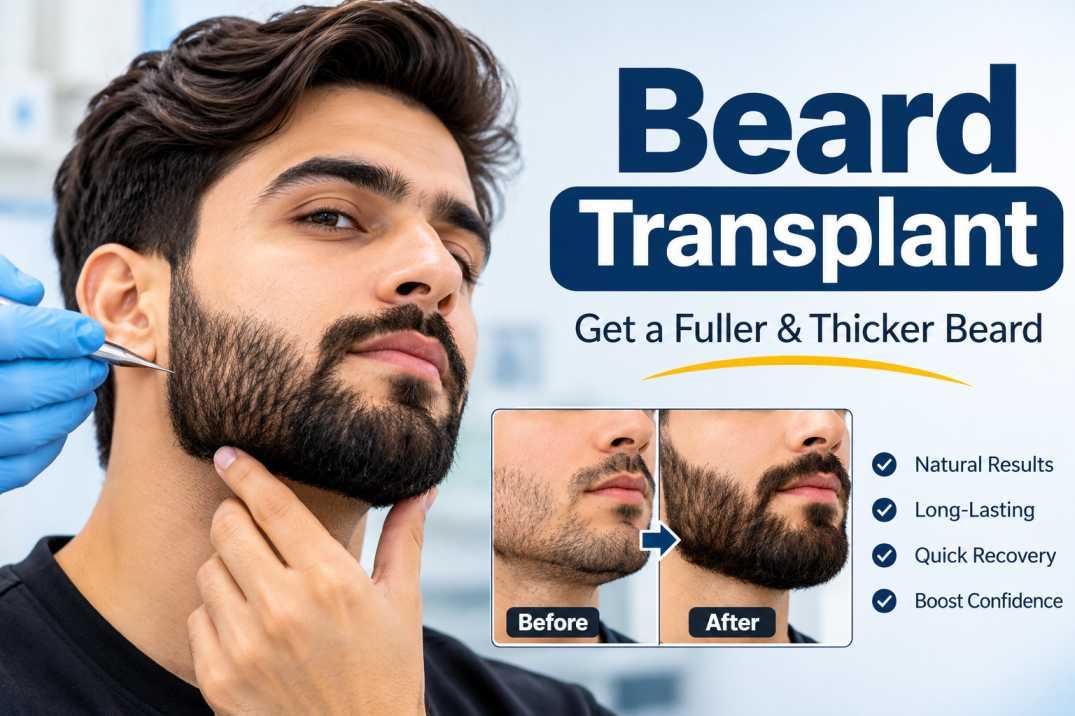
A thick, full, and well-shaped beard is a popular grooming goal for many men. However, not everyone naturally develops dense facial hair. Some men experience patchy beard growth, uneven facial hair, or areas where beard hair does not grow at all. Genetics, hormonal factors, scars, and other conditions can affect beard growth. For men who want a fuller and more defined beard, a beard transplant can be an effective solution.
A beard transplant is a cosmetic hair restoration procedure that involves transferring healthy hair follicles from one part of the body, usually the back or sides of the scalp, to areas of the face where beard growth is thin or missing. The transplanted follicles can grow naturally and help create a fuller-looking beard.
Before choosing this treatment, it is important to understand how the procedure works, who is eligible, what results to expect, and how to take care of your facial hair after surgery. This guide covers everything you need to know about the beard transplant procedure before treatment.
A beard transplant is a minimally invasive cosmetic procedure designed to improve facial hair density and shape. During the treatment, a surgeon extracts healthy hair follicles from a donor area and implants them into selected areas of the beard, moustache, sideburns, or cheeks.
The main purpose of a beard transplant is to create natural-looking facial hair that matches the patient's facial structure and desired beard style.
Unlike temporary beard growth products, a beard transplant provides a long-term solution by using your own hair follicles. Once the transplanted follicles establish themselves, they can produce new hair growth.
A beard transplant may be suitable for men who are unhappy with their natural facial hair growth. However, a proper medical consultation is necessary to determine whether the treatment is appropriate.
You may be a suitable candidate if:
You have patchy or uneven beard growth.
Your beard is naturally thin or has low density.
You have scars on your face that prevent hair growth.
You want to improve your moustache or sideburn density.
You have areas where facial hair does not grow.
You have sufficient healthy donor hair available.
You are in good general health and have realistic expectations.
Men experiencing sudden or unexplained beard hair loss should first consult a dermatologist to identify the underlying cause before considering surgery.
Modern hair restoration clinics generally use advanced techniques to extract and implant hair follicles. Two commonly used methods are FUE and FUT.
FUE is one of the most commonly used techniques for beard transplantation. In this method, individual hair follicles are extracted from the donor area using a specialised extraction instrument.
The surgeon then creates tiny openings in the recipient area and carefully implants the extracted follicles according to the desired beard shape and natural hair direction.
Benefits of FUE include:
No long linear scar in the donor area.
Minimally invasive extraction process.
Relatively faster recovery.
Natural-looking beard growth when performed correctly.
Suitable for treating small and large patchy areas.
FUT involves removing a small strip of skin containing healthy hair follicles from the donor area. The strip is then divided into individual follicular units under a microscope before implantation.
Although FUT is an established hair restoration technique, it is less commonly preferred for beard transplantation because it can leave a linear scar in the donor area.
Your surgeon can recommend the most appropriate technique based on your donor hair quality, facial hair requirements, and medical condition.
Understanding the treatment process can help you feel more confident before undergoing surgery. A typical beard transplant involves several important steps.
The first step is a consultation with a qualified hair transplant surgeon. During this appointment, the surgeon examines your facial hair, donor area, skin condition, and overall suitability for treatment.
You can discuss your preferred beard style, expected density, and the number of grafts required.
After evaluating your requirements, the surgeon creates a beard design that complements your facial structure. The hairline, cheek line, jawline, and moustache area are planned carefully.
Proper planning is important because the direction, angle, and distribution of transplanted hair play a major role in achieving natural-looking results.
Before extracting the hair follicles, local anaesthesia is administered to the donor and recipient areas. This helps minimise discomfort during the procedure.
Patients generally remain awake throughout the treatment.
In the FUE technique, individual hair follicles are carefully extracted from the donor area, usually the back or sides of the scalp.
The extracted grafts are handled carefully to maintain their quality and improve their chances of successful growth.
The surgeon creates tiny openings in the beard area and implants the extracted follicles according to the planned beard design.
Special attention is given to the angle, direction, and spacing of each graft to create a natural appearance.
After implantation, the medical team provides instructions regarding cleaning, medication, sleeping positions, and daily activities.
Following these instructions is essential for proper healing and healthy hair growth.
The number of grafts required depends on the patient's existing beard density, facial structure, and desired results.
For example, someone who wants to fill a few small patches may require fewer grafts than someone looking for a completely fuller beard.
The surgeon evaluates the treatment area and estimates the number of grafts needed during the consultation.
There is no fixed graft requirement for every patient. A personalised treatment plan helps achieve balanced and natural-looking facial hair.
The duration of a beard transplant depends on the number of grafts being implanted and the complexity of the treatment.
In many cases, the procedure takes approximately 4 to 8 hours. Smaller procedures may take less time, while larger sessions can require longer.
Since beard transplantation is generally performed under local anaesthesia, patients can usually return home on the same day after receiving post-operative instructions.
Recovery is an important part of the treatment process. Although patients can usually resume light activities relatively soon, complete healing and visible hair growth take time.
First 3 Days: Mild redness, swelling, and small scabs may appear around the implanted follicles. Follow the surgeon's cleaning instructions and avoid touching the treated area unnecessarily.
First 7–10 Days: Most initial scabbing and redness gradually improve. The implanted area begins healing, but it is important to avoid shaving or rubbing the beard area until your surgeon allows it.
First 2–4 Weeks: Some transplanted hairs may begin shedding. This is commonly known as shock loss and is generally a normal part of the hair transplant cycle.
3–4 Months: New hair growth may begin to become noticeable. However, the growth rate varies between individuals.
6–9 Months: The beard usually starts looking fuller as more transplanted hairs grow.
9–12 Months: More mature results generally become visible, although some patients may continue seeing improvements beyond this period.
A beard transplant offers several advantages for men who want to improve their facial hair appearance.
1. Fuller Beard Appearance: The procedure can help fill patchy areas and improve overall beard density.
2. Natural-Looking Results: Since your own hair follicles are used, the transplanted hair can blend with your existing facial hair when properly implanted.
3. Permanent Hair Restoration: Successfully transplanted follicles generally provide long-term hair growth.
4. Customised Beard Design: Patients can discuss their preferred beard shape, cheek lines, and moustache density with the surgeon.
5. Improved Confidence: A fuller beard may help men feel more comfortable with their overall appearance.
The cost of a beard transplant varies depending on several factors. There is no single price that applies to every patient.
Some important factors affecting the treatment cost include:
Number of grafts required.
Hair transplant technique used.
Experience and qualifications of the surgeon.
Location and reputation of the clinic.
Complexity of the treatment.
Post-treatment care and follow-up services.
Before selecting a clinic, compare treatment plans, surgeon experience, hygiene standards, and the overall quality of care instead of choosing a provider based only on price.
Proper aftercare helps protect the transplanted follicles and supports the healing process.
Here are some important precautions to follow:
Follow all instructions provided by your surgeon.
Avoid touching, scratching, or rubbing the implanted area.
Keep the treated area clean as instructed.
Avoid strenuous exercise until your surgeon approves it.
Protect your face from direct sunlight during the initial healing period.
Avoid shaving the transplanted area until you receive medical approval.
Take prescribed medications as directed.
Attend scheduled follow-up appointments.
If you experience increasing pain, severe swelling, unusual discharge, or fever, contact your medical provider promptly.
Like other surgical procedures, beard transplantation also carries some potential risks and side effects.
These may include temporary swelling, redness, itching, infection, scarring, folliculitis, uneven hair growth, and poor graft survival.
The final appearance also depends on the surgeon's experience, the quality of donor hair, and individual healing characteristics.
Choosing a qualified and experienced surgeon and following proper aftercare instructions can help reduce avoidable complications.
A beard transplant can be an effective option for men who want to improve patchy facial hair, increase beard density, or create a more defined beard shape. Modern techniques such as FUE allow surgeons to transfer healthy hair follicles and create natural-looking facial hair.
However, successful treatment requires proper planning, a suitable donor area, an experienced surgeon, and appropriate aftercare. Before making a decision, schedule a consultation with a qualified hair restoration specialist to understand your treatment options, expected results, possible risks, and overall costs.
With the right approach and realistic expectations, a beard transplant can offer a long-term solution for achieving a fuller and more balanced beard.