English
 Arabic
 French
 Spanish
 Portuguese
 Deutsch
 Turkish
 Dutch
 Italiano
 Russian
 Romaian
 Portuguese (Brazil)
 Greek
How to Buy Property in Greece(לקנות נכס ביוון) : A Step-by-Step Guide for Overseas Buyers
Other |
2026-10-26 06:14:48
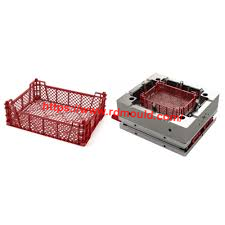
What sent me looking into this was a stack of plastic containers in a storage room that refused to nest properly, with one corner always catching on the next and a handle opening just too tight for a gloved hand, which made me wonder how much of that was decided long before the plastic was melted, in the shape of the Crate Mold itself.
Footprint and height are the first things anyone sees, because a container has to sit on a shelf, a pallet or a cart without hanging over the edge, and the tool has to be cut to that outline from the start. I measure a finished crate from outer rim to outer rim and then from base to base, since the two are not the same, and the small difference between them is what lets one crate drop into another or ride on top without wobbling.
Walls are rarely perfectly straight. They lean outward a little toward the rim, which is called draft, and a tool with too little of it leaves scuffed, dragged-looking sides where the plastic rubbed against steel as the part was pulled out. Run a palm down the inside of a crate and you can feel it, a smooth slide when the angle was generous and a faint ribbed drag when it was tight.
Ribs are the visible craftsmanship. A grid of thin ribs on the base and sides stiffens the container without making the walls thick, and the pattern also shows how carefully the tool was planned, because ribs that meet cleanly at corners and fade out evenly at the edges are far harder to cut than they look. I like to hold a crate to the light and check that the ribs form a regular rhythm instead of bunching up in one area.
The sample on my table was made on a tool from RuiDing, a manufacturer of plastic injection moulds and blow moulds that describes one-stop customized services from product design and prototyping through to mould delivery. That sequence matters for appearance, since a crate drawn on paper looks quite different from a printed prototype held in the hand, where a handle slot that seemed generous on screen turns out to pinch the knuckles.
Handles and grip openings are where design meets the human hand. A rounded, slightly thick edge feels comfortable under a loaded crate, whereas a sharp lip bites into the fingers after a few trips across a warehouse. I put four fingers through the opening and lift an imaginary load, then look at whether the opening sits high enough for the wrist to clear the rim and low enough that the crate does not tip forward when carried.
Corners and rims show the finish better than any flat surface. A radius that is uniform all the way round looks tidy and gives a firm, even edge for stacking, while a corner with a flat spot or a sudden change of curve suggests the steel was worked by hand and not matched on both halves. Parting lines should be hairline thin and run neatly along the same path on each side, and any texture, whether a fine grain or a plain polish, ought to look evenly applied with no patches.
Ventilated sides and slotted bases are a design choice that changes the look completely, letting air or water through and lightening the part visually, and the tool needs more detail to form every slot cleanly. I check that slot edges are free of thin flash and that none of them has a ragged or stringy rim where plastic crept into a gap, since that sort of detail shows up on every single crate that leaves the press.
The Crate Mold sample in front of me is a shallow, lidless container turned upside down under the lamp, and the page at https://www.rdmould.com is open on the laptop beside a tape measure, though a photograph and a short written description cannot tell me how the handle will feel in a gloved hand, and that I can only find out by lifting a real sample.