English
 Arabic
 French
 Spanish
 Portuguese
 Deutsch
 Turkish
 Dutch
 Italiano
 Russian
 Romaian
 Portuguese (Brazil)
 Greek
US Doppler Probe Market Forecast 2034: Emerging Trends and Growth Opportunities
Health |
2026-11-17 06:50:16
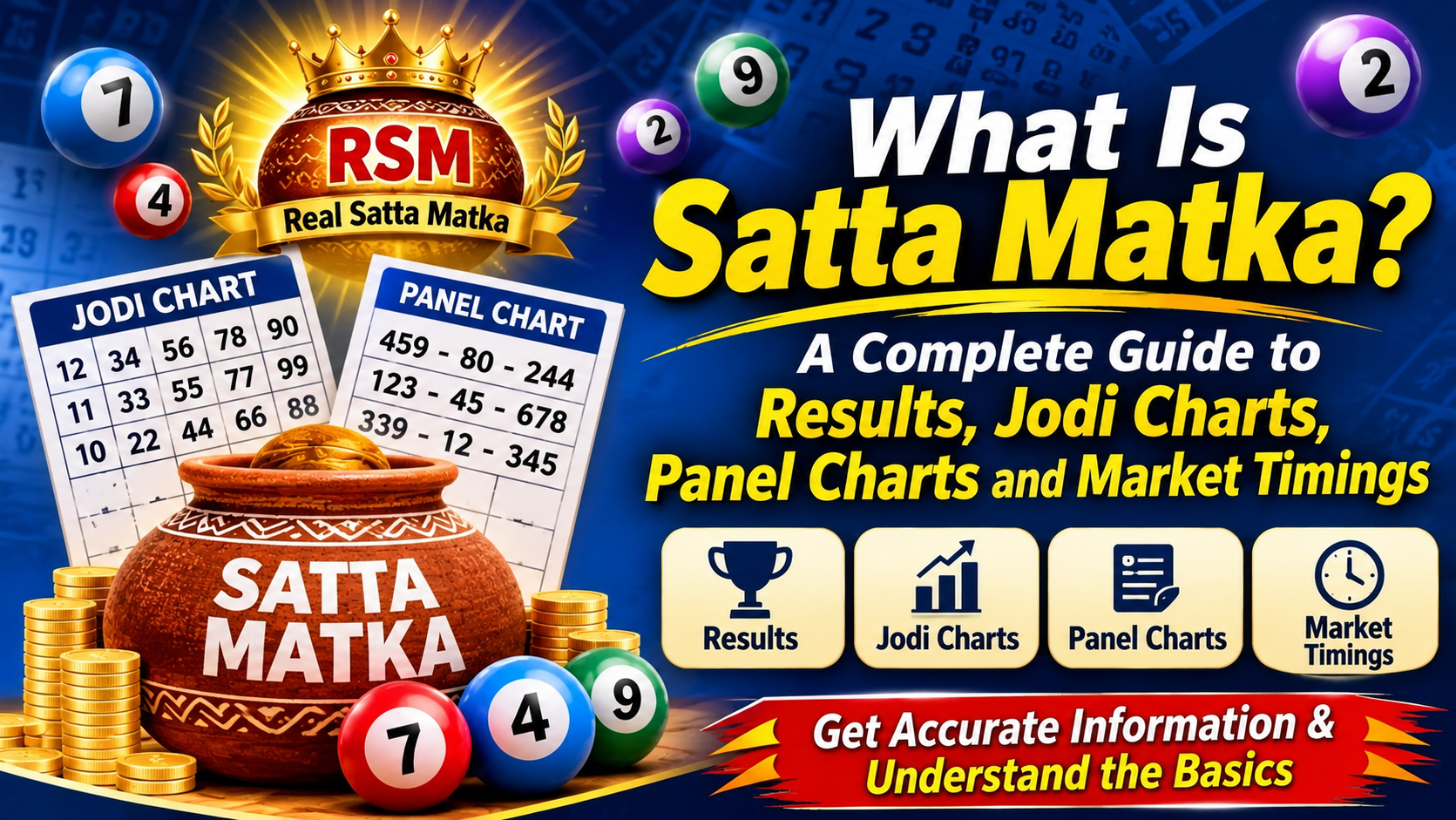
Satta Matka has a long history in India and remains a widely discussed subject online. With the growth of digital platforms, people increasingly search for information about its history, traditional terminology, result formats and historical charts.
However, understanding this subject requires more than simply looking at numbers. Readers should know how to interpret a result, understand the difference between Jodi and Panel charts, and identify market status correctly.
This guide explains the essential aspects of Satta Matka in simple English. It also covers practical points to consider when reading online result records.
The history of Satta Matka is closely associated with Mumbai. Its origins date back to the 1950s, when betting activities were connected with fluctuations in cotton prices. Over time, the format evolved, and different markets and local names became popular.
During the 1960s, names such as Kalyan and Ratan gained recognition. Later, the growth of the internet made historical results, market information and related records more accessible online.
Today, readers explore this subject to understand its history, traditional terminology and result formats.
For more background information, visit the Satta Matka Guides and Knowledge Base.
A traditional Satta Matka result generally follows a three-part format consisting of an opening Panna, a Jodi and a closing Panna.
For example:
459 - 80 - 244
Each section represents a different part of the result:
Open Panna: The first group of three digits.
Jodi: The two-digit number displayed in the middle.
Close Panna: The final group of three digits.
Understanding this format helps readers interpret historical result records more accurately.
It is important to remember that historical results do not guarantee future outcomes. No number or historical pattern can provide a certain prediction.
For a more detailed explanation, visit the Real Satta Matka Result Guide.
Jodi charts and Panel charts are two commonly used terms in the Satta Matka system. New readers sometimes find it difficult to understand how these charts differ.
A Jodi chart displays historical two-digit results arranged by date or market. Its straightforward layout helps readers review previous records and compare results across different dates.
A Panel chart provides more detailed result information. It generally includes the Open Panna, Jodi and Close Panna in one format.
This allows readers to examine the different parts of a historical result together.
You can explore historical records through the Jodi and Panel Charts section.
Remember that these charts serve as historical records. Previous results cannot guarantee or determine future outcomes.
Panna and Ank are important terms in traditional Satta Matka terminology.
A Panna is a combination of three digits, while an Ank represents the single digit associated with that Panna.
Pannas are generally divided into three categories:
Single Patti
Double Patti
Triple Patti
Understanding these categories makes it easier to read traditional result formats and historical charts.
For example, when readers encounter a three-digit combination in an older result, they can refer to the relevant Panna category to understand its classification.
The 220 Patti Chart provides a useful reference for understanding Panna categories and their associated Anks.
Market timings and result status are important when reviewing online result information. Different markets follow different schedules, so readers should always check the market name, date and scheduled timing.
Common market status labels include:
Upcoming: The scheduled market opening time has not arrived.
Live: The market is within its scheduled operating period.
Closed: The scheduled market period has ended for the day.
Holiday: The market is not operating on that particular day.
For example, a market may display Upcoming in the morning if its scheduled opening time is later in the day. Once its operating period begins, the status changes to Live. After the scheduled closing time, it changes to Closed.
Readers should also check whether the displayed timings follow Indian Standard Time (IST).
For market schedules and related information, visit the Satta Matka Result Timings page.
Online result platforms provide different types of information. Readers should follow a few basic checks to avoid confusion.
Check the market name: Different markets may have similar names. Always confirm that you are viewing the correct market.
Verify the date: Historical records should always be checked against their original result dates.
Confirm the timing: Market schedules may differ, so refer to the latest published timing information.
Understand the difference between results and predictions: Officially declared results and unverified numbers shared on social media are not the same.
Do not treat historical patterns as predictions: Previous records provide historical information, not certainty about future results.
You can explore different market listings through the All Markets section.
RealSattaMatka.net provides several informational sections related to Satta Matka results, historical charts and market schedules.
The website organizes information into different sections to make navigation easier for readers.
Some of its important sections include:
Live Result Board: Displays declared results and market status.
Jodi and Panel Charts: Provides access to historical result records.
Result Timings: Explains scheduled opening and closing times.
220 Patti Chart: Helps readers understand Panna classifications and associated Anks.
Knowledge Base: Contains educational guides about result formats, terminology and market information.
Readers can explore these sections through the official Real Satta Matka website.
Understanding Satta Matka requires basic knowledge of its history, result formats, Jodi charts, Panel charts, Panna classifications and market timings.
When reviewing online records, always verify the market name, result date and declared information. Historical charts should be treated as records of previous results rather than tools for predicting future outcomes.
Readers should also understand that betting involves financial risks and that gambling laws differ across Indian states. Always check the applicable local laws before engaging in any related activity.
Real Satta Matka provides informational resources to help readers understand declared results, historical records and traditional terminology.