English
 Arabic
 French
 Spanish
 Portuguese
 Deutsch
 Turkish
 Dutch
 Italiano
 Russian
 Romaian
 Portuguese (Brazil)
 Greek
Increasing Infection Prevention Awareness Strengthens the North America Dental Infection Control Products Market
Health |
2026-10-27 10:52:19
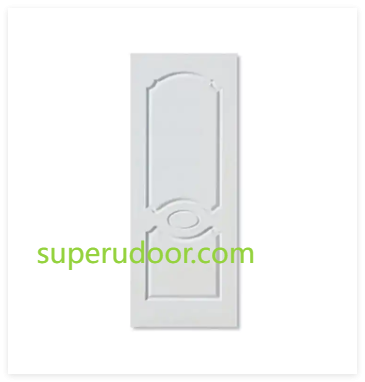
People say a moulded leaf is just a flat board with a pattern pressed into it, and I believed that until I held a sample at an angle against a window and watched the shadows travel through the recesses as the afternoon changed. An HDF Moulded Door gets its shape from a fibreboard skin pressed into a form, so the depth of each recess, the softness of each corner and the sheen of the finish all become design choices that a catalogue photograph tends to flatten out.
Proportion is the first thing that registers from the far end of a room. A leaf that is slightly wide for a narrow hallway makes the passage feel pinched, whereas a tall slim one lengthens a short corridor, and a wide-lens photograph hides both effects. I mark the opening width on the wall with masking tape before I look at any sample, then walk to the other end of the room and see how the rectangle reads from where people actually stand, which sounds fussy until the tape shows you that a recess pattern drawn for a wide slab looks crowded on a narrow one.
Recess depth is the detail I keep returning to. A shallow moulding gives a quiet surface that sits comfortably in a plain flat, while a deep one throws a dark line along its edge in side light and can look heavy beside slim skirting. Run a fingertip across the step between the flat and the recess and notice whether the corner is crisp or rounded, because a rounded one hides small knocks but softens the line the designer drew, and a crisp one in a dusty hallway tends to collect grime in its angle.
The sample on my desk while I wrote this came from Shangpin, a Zhejiang home furnishing company that works from a large plant, sells under the SUPERU name and offers OEM and ODM services to buyers in other countries. Since adapting a design for a project is part of that kind of work, I asked whether a profile or a surface tone can be adjusted, and I wrote the reply down in the maker's own phrasing instead of filling the silence with assumptions.
A printed or embossed wood pattern repeats at some interval, and on a tall slab you can sometimes catch the repeat if you stand at an angle, which is why I hold a sample with the light coming from the side. A matt finish hides fingerprints around the handle, and a glossy one shows every ripple in the board under a ceiling spotlight. Colour needs the same patience, so I hold the swatch against the skirting, the flooring and a scrap of the wall paint, since a tone that looks calm on its own can turn muddy beside a warm wall.
The gap around the leaf is a design element that people overlook. A narrow, even reveal on every side looks deliberate, while an uneven one pulls the eye straight to the problem, so I ask for the clearances to be written beside the leaf dimensions and for the frame thickness to be stated too. A deep frame can swallow a thin slab and leave an awkward step along the edge, and the swing direction matters in a tight hall, because a leaf that opens against a wall hides its own face and shows only the back.
Handle and hinge positions belong in the picture as well. A lever set too close to the frame crowds the knuckles and looks cramped even when the surface is handsome, and hinge knuckles that stand proud break the clean line of a plain flat. When several rooms share one style, a consistent tone between slabs becomes a design matter in itself, since a hallway lined with openings that differ slightly looks accidental rather than planned, and I held two samples together under the same lamp for exactly that reason.
Light changes everything. A pale smooth finish throws daylight into a dim corridor, a dark textured one soaks it up and makes the passage feel deeper, and I carry a sample around the flat at different hours and let it rest beside the sofa, the stair rail and the coat hooks, which are the things that actually share a wall with it. Under a warm bulb in the evening, the same recess that looked soft at noon turns into a dark groove.
I keep my notes on the HDF Moulded Door samples in a folder beside the tape, and every profile name I copied down is crossed out except two that held up beside the window. The names came from https://www.superudoor.com and sit next to small tape marks on the wall where each width was tried. One of the two has a deep recess and throws a handsome shadow but gathers dust in its corners, while the other is shallow and easy to wipe but looks flat from across the room, and I have not settled which trade I can live with.