English
 Arabic
 French
 Spanish
 Portuguese
 Deutsch
 Turkish
 Dutch
Dutch
 Italiano
 Russian
 Romaian
 Portuguese (Brazil)
 Greek
Greek

Choosing a Fertility Clinic Abroad: Important Factors to Evaluate
Health & Wellness |
2026-09-19 12:48:04
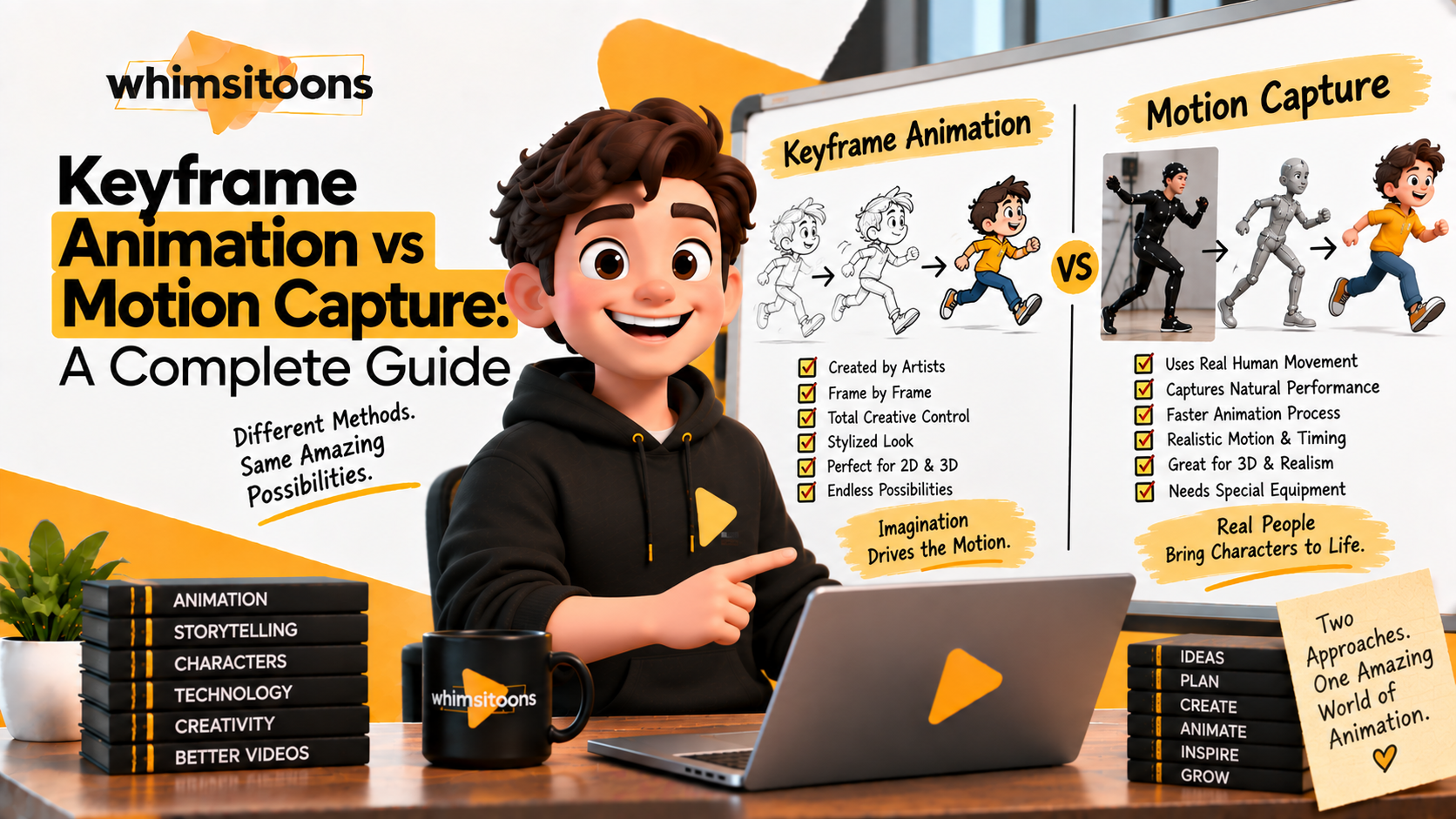
3D animation can be created using different techniques, but two widely used approaches are keyframe animation and motion capture. Understanding keyframe animation vs motion capture helps creators choose a workflow based on realism, creative control, production requirements, and project goals.
Keyframe animation allows artists to manually control poses and movement, while motion capture records performances from real people and transfers the data to digital characters. Both methods have unique advantages and can also be combined.
Whimsitoons uses creative storytelling and animation techniques to develop engaging visual content for different audiences.
Keyframe animation is a traditional digital animation method where animators define important poses at specific points on a timeline. Animation software then creates transitions between those poses.
For example, an animator can create a character's starting pose at frame one and a walking pose several frames later. Additional keyframes can refine the movement.
Animators can control:
This provides detailed control over the final performance.
Motion capture, commonly called mocap, records real-world movement using cameras, sensors, markers, or tracking technology. The captured data is then applied to a rigged 3D character.
A performer can walk, run, dance, fight, or perform other actions while the system records the movement.
The resulting data is processed and cleaned before being transferred to the digital character.
The key difference in keyframe animation vs motion capture is how movement is created.
With keyframe animation, an artist creates movement manually. With motion capture, movement begins with a real performance.
Keyframe animation gives animators extensive artistic control. They can exaggerate movements, create impossible actions, and adjust individual poses.
Motion capture focuses on reproducing a recorded performance, although animators can still modify the captured data.
Motion capture naturally captures human movement, making it useful when realistic body mechanics are important.
Keyframe animation can also look highly realistic, but achieving natural movement requires considerable animation skill and attention to timing and spacing.
Motion capture can provide a useful starting point for complex human movements.
Keyframe animation may require more manual work, particularly for detailed performances.
However, motion capture data still needs cleanup and refinement, so it does not automatically eliminate animation work.
Keyframe animation can be useful when the project requires strong artistic control.
It works particularly well for:
For example, a cartoon character might need to stretch, squash, jump unusually high, or perform physically impossible actions. Keyframes allow animators to create these effects precisely.
Motion capture is particularly useful when realistic human movement is important.
Common applications include:
A performer can demonstrate complex physical actions that would otherwise require extensive manual animation.
The discussion of keyframe animation vs motion capture does not always have to result in choosing only one method.
Many productions combine them.
Motion capture can provide the basic performance, while keyframe animation can refine the result. Animators may correct foot placement, adjust hand positions, improve facial expressions, exaggerate movements, or change timing.
This hybrid approach can provide both realistic movement and artistic control.
Animators can create realistic, stylized, or imaginary movement.
Every action can be adjusted frame by frame.
Movement can be exaggerated to match a particular artistic style.
The animation can be created without scheduling a motion capture performance.
Real performances provide authentic body mechanics.
Difficult physical movements can be recorded directly.
Subtle gestures and timing can be captured from the performer.
Captured data can reduce the amount of manual work needed for certain realistic sequences.
Keyframe animation can be time-consuming, particularly for long sequences with complex human movement.
Creating convincing body mechanics requires experience. Poor timing, spacing, or posing can make movement appear unnatural.
However, skilled animators can achieve highly detailed and expressive results through careful refinement.
Motion capture requires specialized equipment, software, and technical setup.
Raw data can also contain unwanted movements or tracking errors. Animators usually need to clean and refine the performance.
Motion capture may also be less suitable for highly stylized movement that does not resemble natural human motion.
Businesses and creators often need characters that can communicate ideas clearly through movement.
Professional 3D character animation services for videos can support marketing campaigns, educational content, product demonstrations, corporate videos, and entertainment projects.
Experienced animators can determine whether keyframes, motion capture, or a combination of both is appropriate for the project.
Professional 3D character animation services for videos can also include modeling, rigging, texturing, animation, lighting, rendering, and post-production.
When comparing keyframe animation vs motion capture, consider several factors.
Stylized projects may benefit from keyframes, while realistic performances may benefit from motion capture.
Motion capture can require specialized equipment and facilities. Keyframe animation may require more artist hours.
Motion capture can provide a faster starting point for complex movements, while keyframe animation offers a direct manual workflow.
Human characters are well suited to motion capture, while unusual creatures or highly stylized characters may require keyframe animation.
If the project requires impossible or exaggerated movement, keyframe animation provides greater flexibility.
Whimsitoons combines technical animation knowledge with creative storytelling. The appropriate animation method can be selected according to the project's visual style, audience, character requirements, and communication goals.
Rather than treating one technique as universally suitable, production can use the method—or combination of methods—that best supports the intended result.
Understanding keyframe animation vs motion capture makes it easier to see how different animation workflows create movement.
Keyframe animation offers detailed artistic control, while motion capture provides realistic movement based on real performances. Each approach has its own applications, strengths, and limitations.
For many projects, the most practical solution may be a combination of both. Motion capture can establish natural movement, while keyframe animation can refine and stylize the performance.
For creators and businesses exploring professional 3D character animation services for videos, choosing the right technique depends on the project's goals, style, timeline, budget, and character requirements.
Whimsitoons brings storytelling and animation expertise together to create polished digital performances.
Ultimately, keyframe animation vs motion capture is less about finding one universal method and more about selecting the workflow that fits the creative and technical needs of each project.