English
 Arabic
 French
 Spanish
 Portuguese
 Deutsch
 Turkish
 Dutch
Dutch
 Italiano
 Russian
 Romaian
 Portuguese (Brazil)
 Greek
Greek

SKYLRK | Skylrk Justin Bieber | Official Clothing Store
Gardening |
2026-09-30 18:01:04
Anyone who has left a bucket of water outside in a Dubai July knows how quickly it warms. A cold plunge faces the same challenge, only on a larger scale. A setup that feels perfect in cooler months can turn lukewarm by midsummer.
This guide explains why water warms so fast, what ice can and can't do, how chillers work, and which simple habits make a cold plunge easier to maintain in extreme heat. It's aimed at current owners and people still deciding what to buy.
Three things work against you. Summer air temperatures can climb well above 40°C, tap water can start out warm, and direct sun adds heat to both the water and the tub itself. A larger water surface also exchanges heat with the air faster.
Insulation, shade and covers all slow this process, but they don't stop it. Even a well-built tub will drift upwards over hours if left uncovered in the heat.
Understanding this early helps you choose the right cooling method instead of finding out the hard way.
Ice is the simplest cooling tool. It works well for occasional sessions, especially in cooler months, and requires no extra equipment.
In peak summer, though, it melts fast. You may need a lot of ice to bring warm tap water down to your target, and you'll repeat that every session. The cost and effort add up, and temperature can vary from one day to the next.
If you use a tub a few times a month, ice may be enough. If you plan a regular routine, it quickly becomes the least convenient option.
A chiller circulates water through a cooling unit and returns it at a lower temperature, holding the tub at a set level. Many models also filter the water, which reduces how often you need to change it.
When comparing chillers, look at capacity relative to your tub volume, how low the unit can cool in hot ambient conditions, power requirements, noise and the cost of replacement filters. A chiller that's too small for your tub will run constantly and struggle in summer.
Check compatibility too. Not every tub connects to every chiller, so confirm fittings and flow requirements before buying.
Where you put the tub changes how hard the chiller has to work. Indoor spaces, shaded patios and areas away from reflective walls all help.
A well-fitting lid or cover is one of the most effective upgrades. It reduces heat gain and keeps out debris, so keep it on whenever the tub isn't in use.
Material also plays a role. Metal can heat up in the sun, while thicker or insulated walls hold temperature longer. If your tub will sit outdoors, factor in sun exposure from the start.
Early morning and evening are often the easiest times for outdoor tubs, since the water has had less sun and the surrounding air is cooler. Choosing a consistent time also helps you notice how the temperature behaves.
After outdoor exercise or a sauna, allow your body a moment to settle before plunging. Moving quickly between hot and cold can cause dizziness in some people, so sit down if you feel lightheaded and drink water afterwards.
If you have heart conditions, high blood pressure or circulation issues, speak to a doctor before starting.
For hot-climate use, prioritise cooling compatibility, insulation, cover quality and filtration. Ask how the tub performs in summer conditions and whether chillers are sold separately or included.
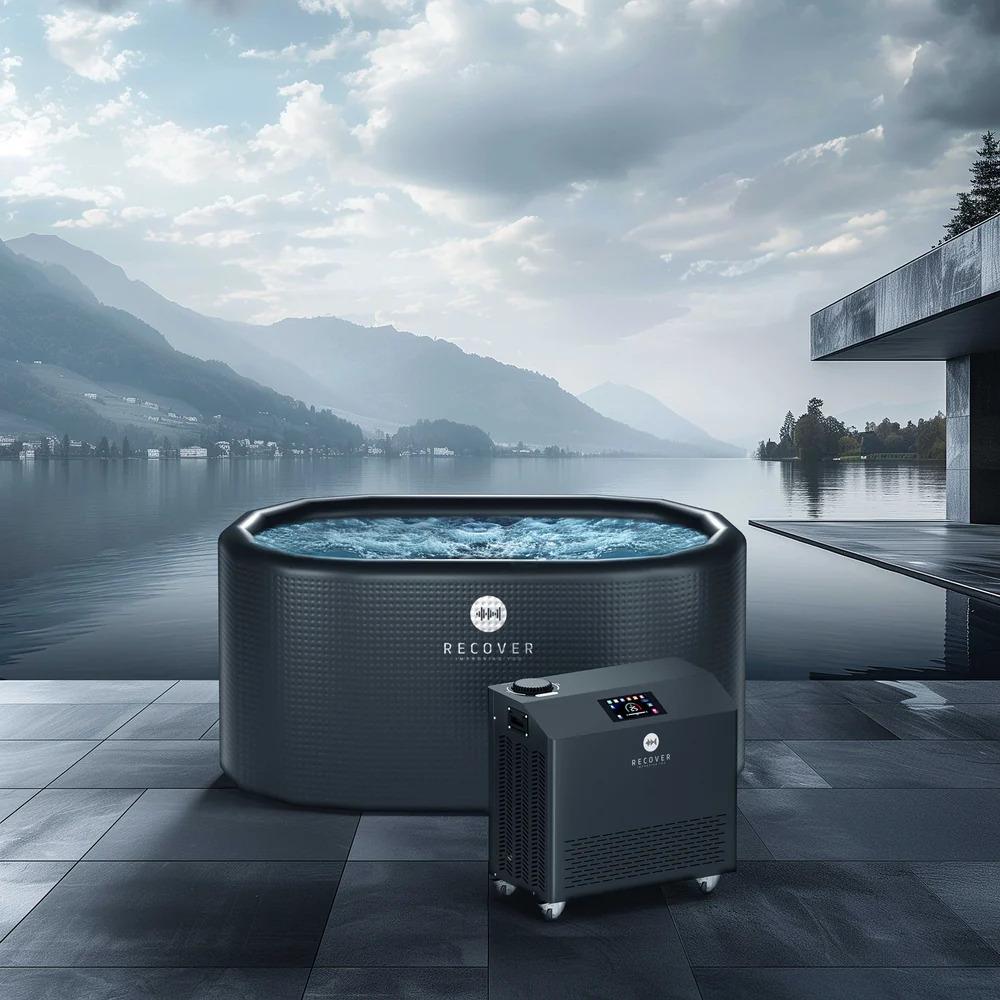
A supplier's chiller-compatible ice bath tubs page can help you see which designs are built to work with chillers. Recover is one example of a UAE retailer that lists tubs alongside compatible chillers and accessories.
Not strictly, but for regular use it's strongly worth considering. Ice alone is hard to sustain in summer, whereas a chiller holds a consistent temperature with less daily effort.
It depends on the unit, tub size and ambient temperature. Check manufacturer specifications and look at performance in hot conditions, not only the headline minimum.
Yes. A good cover reduces heat gain and keeps out dust and leaves, which lowers the workload for both ice and chillers.
You can, but shade and cooling matter. Choose cooler times of day, avoid direct sun and take care moving between very hot and very cold conditions.
Keeping a cold plunge cold in Dubai comes down to managing heat. Ice can start you off, but a chiller, shade, a cover and sensible timing make the routine sustainable.
If you're choosing a tub, put cooling compatibility near the top of your list. It's the feature that most affects how often you'll actually use the plunge once summer arrives.