English
 Arabic
 French
 Spanish
 Portuguese
 Deutsch
 Turkish
 Dutch
Dutch
 Italiano
 Russian
 Romaian
 Portuguese (Brazil)
 Greek
Greek

Buy Professional Business Email in USA 2026 ? Trusted Solution
Food |
2026-10-02 10:15:07
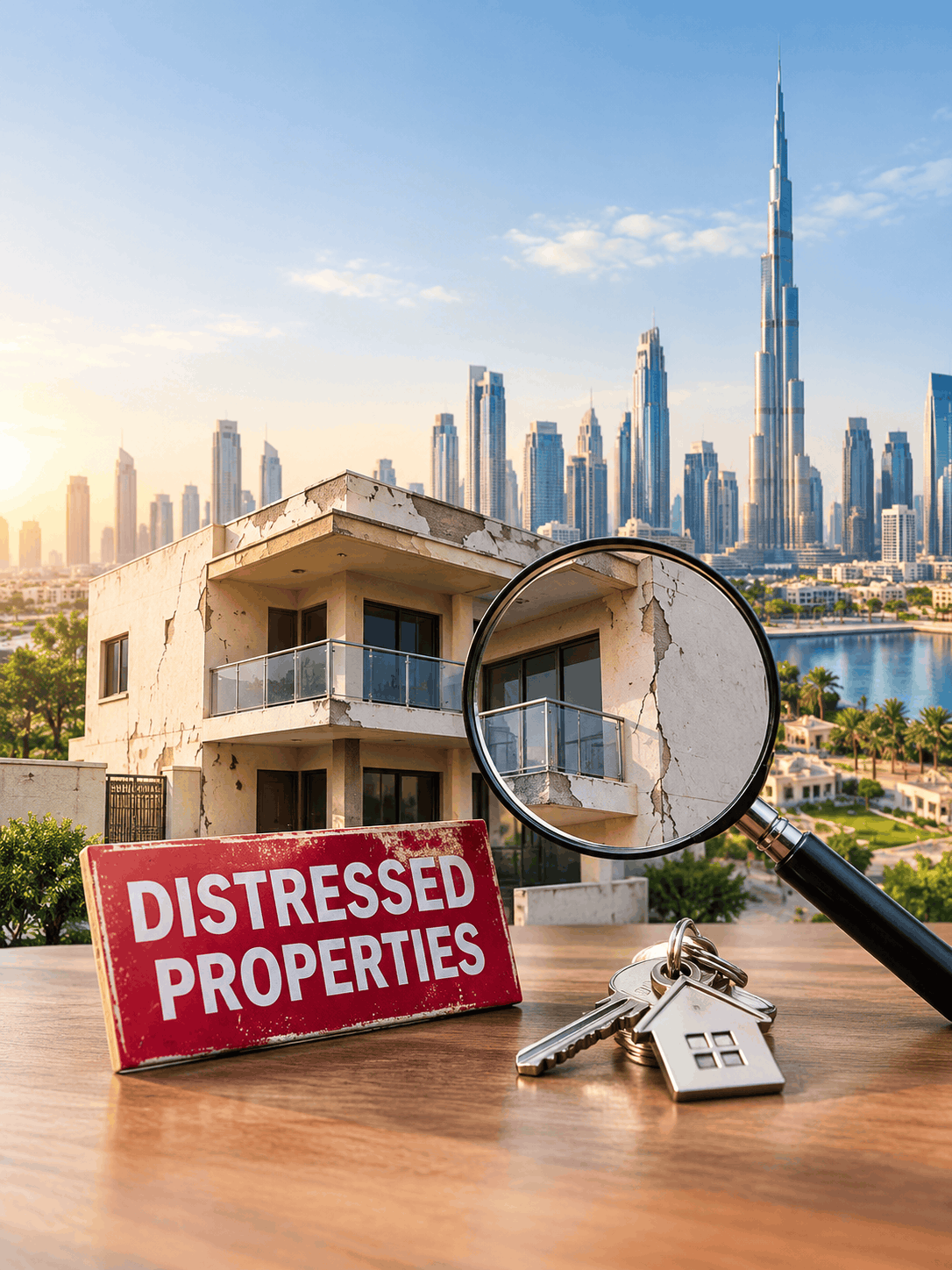
Few phrases attract more attention from property buyers than "distressed sale." It suggests a motivated seller, a fast deal and a price well below the market. It is no surprise that distressed properties for sale in Dubai is a search many investors and bargain hunters type into Google.
But are these properties really cheaper, and are they right for you? The honest answer is that it depends. Some genuine opportunities exist, but many listings that use the word "distressed" or "urgent sale" are not priced below the market at all. This guide explains what distressed property means in Dubai, how large the discounts tend to be, where the risks sit and how to protect yourself.
In simple terms, a distressed property is one that is being sold under pressure, usually with a seller who needs to exit quickly. The pressure can come from different sources:
Owner-driven urgent sales: An owner needs cash, is relocating or wants to exit an investment.
Off-plan investor resales: Buyers who purchased during construction sometimes struggle to keep up with developer payment milestones and look to sell.
Mortgage defaults and bank repossessions: Lenders may sell properties after a borrower defaults, sometimes through court auctions.
Distressed projects: In rarer cases, an entire project is stressed and may be sold or restructured.
One point matters a lot: according to major brokerages, most distressed listings in Dubai come from individual seller circumstances rather than widespread foreclosures. Investor-led resales, particularly in communities with a high share of off-plan ownership, are a more common source than bank repossessions.
Sometimes, but not always. The claims you will see online differ considerably:
One guide says distressed properties are typically sold at around 10 to 30 percent below market value.
Another says they are priced anywhere from 10 to 35 percent below comparable units in the same area.
A third suggests buyers can expect entry costs of roughly 15 to 25 percent lower than prevailing market prices, with entry points from around AED 600,000 for studios up to AED 3 million in some mid-tier complexes.
At the same time, a leading international brokerage cautions that truly below-market distressed opportunities are rare in strong market cycles, and that not every listing marketed as urgent or distressed is actually priced below market value.
So which is right? Both can be true. Discounts exist in specific cases, depending on location, urgency, property condition and market conditions, but they are not guaranteed, and they should never be assumed from a listing headline alone.
A discount can disappear quickly once you look at the full picture. Before treating a lower asking price as a bargain, consider these factors:
Condition: Some distressed units need renovation, and the cost can erase the discount.
Outstanding payments: On off-plan resales, the seller may owe installments, and you will need to understand exactly what has been paid and what remains.
Service charges and arrears: Unpaid service charges can attach to a unit, so ask for a clearance.
Mortgage and title issues: A property may still carry a mortgage or other encumbrance that must be settled before transfer.
Developer fees: Resales may involve no-objection certificate (NOC) fees and administration charges.
Hidden reasons for the discount: A property may be cheap for a reason, such as a poor view, a weak building or a location with oversupply.
Guides commonly point to several channels:
Specialist real estate brokers who track urgent sales
Bank listings and repossessed property sales
Court-linked auctions after mortgage defaults
Developer resale portals and secondary-market listings
Major property portals, although distressed properties are not always tagged as such
On portals, telltale signs include phrases such as "motivated seller" or "urgent sale," and units that have been vacant or listed for a long time. These signs are not proof of a bargain, only a prompt to investigate further.
There is no single best area for distressed properties in Dubai. Guides mention communities with large numbers of investor-owned units, including Jumeirah Village Circle (JVC), Business Bay, Dubai Marina, Dubai South, Arjan, Damac Hills 2, Dubai Hills Estate and Dubai Creek Harbour. Communities with a high concentration of off-plan investors are more likely to see investor-led resales.
Rather than chasing an area, focus on the specific unit, the building and the numbers.
|
Factor |
Distressed or urgent sale |
Regular resale |
|---|---|---|
|
Seller motivation |
Needs a fast exit |
Flexible timing |
|
Price |
May be below market, but not always |
Closer to market value |
|
Negotiation room |
Often higher |
Varies |
|
Speed |
Can close quickly |
Typically standard timelines |
|
Due diligence |
Needs extra care |
Standard checks |
|
Payment |
Cash buyers often favoured |
Mortgage or cash |
|
Condition |
Can vary and may need work |
Usually clearer |
This table is a general guide. Individual properties can differ.
It may suit you if:
You have cash or pre-approved finance and can move quickly
You are comfortable doing detailed due diligence, or you work with a trusted adviser
You can handle some uncertainty about condition or paperwork
You are focused on value rather than a perfect, ready-to-live-in home
It may not suit you if:
You rely on slow mortgage approvals
You want a risk-free, fully verified process
You are buying purely on the assumption of a big discount
Cash buyers tend to have an advantage in distress deals because sellers value speed and certainty.
Because these deals can close quickly, preparation matters. Before you commit, work through this list:
Verify ownership and title: Confirm that the seller is the registered owner and that the property is free to transfer.
Check for mortgages and encumbrances: Ask how any outstanding mortgage will be settled and who bears the cost.
Compare against real transactions: Review recent Dubai Land Department sales data for similar units, not only portal asking prices.
Get a valuation: A private valuation can help you judge whether a discount is real.
Inspect the property: Check condition, defects and any renovation needs.
Confirm service charges: Ask for clearance and the latest figures.
Understand off-plan balances: For off-plan resales, confirm what has been paid, what is outstanding and what the developer requires for transfer.
Read the contract carefully: Have a qualified real estate lawyer review it before you sign.
Budget for all costs: Include the DLD registration fee, agency commission, NOC fees, service charges and any repairs.
At Takween AlDar, we encourage buyers to verify every key detail independently before paying a deposit, and our team is happy to help you compare options and understand what a listed price really means.
Pause the process if you notice any of the following:
Pressure to pay a deposit immediately, before you have seen documents
A price far below comparable units with no clear explanation
Reluctance to share ownership, title or payment details
Requests to pay into an account that is not clearly documented and appropriate for the transaction
Guaranteed returns or promises of a fixed discount
A seller who cannot explain the status of mortgage, service charges or developer payments
Foreign buyers can generally purchase property in designated freehold areas of Dubai with full ownership rights, and the same applies to distressed properties in those areas. Confirm that the specific building and community are eligible and check the current rules with the Dubai Land Department before proceeding.
Before you move forward with distressed properties for sale in Dubai, make sure you can answer yes to each of these:
Do I understand why this property is being sold quickly?
Have I compared the price with recent transactions for similar units?
Have I confirmed ownership, title and any mortgage?
Do I know the condition and the cost of any repairs?
Have I checked service charges and any arrears?
Do I understand all transfer fees and developer requirements?
Is my finance or cash ready, and can I move at the pace required?
Have I had the contract reviewed by a qualified professional?
A: Sometimes. Published guides suggest discounts anywhere from around 10 to 35 percent in certain cases, but these claims vary widely, and experienced brokers warn that genuine below-market deals can be rare and that many urgent-sale listings are not priced below market. Always compare with recent transaction data.
A: Common reasons include owners needing quick cash, investors struggling to meet off-plan payment milestones, mortgage defaults and, in rarer cases, project-level difficulties. Most cases come from individual seller circumstances rather than widespread foreclosures.
A: They may appear through specialist brokers, bank listings, court-linked auctions, developer resale channels and major property portals. Listings are not always labelled as distressed, so look for signs such as urgent sale wording and long listing periods, then verify the price independently.
A: It can be, but it requires more due diligence than a standard purchase. Check ownership, mortgages, service charges, condition and the contract, and consider independent valuation and legal advice.
A: It is possible in some cases, but cash buyers often have an advantage because sellers in urgent situations value speed and certainty. Check with your lender early to see whether the property and timeline fit their requirements.
A: Foreign buyers can generally purchase in designated freehold areas with full ownership rights. Confirm the eligibility of the specific building and the current rules with the Dubai Land Department.
A: Yes. Our team can help you compare prices with recent transactions, understand costs and review your options so you can decide with confidence.
Distressed properties in Dubai can offer value, but they are not automatically cheaper and they are not right for every buyer. The smartest approach is to treat the word "distressed" as a starting point for investigation, not proof of a bargain. Compare prices with real transactions, understand why the seller is selling, check the title and the costs, and be ready to walk away if the numbers do not add up.
If you are exploring distressed properties for sale in Dubai and want clear, honest guidance, the team at Takween AlDar is ready to help you assess your options and move forward with confidence.