English
 Arabic
 French
 Spanish
 Portuguese
 Deutsch
 Turkish
 Dutch
Dutch
 Italiano
 Russian
 Romaian
 Portuguese (Brazil)
 Greek
Greek

Trapstar Australia Collection Guide: Must-Have Pieces for Your Closet
Shopping |
2026-09-30 19:04:29
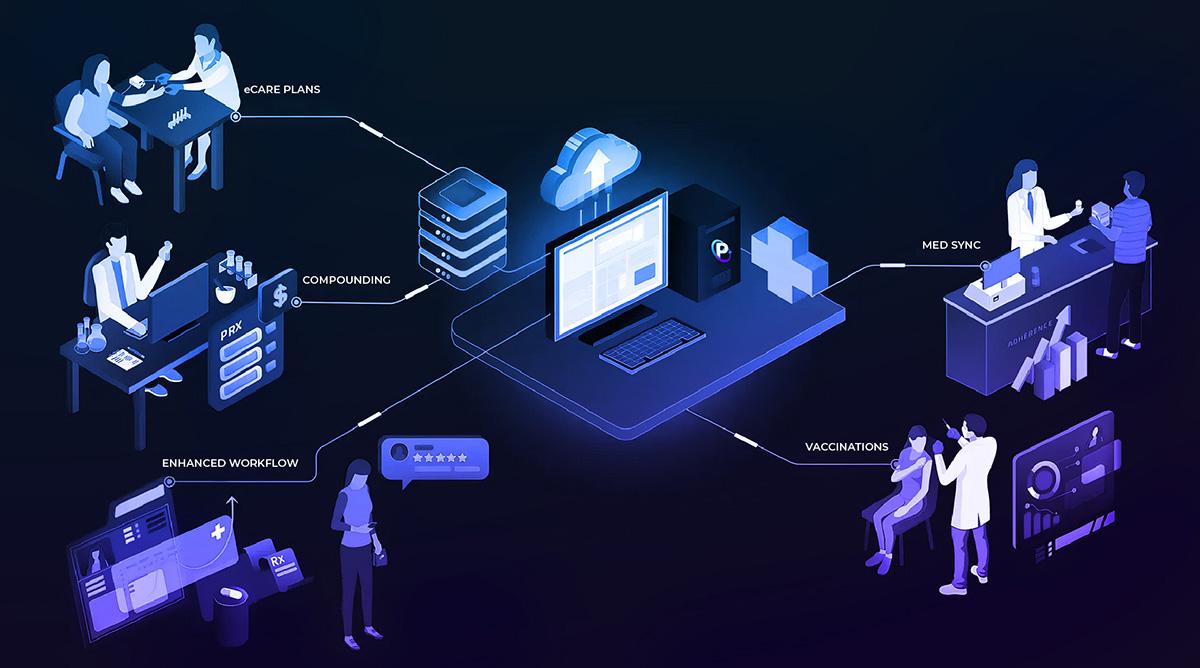
A single patient can show up in a healthcare system under three different names, two birth dates, and four medical record numbers. Multiply that by thousands of patients, several hospitals, and a dozen software systems, and the result is fragmented data, duplicated work, and real risk to patient safety. An enterprise master patient index (EMPI) solves this by giving every patient one reliable identity across the entire organization.
This guide explains what an EMPI is, how it works, why it matters for EMPI in healthcare, and what to look for when building a patient data integration strategy.
An enterprise master patient index is a centralized system that links a patient’s records from many sources into a single, accurate identity. It identifies that “Jon Smith” in the lab system, “Jonathan Smith” in registration, and “J. Smith” in billing are the same person, and connects those records so clinicians see one complete picture.
Think of it as the matchmaker of healthcare data. Every system keeps its own records, and the EMPI works in the background to ensure they all point back to the right individual.
The two terms are often used interchangeably, but there is a meaningful difference in scope.
Master patient index (MPI): Typically manages patient identities within a single facility or system.
Enterprise master patient index (EMPI): Extends that capability across multiple facilities, applications, and organizations, such as health systems, clinics, labs, and payers.
If your organization operates in more than one location or runs several clinical systems, an EMPI is the more appropriate solution.
Electronic health records (EHR) integration is central to how an EMPI works. The EMPI sits alongside or above your EHR, billing, and departmental systems, receiving patient demographic data from each. It compares and links records, then shares the unified identity back to those systems. Clinicians continue to work in their usual tools while the EMPI maintains consistent identities behind the scenes.
Matching patients to their records sounds simple, but it is one of healthcare’s most persistent challenges. Records end up fragmented for many everyday reasons:
Spelling variations and typos at registration
Name changes after marriage or divorce
Nicknames, hyphenated names, and transposed digits in birth dates
Mergers and acquisitions that combine separate systems
Different registration workflows across departments
Missing or outdated address and phone information
When these small inconsistencies pile up, patients end up with multiple records, or worse, with two people’s information mixed into one chart.
Duplicate patient records affect care, finances, and operations alike:
Clinical impact: Clinicians may miss allergies, medications, or prior diagnoses stored in a different record, increasing the risk of errors and delayed treatment.
Financial impact: Duplicate records contribute to repeated tests, denied claims, and billing mistakes.
Operational impact: Staff spend time searching for, reconciling, and correcting records instead of supporting patients.
Strong patient identity management is the foundation for avoiding these problems, and an EMPI is the technology that makes it possible at scale.
An EMPI follows a repeatable process: collect demographic data, compare records, link matches, and keep the results clean over time.
Patient matching algorithms are the engine behind accurate patient record matching. The three most common approaches are:
Deterministic matching: Links records only when selected fields match exactly, such as last name, date of birth, and ID number. It is simple and fast but can miss records with minor errors.
Probabilistic matching: Assigns weighted scores to each field comparison and links records that exceed a confidence threshold. It handles typos and variations much better.
Referential matching: Compares records against a trusted external reference dataset to improve accuracy, particularly for incomplete or inconsistent data.
Many modern EMPI solutions combine these methods and let organizations tune thresholds to balance missed matches against false matches.
Once records are matched, the EMPI assigns a unique patient identifier, an enterprise-wide ID that stays consistent across every connected system. Individual systems keep their local record numbers, but all of them are cross-referenced to the enterprise ID. This lets any authorized system retrieve the right patient information instantly.
Patient data is never static. People move, change names, and re-register. An EMPI continuously monitors incoming data to:
Identify and merge new duplicates
Flag potential matches for human review
Detect and correct overlays, where two patients are wrongly combined
Maintain an audit trail of every change
Data stewards typically review the uncertain cases, combining automation with human judgment.
The benefits of an enterprise master patient index extend across clinical, financial, and administrative areas:
Improved patient safety: Clinicians see complete histories, which reduces the risk of medication errors, missed allergies, and misdiagnosis.
A single, complete view of the patient: Information from every encounter and facility comes together in one place.
Better healthcare data quality: Cleaner, standardized records improve reporting, analytics, and decision-making.
Higher patient data accuracy: Fewer duplicates and overlays mean more trustworthy information.
Fewer duplicate tests and lower costs: Providers can see existing results rather than reordering them.
Smoother billing and claims: Accurate identities reduce rejected claims and administrative rework.
Stronger compliance and data governance: Consistent identity management supports privacy, auditing, and regulatory requirements.
Healthcare interoperability, the ability of different systems to exchange and use data, depends on knowing which records belong to which patient. Without reliable identity matching, shared data can be attached to the wrong person or fail to connect at all.
An EMPI supports interoperability by:
Enabling accurate data exchange between hospitals, labs, pharmacies, payers, and health information exchanges (HIEs)
Supporting value-based care and population health programs that need complete longitudinal records
Providing a trusted identity layer that standards-based exchange builds on
In short, interoperability can only be as reliable as the patient matching behind it.
When evaluating EMPI software solutions, consider these capabilities. An EMPI works best when it connects smoothly with your patient management software, so integration should be high on your checklist.
Matching accuracy: Support for multiple, tunable algorithms and transparent match scoring.
Scalability: The ability to handle growing patient volumes, new facilities, and additional systems.
Integration flexibility: Standards-based connections to EHR, billing, lab, and other applications.
Data stewardship tools: User-friendly workflows for reviewing, merging, and unmerging records.
Audit trails: Complete tracking of changes for accountability.
Security and compliance: Strong access controls and alignment with HIPAA and other regulations.
Even the best technology faces obstacles. Common challenges include:
Poor data quality in legacy systems: Clean up and standardize data before or during migration.
Integration complexity and cost: Prioritize the highest-value systems first and phase the rollout.
Change management: Train registration staff and communicate why accurate data entry matters.
Privacy and security concerns: Apply role-based access and ensure compliance from the start.
Start with a data quality assessment to understand your current duplicate rate and problem areas.
Define governance and ownership so someone is accountable for patient identity data.
Standardize registration workflows to prevent duplicates at the source.
Track duplicate rates as an ongoing KPI to measure improvement over time.
Choose a scalable, vendor-neutral approach that can adapt as your organization grows.
Patient identity management continues to evolve. Key trends include:
AI and machine learning: Smarter matching that learns from past decisions and reduces manual review.
Cloud-based EMPI: Easier deployment, scaling, and updates.
Cross-organization identification: Growing momentum toward consistent patient identification across regions and networks, as interoperability expectations rise.
Organizations that invest in strong identity foundations now will be better prepared for these advances.
An enterprise master patient index is far more than a back-office tool. It is the foundation that keeps patient information accurate, connected, and trustworthy across every system and setting. By eliminating duplicate records, enabling interoperability, and supporting safer, more efficient care, an EMPI helps healthcare organizations deliver better outcomes while controlling costs.
If your organization is struggling with fragmented records or preparing for greater data exchange, now is the time to evaluate how an enterprise master patient index fits your strategy. Request a demo or speak with an expert to see how a modern EMPI can unify your patient data.
An enterprise master patient index (EMPI) is a centralized system that links a patient’s records from multiple facilities and systems under one unique identity, ensuring clinicians see a complete and accurate view.
An MPI generally manages patient identities within a single facility or system, while an EMPI works across multiple facilities, applications, and organizations.
It reduces duplicate and mismatched records, improves patient safety, supports interoperability, and lowers costs from repeated tests and billing errors.
It uses matching algorithms to compare demographic data, links records that belong to the same person, and continuously monitors new data to catch and merge duplicates.
By providing a reliable patient identity across systems, an EMPI ensures that exchanged data is attached to the right person, which is essential for accurate data sharing between providers, labs, payers, and HIEs.