English
 Arabic
 French
 Spanish
 Portuguese
 Deutsch
 Turkish
 Dutch
Dutch
 Italiano
 Russian
 Romaian
 Portuguese (Brazil)
 Greek
Greek

Infinite Craft: The Game That Made Me Forget About Winning
Games |
2026-10-07 07:43:17
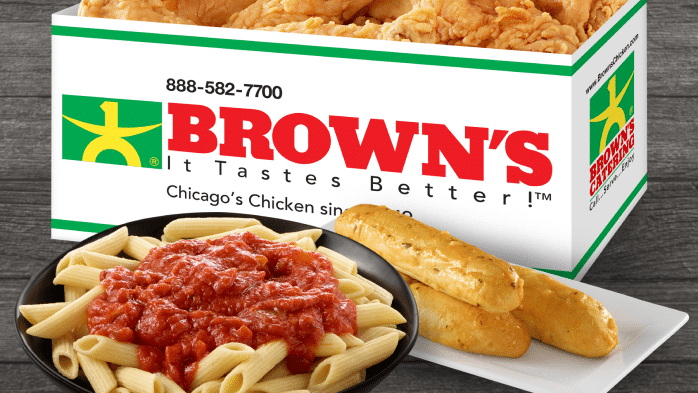
For over 74 years, Brown's Chicken has tempted the taste buds of generations of Chicagoans. From humble beginnings in 1949 when John and Belva Brown opened their first location in a trailer at 80th and Harlem in Bridgeview, the company's pursuit of chicken that truly tastes better continues in a new era. With over 21 stores in the Chicagoland market, Brown's Chicken boasts a style of chicken all their own. The recipe cooked up by John and Belva uses buttermilk batter with cottonseed oil, delivering a delicious golden crunch on the outside with a moist and flavorful inside. That crunch is not marketing language. It is measurable, repeatable, and the reason locals call it the best fried chicken in Chicago.
Our History at Brown's Chicken Illinois is a story about solving one problem. Why does most fried chicken lose its crispness within minutes of leaving the fryer? The Browns studied that question from a trailer window, handing boxes to customers who drove home and returned the next week with the same complaint: the coating had gone soft.
Their answer was two ingredients working together. Buttermilk, because it tenderises the meat and helps the coating cling. Cottonseed oil, because it holds temperature and leaves almost no grease behind. Everything else on the menu came later. Pasta arrived in the 1980s, which is why the full name reads Brown's Chicken & Pasta. The company expanded across the United States in the 1970s, then contracted operations exclusively to the Chicago metropolitan area after 2005. According to the company website, 22 restaurants now serve the region. The chicken recipe never changed. Neither did the mushrooms, which the company has promised to leave alone forever.
Crunch is not a single quality. It is the result of four separate events happening in the correct order, and if any one of them fails, the crust goes soft.
The first event is batter adhesion. Buttermilk's acidity gives the chicken surface a slight tackiness, which allows the seasoned flour to grip in a thick, even layer. Patchy coating fries unevenly, and uneven coating means some bites are burnt while others are doughy.
The second event is instant sealing. When battered chicken enters properly heated cottonseed oil, the moisture at the surface turns to steam and pushes outward. That outward pressure sets the coating into a rigid shell within seconds. A rigid shell is what later breaks instead of bending.
The third event is internal steaming. Once the shell is sealed, the chicken cooks in its own trapped moisture. That is why the interior stays juicy even on breast meat, which would otherwise dry out under sustained heat.
The fourth event is cooling without sweating. This is where most restaurants fail. As fried chicken cools, residual surface oil migrates outward and softens the crust. Cottonseed oil leaves far less surface oil than cheaper frying blends, so there is simply less grease available to migrate. The crust stays dry, and dry crust stays crunchy.
You do not need a laboratory to confirm a properly fried piece of chicken. You need four observations.
Look at the box. There should be no translucent grease stain pooling at the bottom. Look at the crust. It should be matte and slightly ridged, never shiny or wet. Then listen. When your teeth break through, you should hear a distinct crack rather than a soft tear. Finally, watch the coating. It should flake away in small pieces rather than peeling off in a single sheet.
Those four signs hold true whether the chicken was fried ten minutes ago or thirty. That reliability is the entire point.
The Chicken Pieces are the purest test of the technique. Breasts, thighs, legs, and wings, all hand-breaded and fried identically. The breast is the hardest cut because white meat has the least fat, yet the buttermilk brine keeps it plump and juicy. The thigh brings deeper savoury richness. The leg is built for eating with your hands, no cutlery required. And the Wings are whole and meaty, never the thin, shrivelled flats that pass for wings at chain restaurants.
Then there is the Zinger. Zinger wings take the same buttermilk batter and build the spice directly into the coating rather than pouring sauce over the finished product. This matters more than it sounds. Sauce introduces moisture, and moisture is the single fastest way to destroy crunch. Because the heat lives inside the crust, a Zinger wing stays brittle from first bite to last, and your fingers stay clean. No sticky residue, no ruined napkins.
The Chicken & Jumbo Tenders are cut from whole breast meat and hand-dipped, which is why no two are identical in shape. Those uneven ridges create extra crunchy edges, the best part of any tender. They are also the tidiest item on the menu, which is why a mobile car detailing technician can eat one between appointments without leaving grease on a customer's steering wheel or door handle.
The Sandwich keeps things deliberately plain: a tender or a whole breast on a soft bun with pickles, and no sauce unless you request it. That choice protects the bread from going soggy. The Bowls move in the opposite direction, layering mashed potatoes, sweet corn, shredded cheese, and crispy chicken under warm gravy. The Family Bowls feed roughly six people for $27.99 to $32.99.
Brown's Catering is the area's largest, serving businesses and home events alike. From 20 to 2,000, Brown's Catering turns every occasion into a special event. The Express Party Pack feeds 8 to 10 with 24 pieces of chicken, two family pasta bowls, two family sides, and 10 biscuits or breadsticks, priced between $149.99 and $159.59. The Chicken Party Pack feeds 10 to 15 with 30 pieces of chicken or tenders, two sides, and 18 slider buns with margarine, plus tableware for 15 and serving utensils, priced between $144.99 and $156.59. For offices, the Have The Boss option says it plainly: order tenders for your office.
Professional car detailing shops and mobile car detailing crews keep returning to these packs because the crunch survives transport. Cottonseed oil leaves minimal surface grease, so hands stay clean and vehicle interiors stay clean. A crew of ten eats properly instead of scattering across three separate drive-thrus.
"It Tastes Better." Four words that have played on Chicago radios for decades. The line has lasted because it is not advertising puffery. It is a description, and the crunch is the proof.
The secret behind the crunch is not a hidden spice or a proprietary additive. It is buttermilk, cottonseed oil, and 74 years of refusing to change either one. John and Belva Brown built that formula in a trailer in Bridgeview, and it still holds today across over 21 stores in the Chicagoland market. Whether you order Chicken Pieces, Zinger wings, tenders, a sandwich, a bowl, or a full Express Catering spread, you will hear the crack before you taste the juice. That is the best fried chicken in Chicago.
Q: What makes the crust at Brown's Chicken so crunchy?
Buttermilk helps the seasoned flour cling in a thick, even layer, while cottonseed oil holds frying temperature so the batter seals instantly instead of absorbing grease.
Q: Why does the chicken stay crunchy during delivery?
Cottonseed oil leaves very little surface oil, so there is less grease available to migrate outward and soften the crust as it cools. The crunch typically holds for twenty to thirty minutes.
Q: Are the Zinger wings coated in sauce?
No. The spice is blended into the buttermilk batter before frying. Nothing is poured on afterwards, so the crust stays crunchy and your hands stay clean.
Q: Can I order just wings?
Yes. Wings are available as a standalone item, and you can request a wing-heavy mix when ordering larger chicken portions or party packs.
Q: How many people does the Chicken Party Pack serve?
The Chicken Party Pack feeds 10 to 15 people with 30 pieces of chicken or tenders, two sides, and 18 slider buns, plus tableware and serving utensils, priced between $144.99 and $156.59.
Q: Has the recipe changed since 1949?
No. The company has added and removed other menu items over the decades, but the chicken recipe has never changed, and the mushrooms remain untouched by design.