 English
 Arabic
 French
 Spanish
 Portuguese
 Deutsch
 Turkish
 Dutch
Dutch
 Italiano
 Russian
 Romaian
 Portuguese (Brazil)
 Greek
Greek

Pesticide Inert Ingredients Market Growth Outlook Points to 8.89% CAGR
Health |
2026-10-06 05:50:10
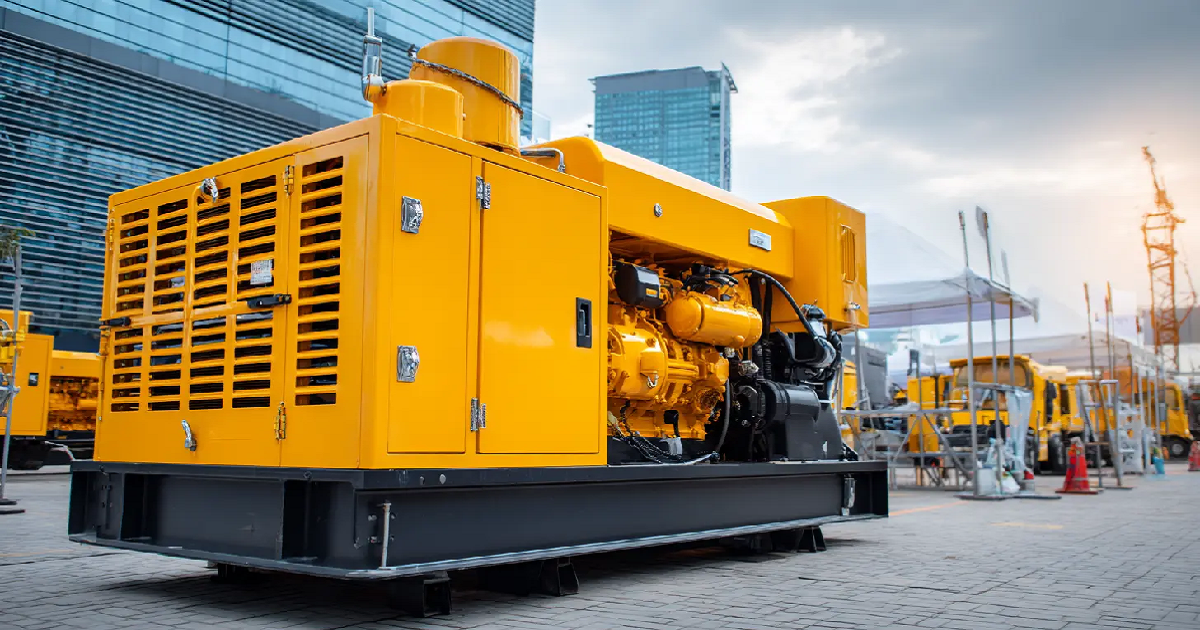
Picture a June afternoon at 45°C. The grid trips, your machines stop mid-shift, and the cold room starts warming up. Every minute of silence costs money. For thousands of Pakistani factories, hospitals, hotels and offices, that scenario is routine, which is why investing in diesel generators in Pakistan is no longer a luxury. It is a survival decision.
But a wrong purchase can hurt almost as much as a blackout. Oversized units burn cash, undersized ones collapse under load, and cheap imports leave you hunting for parts. Below are the seven most common mistakes we see at Alpine Industrial Con, plus practical fixes you can apply before you sign a Diesel Generators in Pakistan order.
A genset is a long-term asset. A well-chosen unit can run reliably for 15 to 20 years, while a poorly matched one can drain your budget through fuel, repairs and downtime within months. Think of it like hiring a key employee: you would never skip the interview. Treat your backup power system with the same care.
The most expensive error is choosing capacity by instinct. "We need 100 kVA because our neighbour has 100 kVA" is not engineering.
List every machine, AC, pump, light and server you want to power.
Note starting current. Motors, compressors and tube wells can draw three to six times their running load at startup.
Add a 20 to 25 percent safety margin for future expansion.
Check whether your load is single-phase or three-phase.
Example: A Faisalabad stitching unit sized its set on running kW alone. Every morning, when 40 motors started together, the voltage dipped and the breaker tripped. A proper load study would have prevented it.
The purchase price is only the beginning. With diesel prices in Pakistan shifting often, fuel is usually the largest lifetime cost of a power generator.
Ask for the consumption rate in litres per hour at 50, 75 and 100 percent load.
Avoid running a large unit at very low load. It wastes fuel and causes "wet stacking," where unburned fuel clogs the engine.
Compare cost per kWh, not just the sticker price.
A slightly pricier, efficient engine can repay the difference within the first two years of heavy use.
A low price often hides a story: reconditioned engines sold as new, mismatched engine and alternator pairings, or missing documentation. Always verify:
Engine serial numbers and the original manufacturer's data plate
Alternator make and insulation class
Country of assembly and test certificate
Complete warranty terms in writing
Branded engine and alternator combinations from established manufacturers cost more upfront, but they retain resale value and are far easier to repair.
The engine is the heart and the alternator is the voice. A strong engine paired with a weak alternator will deliver unstable voltage and damage sensitive equipment such as CNC machines, medical devices and servers.
Reputable engine families with proven spare-part availability in Pakistan
Brushless alternators with automatic voltage regulation (AVR)
Water-cooled engines for continuous duty, especially in industrial zones
Prime, standby or continuous rating clearly stated on the nameplate
Even the best set fails when it is squeezed into a hot, dusty corner. Before delivery, plan for:
Ventilation: Engines need generous airflow, and our summers are unforgiving.
Exhaust routing: Direct fumes away from windows, staff areas and neighbours.
Foundation: A level concrete base with anti-vibration mounts.
Noise control: Choose a soundproof canopy or acoustic enclosure for residential areas, hospitals and plazas.
Fuel storage: Keep a safe, accessible day tank, and follow local safety rules.
Changeover: Install an Automatic Transfer Switch (ATS) so power switches in seconds without manual effort.
A generator is only as dependable as the team behind it. When a fuel injector fails at 2 a.m., you need a technician and genuine parts, not an email to an overseas supplier.
Ask every vendor these questions:
Do you stock filters, injectors, belts and AVRs locally?
How fast can an engineer reach my site in Karachi, Lahore, Islamabad or Peshawar?
Do you offer annual maintenance contracts (AMC) and emergency helplines?
Is the warranty honoured nationwide?
At Alpine Industrial Con, we believe that service speed matters as much as engine power, and that is how we approach every installation.
A set rated at 25°C does not perform the same at 48°C. Heat, dust and altitude reduce output, a factor called derating.
Heat: In Sindh and South Punjab, request a unit with a generous cooling system or a higher-rated radiator.
Dust: Heavy-duty air filters are essential near cement, textile and agricultural sites.
Altitude: Northern regions lose power as air thins, so size up accordingly.
Voltage fluctuation: Make sure the control panel includes protection against over-voltage, low oil pressure and overheating.
Skipping scheduled maintenance is the quiet cousin of this mistake. Change oil and filters on time, test-run the set weekly, and keep a service log.
Run a professional load survey before requesting any quote.
Compare total cost of ownership over five years, not just the invoice.
Insist on genuine documentation, test reports and a written warranty.
Choose a supplier with local stock and a trained service team.
Budget for the ATS, cabling, canopy and installation from day one.
Schedule preventive maintenance before the peak summer season.
Choosing among diesel generators in Pakistan is less about finding the cheapest machine and more about finding the right fit: accurate sizing, efficient fuel use, quality components, a well-planned site and dependable service. Avoid these seven mistakes and your backup power system will protect your production, your customers and your reputation for years.
Ready to get it right the first time? Contact Alpine Industrial Con for a free load assessment and a transparent, no-pressure recommendation tailored to your business.
Add up the running load of all equipment, factor in the starting current of motors, and add a 20 to 25 percent margin. A site survey by an engineer gives the most reliable result.
Oil and filter changes are typically needed every 250 hours of operation or every six months, whichever comes first. Follow the manufacturer's schedule and run the set weekly even when it is on standby.
Yes, especially in residential areas, hospitals, offices and commercial plazas. A canopy also protects the unit from rain and dust, extending its working life.
New units offer full warranties and predictable performance. Reconditioned sets can be risky unless inspected by an independent expert and backed by written guarantees.
An ATS detects a grid failure and starts the generator automatically, then switches back when power returns. It is highly recommended for businesses that cannot tolerate manual delays.
