English
 Arabic
 French
 Spanish
 Portuguese
 Deutsch
 Turkish
 Dutch
Dutch
 Italiano
 Russian
 Romaian
 Portuguese (Brazil)
 Greek
Greek

Why Enterprise Master Patient Index Matters in Modern Healthcare
Technology & Software |
2026-10-12 11:45:50
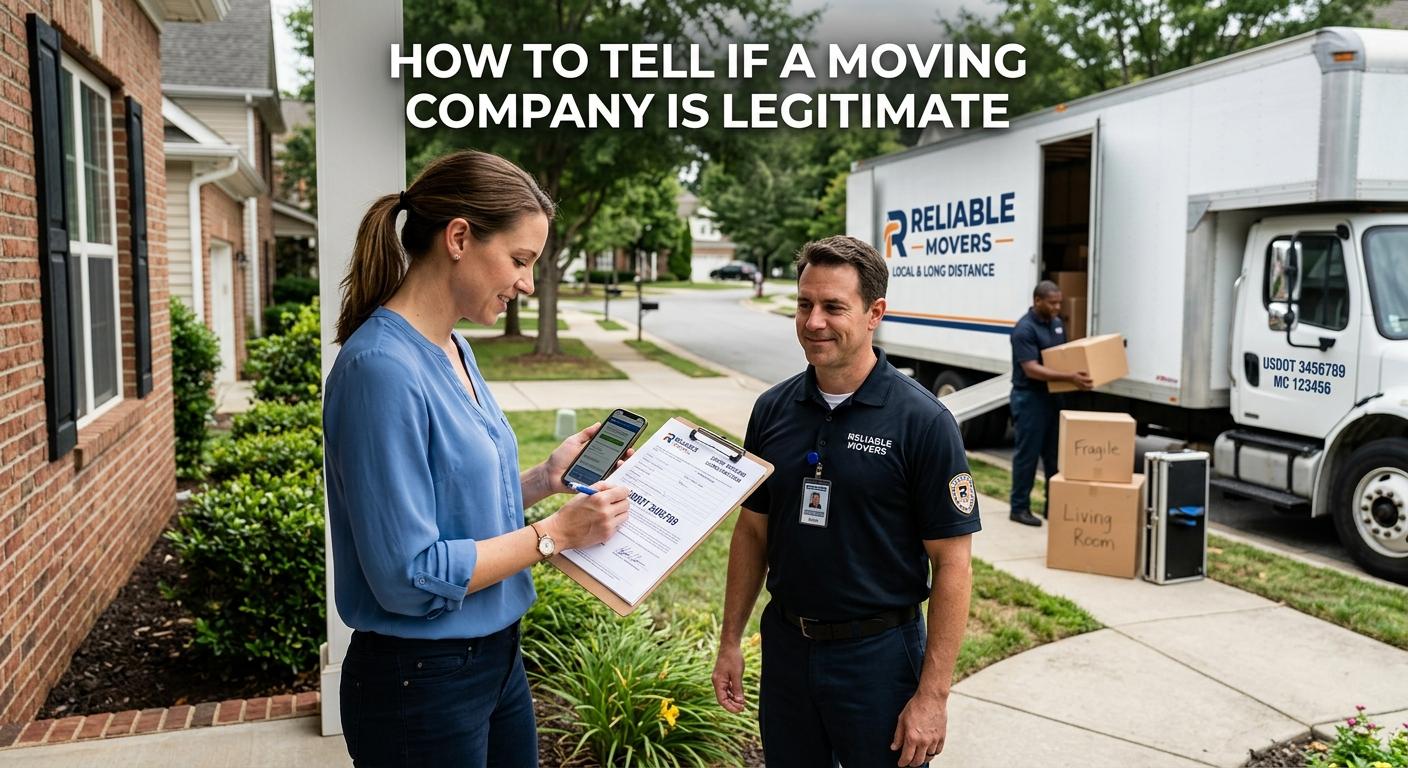
Hiring a moving company should make relocation easier, but choosing the wrong one can turn an ordinary move into an expensive problem. Some movers operate professionally, while others use misleading estimates, questionable business practices, or false credentials to attract customers. Knowing how to tell if a moving company is legitimate helps people protect their belongings, avoid unnecessary expenses, and make better hiring decisions.
A moving company handles more than furniture and boxes. It takes responsibility for personal belongings, valuable possessions, and items that may be difficult or impossible to replace.
Unfortunately, not every business advertising moving services operates according to industry regulations.
The Federal Motor Carrier Safety Administration (FMCSA) receives thousands of consumer complaints involving household goods movers and brokers. Common concerns include unexpected charges, delivery delays, damaged belongings, and disputes over moving estimates.
Some fraudulent operators attract customers with unusually low quotes before demanding additional payments after loading their belongings.
Consumer awareness resources such as Moving Scam Stories help people understand common moving scams, recognize suspicious business practices, and learn from reported moving experiences.
Taking time to investigate a company before signing an agreement can prevent many of these problems.
One of the most reliable ways to determine whether a moving company is legitimate is to verify its operating authority.
Moving companies must follow licensing requirements based on the type of relocation services they provide.
Companies transporting household goods across state lines generally must register with the FMCSA and obtain a USDOT number.
This number allows consumers to review important information about a company's registration and operations.
The FMCSA provides a free database through its Protect Your Move program.
Consumers can use this resource to examine:
Company registration information
USDOT and operating authority details
Available safety and inspection records
Complaint information
Whether the company is authorized to transport household goods
A company displaying a USDOT number on its website should have registration information that matches its actual business identity.
Local moving companies may operate under different licensing requirements.
For example, some states require intrastate movers to register with a state transportation agency or obtain specific operating permits.
Consumers should check the relevant state authority rather than assuming that every moving company needs the same federal credentials.
A legitimate company should be able to explain which regulations apply to its services.
A professional-looking website does not automatically indicate a trustworthy moving business.
Some questionable operators create attractive websites, advertise heavily, and use convincing testimonials despite having little verifiable operating history.
Researching the company's background helps reveal whether its public claims match its actual business activities.
A legitimate moving company should provide clear information about its identity and operations.
Important details include:
Registered business name
Physical business address
Working customer service telephone number
Company website and contact information
Licensing and registration details
Services offered and areas covered
These details should remain reasonably consistent across the company's website, regulatory records, and business listings.
For example, a company advertising 15 years of experience but showing a recently established business history may deserve additional investigation.
That difference does not automatically indicate fraud, since companies sometimes change ownership or legal structure. However, consumers should request clarification.
A business address can reveal useful information about a moving company's operations.
Consumers can search the address online and examine whether it corresponds to an identifiable business location.
An address associated with unrelated companies, an unexplained residential location, or a virtual office may warrant further questions.
Some legitimate moving businesses operate from small offices or residential addresses, so the address alone should not determine whether a company is trustworthy.
The important consideration is whether the business can provide a reasonable explanation of its operations.
Online reviews can help consumers understand how a moving company treats its customers.
However, relying exclusively on a five-star rating can create a misleading impression.
A business with hundreds of positive reviews may still have recurring complaints involving estimates, damaged belongings, or customer service.
Instead of focusing only on average ratings, consumers should read reviews across several platforms.
Useful sources include Google Business Profiles, the Better Business Bureau (BBB), and independent consumer review websites.
Particular attention should be given to recurring issues such as:
Unexpected increases in moving costs
Delayed pickup or delivery
Damaged or missing belongings
Difficulty contacting company representatives
Disputes over deposits and refunds
One negative review does not necessarily make a company unreliable.
However, repeated complaints describing similar experiences may indicate a pattern worth investigating.
Not every online review accurately represents a customer's experience.
Warning signs may include dozens of reviews appearing within a short period, repetitive language, or generic praise without details about the actual moving service.
Consumers should also examine how companies respond to criticism.
Professional responses that address customer concerns can provide useful insight into a company's approach to resolving problems.
Insurance and liability protection are essential considerations when hiring professional movers.
Even experienced moving crews can encounter accidents during packing, loading, transportation, or unloading.
A legitimate moving company should explain what protection is available and how customers can submit claims.
For interstate household goods moves, federal regulations require movers to offer two primary liability options.
Full Value Protection: Under this option, the mover is generally responsible for repairing, replacing, or compensating for lost or damaged items according to the applicable rules and agreement.
Released Value Protection: This option provides limited liability, generally calculated at 60 cents per pound per article.
For example, if a 50-pound television is damaged, Released Value Protection may provide only $30 in compensation.
This illustrates why customers should understand their selected protection before moving day.
Consumers should ask the moving company to explain its liability coverage and provide relevant insurance information.
Important questions include whether the company carries required insurance, how damage claims are handled, and whether additional protection is available.
Moving companies should not avoid reasonable questions about their coverage.
Clear documentation helps customers understand the financial risks involved in transporting valuable belongings.
Moving estimates are among the most common sources of disagreements between customers and moving companies.
A suspiciously inexpensive quote can appear attractive, particularly when several companies offer significantly higher prices.
However, an unusually low estimate may exclude services that customers eventually need.
Consumers researching how to verify a moving company should pay close attention to licensing details, written estimates, and the company's explanation of potential additional charges.
Interstate movers commonly provide binding and non-binding estimates.
A binding estimate generally establishes the price for the services and shipment described in the agreement, subject to applicable rules and changes.
A non-binding estimate provides an approximation based on the expected shipment and services. The final cost may differ according to the actual shipment and applicable charges.
Customers should ask which estimate applies before agreeing to a move.
A professional estimate should clearly describe the services being provided.
It may include:
Estimated shipment weight or inventory
Pickup and delivery locations
Packing and unpacking services
Transportation charges
Additional labor requirements
Potential access-related fees
Payment terms and conditions
For interstate moves, estimates should be based on an appropriate physical or permitted virtual survey of the shipment, unless a valid regulatory exception applies.
Consumers should be cautious when a company provides a firm-sounding quote without gathering enough information about the belongings being moved.
Some warning signs become apparent before a customer signs a contract.
Recognizing these behaviors can help consumers avoid businesses that rely on misleading sales practices.
A moving company requesting a substantial deposit before providing clear documentation deserves additional scrutiny.
Although deposits are not automatically evidence of fraud, consumers should understand why the payment is required and whether it is refundable.
Requests for payment through difficult-to-recover methods can increase financial risk.
Verbal promises offer limited protection when disagreements arise.
A legitimate moving company should provide appropriate written documentation describing the agreed services, charges, and responsibilities.
Customers should avoid signing blank forms or documents containing incomplete information.
Another warning sign occurs when a company answers telephone calls using generic phrases instead of identifying its registered business name.
Other concerning behaviors include refusing to disclose registration information, repeatedly changing company names without explanation, or providing inconsistent contact details.
These behaviors do not always establish fraudulent intent, but they justify further investigation.
Direct communication can reveal important information about a company's professionalism.
Consumers should prepare questions before accepting a quote or making a payment.
A few practical questions can clarify how a moving company operates:
Is the company licensed or registered for the type of move requested?
Will the company transport the belongings itself or arrange another carrier?
What services are included in the written estimate?
Under what circumstances can the final price increase?
What liability protection options are available?
How are damaged or missing items reported?
What happens if pickup or delivery is delayed?
What are the cancellation and refund policies?
The answers should be clear and consistent with the written agreement.
Consumers should also determine whether they are dealing with a moving carrier or a moving broker.
A broker arranges transportation through another company rather than necessarily performing the move itself.
Both types of businesses can operate legitimately, but their responsibilities differ.
Understanding that distinction helps customers know which company will handle their belongings.
A moving contract establishes important expectations between the customer and the service provider.
Customers should review all documents carefully before signing.
For interstate moves, relevant documents may include the written estimate, order for service, bill of lading, and inventory records.
The FMCSA also requires interstate household goods movers and brokers to provide certain consumer information, including the Your Rights and Responsibilities When You Move booklet.
Important details to review include:
Agreed pickup and delivery arrangements
Shipment inventory and service descriptions
Pricing terms and additional charges
Liability protection selection
Payment requirements
Claims and dispute procedures
Customers should request clarification whenever contract language conflicts with earlier discussions.
Keeping copies of estimates, receipts, inventory documents, and written communications can also help resolve disagreements later.
Independent verification is more reliable than accepting information supplied exclusively by a moving company.
Several established resources can help consumers investigate a mover's background.
The FMCSA maintains registration and safety information for federally regulated motor carriers.
Its resources allow consumers to investigate interstate movers and understand federal household goods transportation requirements.
The Better Business Bureau provides business profiles, complaint histories, and information about how companies respond to consumer concerns.
BBB accreditation is voluntary, and the absence of accreditation does not automatically indicate an illegitimate business.
State transportation departments, public utility commissions, and consumer protection agencies may maintain licensing information or complaint procedures for local movers.
Consumers should consult the appropriate authority for the state where the moving service will operate.
Using multiple independent sources provides a more complete picture than relying on a single rating or advertisement.
Even after selecting a legitimate moving company, customers should take practical steps to protect their belongings and finances.
Preparing properly reduces confusion and creates useful documentation if a problem occurs.
Recommended precautions include:
Photographing valuable furniture and fragile items before packing
Creating an inventory of important belongings
Keeping copies of all signed moving documents
Confirming pickup arrangements directly with the company
Reviewing payment requirements before loading begins
Keeping valuables, medications, and essential documents separate
Checking delivered items against the inventory when practical
Customers should also document any visible damage and follow the company's applicable claims procedures.
These precautions cannot eliminate every moving-related risk, but they can make disagreements easier to investigate and resolve.
Knowing how to tell if a moving company is legitimate requires more than reading reviews or comparing prices.
Licensing records, business history, insurance information, written estimates, and contract terms all contribute to a more reliable evaluation.
A trustworthy mover should provide clear answers, explain its responsibilities, and give customers enough information to make an informed decision.
By checking official records, investigating warning signs, and reviewing agreements carefully, consumers can reduce the risk of moving scams and choose professional movers with greater confidence.