English
 Arabic
 French
 Spanish
 Portuguese
 Deutsch
 Turkish
 Dutch
 Italiano
 Russian
 Romaian
 Portuguese (Brazil)
 Greek

Turn One Guest Post Into Ten Traffic Assets: The Repurposing System
Online Education |
2026-10-01 06:49:08
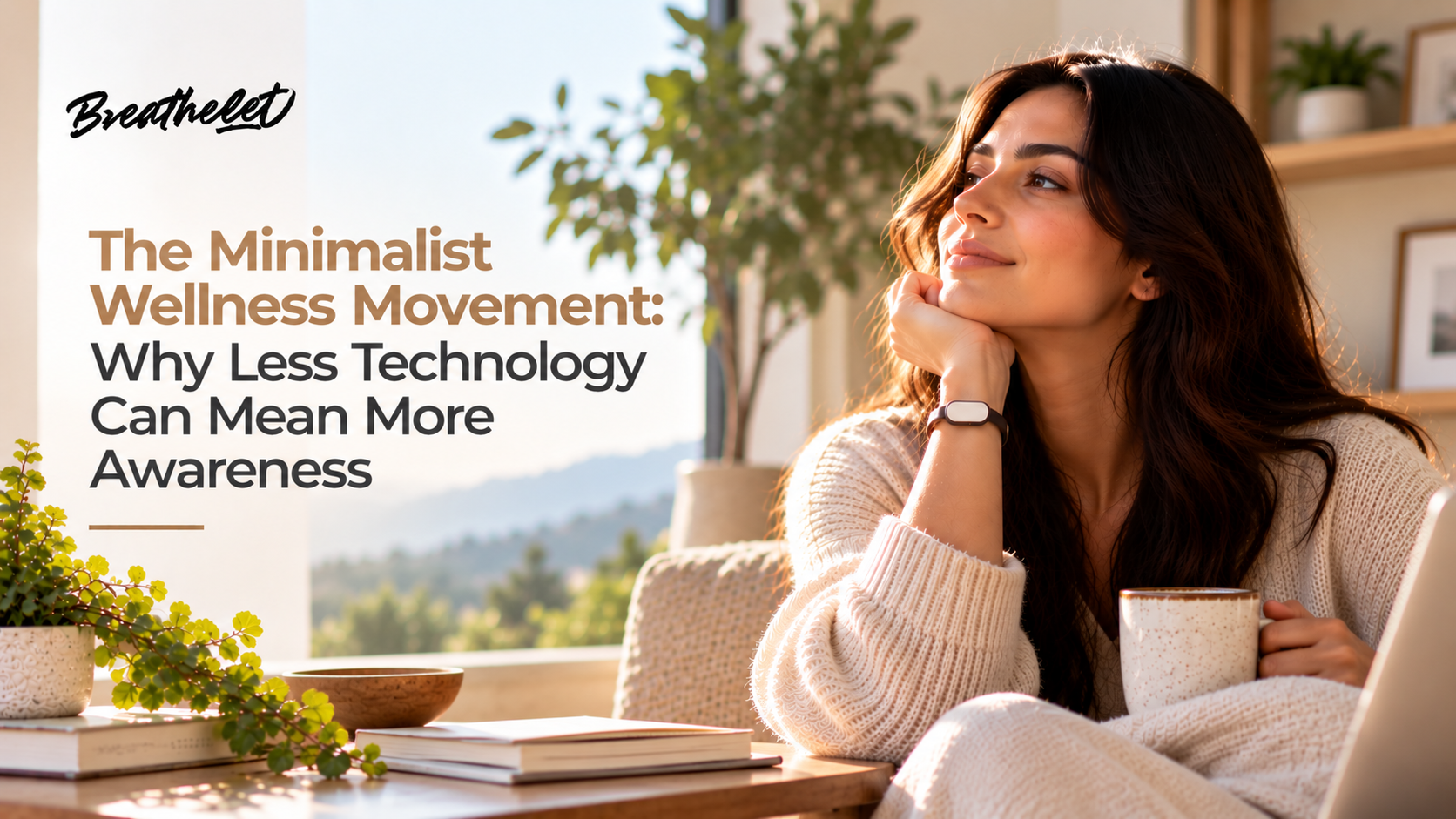
Technology has made it possible to track almost everything.
Steps. Sleep. Heart rate. Calories. Focus time. Screen time. Stress levels. Breathing sessions. Productivity.
There is an app, notification, dashboard, or wearable for nearly every part of modern life.
Yet an interesting shift is happening in wellness. Instead of asking how technology can measure more, some people are beginning to ask a different question:
What if wellness sometimes works better when technology asks less of us?
This idea sits at the heart of the minimalist wellness movement. It is not necessarily about rejecting technology or abandoning useful digital tools. Instead, it is about becoming more selective about which technologies deserve our attention and which ones simply create more noise.
For people already surrounded by screens, alerts, metrics, and constant information, doing less can sometimes create more room to notice what is happening in the present moment.
Minimalist wellness applies the broader principles of minimalism to everyday wellbeing.
Rather than collecting more tools, routines, apps, subscriptions, and complicated systems, the goal is to identify a smaller number of habits that genuinely support daily life.
That might mean:
Taking a short walk without checking a phone
Spending a few minutes breathing without opening an app
Creating a simple morning routine
Turning off unnecessary notifications
Using physical or wearable cues instead of digital alerts
Taking brief pauses between demanding tasks
The emphasis is less on optimizing every second and more on becoming aware of how those seconds are actually being experienced.
Minimalist wellness therefore isn't anti-technology.
It is intentional technology use.
The question changes from:
"What else can technology do for me?"
to:
"Does this technology actually help me live the way I want to?"
That distinction matters.
Technology can be incredibly useful for wellness.
Meditation apps can introduce people to mindfulness practices. Fitness trackers can provide useful activity information. Sleep devices can help people understand routines. Digital reminders can encourage healthy habits.
But these tools also compete for something valuable:
attention.
Imagine trying to create a calmer morning while moving through a familiar sequence:
Check the time.
See a notification.
Open the notification.
Notice another message.
Check email.
Open social media.
Remember that you originally picked up the phone to start a breathing exercise.
The technology intended to support the habit can become the doorway to dozens of unrelated distractions.
This is one reason minimalist wellness is gaining relevance.
Sometimes reducing the number of digital interactions surrounding a healthy habit can make the habit itself easier to notice.
Modern wellness technology often emphasizes measurement.
How many steps did you take?
How many hours did you sleep?
How long did you meditate?
How many calories did you consume?
How productive were you?
Data can be useful. It can reveal patterns that are difficult to recognize otherwise.
But not every meaningful experience needs to become a metric.
There is another form of awareness that comes from simply paying attention.
Instead of asking:
"Did I complete my mindfulness goal today?"
you might ask:
"How am I feeling right now?"
Instead of checking whether a device says you were stressed, you might notice that your shoulders are tense or your breathing has become shallow.
Instead of measuring a five-minute break, you might simply take one.
Minimalist wellness makes space for this kind of internal observation.
The goal isn't perfect measurement.
It is awareness.
Modern technology is remarkably good at attracting attention.
Phones vibrate.
Apps display badges.
Emails arrive.
Messages appear.
Feeds refresh endlessly.
Even when we aren't actively using technology, we can remain mentally prepared for the next interruption.
That creates an interesting contradiction for digital wellness tools.
A person may open a device because they want to become more present, but the same device contains dozens of things designed to pull their attention elsewhere.
Minimalist wellness attempts to remove some of that competition.
A physical reminder, quiet ritual, familiar object, or screen-free wearable can provide a cue without requiring the user to enter an environment filled with additional information.
The difference is subtle but important.
A reminder does not always need to become an interaction.
Sometimes it simply needs to remind you.
Humans were responding to environmental cues long before smartphones existed.
A notebook on a desk can remind someone to write.
Running shoes beside the door can encourage a morning walk.
A water bottle can remind someone to drink.
A bracelet on the wrist can become associated with a particular intention.
These objects work differently from digital notifications because they can exist quietly in the environment.
They do not necessarily demand immediate action.
They simply provide a cue.
For mindfulness, this can be particularly useful.
A small physical reminder might encourage someone to pause and ask:
Where is my attention right now?
That moment does not need a dashboard.
It does not need a streak.
It does not need another notification.
It simply creates an opportunity to notice.
Minimalist wellness does not require returning to a completely analog lifestyle.
That would be unrealistic for most people whose work, communication, entertainment, shopping, banking, and daily logistics already depend heavily on digital systems.
Instead, a more practical approach is to reconsider how technology communicates with us.
Technology can be quiet.
It can perform a specific function without demanding continuous engagement.
For example, a wearable reminder does not necessarily need a large screen, constant data tracking, or an endless stream of notifications.
A simple tactile cue can sometimes be enough.
This philosophy is reflected in products such as Breathelet, which uses gentle vibration reminders at intervals throughout the day as prompts to pause and reconnect with the present moment.
Rather than introducing another screen to monitor, the idea is deliberately simple:
Feel the reminder. Pause. Notice the moment. Continue your day.
The technology remains in the background instead of becoming the center of the experience.
There is an important difference between an alert and a cue.
An alert often demands attention.
A cue invites awareness.
Consider a typical phone notification.
The screen lights up. A message appears. Perhaps there is a sound or vibration. The natural response is often to look at the phone and discover what happened.
One interaction can quickly become several.
A quiet physical cue can create a different pattern.
Instead of asking:
"What happened on my phone?"
it can encourage:
"What is happening with me?"
That small shift represents much of what minimalist wellness is trying to achieve.
Wellness culture sometimes makes healthy routines feel surprisingly complicated.
Morning routines become twelve-step programs.
Meditation requires subscriptions.
Exercise needs tracking.
Sleep needs scores.
Meals need logging.
Even relaxation can become something people feel pressured to optimize.
Minimalist wellness offers another possibility.
A meaningful pause does not have to last thirty minutes.
It might last thirty seconds.
You could stop typing.
Relax your shoulders.
Notice your breathing.
Look away from the screen.
Feel your feet on the floor.
Take one slower breath.
Then continue.
Nothing has to be recorded.
The moment itself is the practice.
Complicated routines create friction.
If a wellness habit requires finding your phone, opening an app, choosing a session, putting on headphones, finding a quiet location, and completing a specific amount of time, there are many opportunities to decide:
I'll do it later.
Simpler habits have fewer barriers.
A pause can happen almost anywhere.
At your desk.
Before a meeting.
While waiting for coffee.
After finishing a difficult task.
During a commute.
Before entering your home after work.
The easier a behavior is to begin, the easier it can be to integrate naturally into everyday life.
Minimalist wellness therefore focuses less on dramatic lifestyle transformations and more on small actions that can realistically survive busy schedules.
This may be one of the most useful principles of minimalist wellness.
Technology should support an experience rather than replace it.
A meditation timer should support meditation.
A fitness tracker should support movement.
A reminder should support remembering.
Problems can arise when interacting with the technology becomes more important than the behavior it was supposed to encourage.
You start caring more about maintaining the streak than experiencing the practice.
You become more interested in the sleep score than how rested you actually feel.
You check whether your device thinks you were active instead of noticing how your body feels.
Minimalist wellness tries to restore the original relationship.
The tool stays secondary.
The human experience remains primary.
You do not need to throw away your smartphone or delete every wellness app before sunset. Human beings do enjoy turning simple ideas into dramatic lifestyle challenges.
A more useful approach is gradual.
Look at which notifications genuinely require immediate attention.
Turn off the ones that do not.
Every unnecessary alert removed creates slightly more control over where your attention goes.
Choose ordinary moments when your phone does not need to participate.
Breakfast.
A short walk.
The first few minutes after waking.
A coffee break.
The final moments before sleep.
Start small enough that the habit feels realistic.
Not every reminder needs to come from a screen.
Objects in your environment, written notes, routines, or wearable cues can provide reminders without encouraging additional screen use.
Tracking can be useful when the information helps you make a decision.
Otherwise, consider whether the measurement is actually adding value.
Sometimes knowing that you took the walk is enough.
Instead of creating an entirely new mindfulness schedule, attach awareness to something you already do.
Pause before opening your laptop.
Take one conscious breath after finishing a call.
Notice your surroundings while waiting for an elevator.
Relax your shoulders when you feel a wearable cue.
Small practices can fit into real life much more easily than elaborate routines.
The strongest version of minimalist wellness is not technological rejection.
It is technological selectivity.
Some technology deserves a place in our routines because it genuinely makes life easier, safer, healthier, or more connected.
Other technology simply occupies attention.
The challenge is learning to recognize the difference.
A useful wellness tool should ideally reduce friction rather than create more of it.
It should support the behavior without demanding constant management.
And when possible, it should eventually help us pay less attention to the tool and more attention to ourselves and the world around us.
There is something almost ironic about modern wellness.
We have more tools than ever for measuring ourselves, yet many people are searching for simpler ways to feel present in their own lives.
Minimalist wellness responds to that tension.
It suggests that wellbeing does not always require another platform, metric, notification, or screen.
Sometimes awareness begins with something much smaller:
A breath.
A vibration.
A walk.
A moment without reaching for the phone.
A reminder to notice where you already are.
Technology can help create that moment, but it does not have to occupy it.
And perhaps that is the most useful principle behind minimalist wellness:
Use technology when it helps you return to life, not when it gives you another reason to look away from it.