English
 Arabic
 French
 Spanish
 Portuguese
 Deutsch
 Turkish
 Dutch
 Italiano
 Russian
 Romaian
 Portuguese (Brazil)
 Greek

Reliable Dishwasher Technicians in Dubai for All Major Brands
Home Services & Local Business |
2026-10-26 12:02:13
Every business idea feels brilliant at the start. You picture the product, the first customer, perhaps even opening day. Then comes the question most people dodge: what if nobody actually wants to buy it?
It stings to ask. But finding the weak spot now costs a few conversations. Finding it after you’ve signed a lease costs savings.
Picture someone launching handmade skincare. Friends adore the samples and social media is full of warm comments. Then the products go on sale and orders barely trickle in.
The product wasn’t the problem. Liking something and paying for it are different acts, and testing is how you tell them apart.
Business idea validation means gathering evidence that a product or service can win customers and make money. Not hope. Evidence.
Take a coffee shop near a railway station. Thousands of commuters pass daily, so it looks like a gift. But footfall isn’t demand. Do they have time to stop? Are three cheap kiosks already there? Will anyone pay extra for better beans?
Three things must line up:
Miss one and the idea wobbles. A great product with no demand struggles. So does a popular one with costs that are too high.
A premium lunch-delivery service sounds lovely to office colleagues. At £12 a meal, most return to the supermarket meal deal.
People describe what they imagine they’d do. They rarely describe what they’d do with a card in their hand.
Two more traps catch people out. The first is asking the wrong crowd: university students can’t tell you how retired professionals spend money. The second is lazy competitor analysis. No rivals might mean a gap, or it might mean nobody cares. A crowded market might be full, or full of people whose needs are going unmet.
This is also where assessments lose marks. Listing competitors or survey results is description, not analysis.
The question that matters isn’t “what did I find?” It’s “so what?”
Primary research is information you gather yourself: interviews, questionnaires, trials. Secondary research is existing data, such as government statistics and industry reports. National figures might show growth, but they won’t prove your town will buy. Fifteen friends with a questionnaire isn’t a market either.
The Business Model Canvas (Osterwalder and Pigneur) maps how customers, value, revenue and costs connect. Follow the consequences. Free delivery may attract buyers, but if they buy one item at a time, every order loses money.
The Lean Startup approach (Eric Ries) favours building small, measuring and learning. Its core tool is the Minimum Viable Product. Someone planning a tutor-booking platform could take bookings through a basic page and handle them by hand. If nobody books even then, an expensive app won’t fix it.
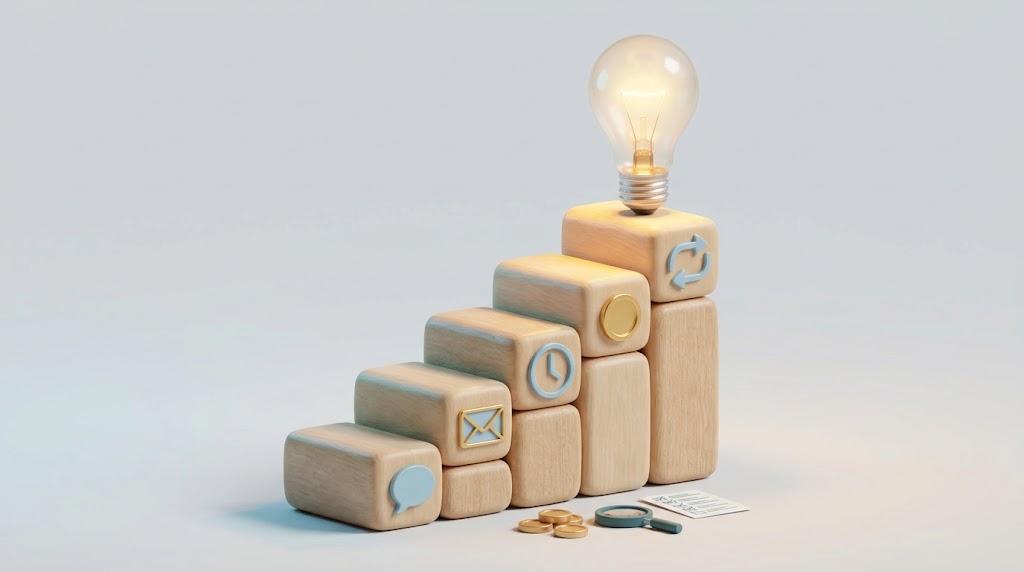
Not all evidence carries equal weight. This five-stage ladder is a practical way to judge the strength of customer evidence, from casual approval to actual purchasing behaviour.
The higher someone moves up this ladder, the stronger the evidence generally becomes, but the stages are not a guarantee of demand. A deposit from five people may reveal genuine interest, yet those five customers might belong to the same friendship group or represent an unusually enthusiastic niche. A larger group showing weaker interest can sometimes reveal more about the wider market.
Paid commitments are particularly useful when a business can offer a sample, trial or pre-order without making promises it cannot fulfil. For services that cannot reasonably be sold in advance, a completed trial or a serious booking may provide more appropriate evidence. The aim is to find the strongest realistic indication of customer behaviour before committing substantial money.
Customers rarely want exactly what the founder imagined. Someone starting a cleaning business may assume low prices win bookings, then discover that reliability matters more. That finding changes the whole proposition.
For students working on business viability assessments, understanding this relationship between customer demand and financial feasibility is just as important as calculating potential revenue. An Entrepreneurship Assignment Service may appear in the context of an academic discussion, but the underlying business question remains the same: can the proposed venture attract enough paying customers to cover its costs and operate sustainably?
Imagine personalised gift boxes sell for £30 each, while their contents cost £10. At first, that appears to leave £20 from every sale. But packaging (£2), postage (£3.50), payment fees (£0.60) and advertising (£5 per sale) reduce the contribution to £8.90.
If monthly fixed costs are £450, the business needs to sell approximately 51 boxes to cover those costs. That is the break-even point, not the point at which the owner starts earning a comfortable income.
Now consider the time involved. At 120 boxes a month, the business would have around £618 left after the listed variable and fixed costs. If preparing and dispatching those orders takes 70 hours, that works out at roughly £8.83 per hour.
This is not necessarily the owner’s final take-home income. Tax, unexpected expenses and any costs missing from the calculation would reduce the amount further. The example shows why a business can appear profitable on paper while offering a much smaller return for the time invested.
Then stress-test it. Cut sales by 30%. Raise supplier costs by 10%. If it only works under ideal conditions, it doesn’t work yet.
Imagine the business closed after twelve months, then write down why. Did customers buy once and vanish? Did supplier prices rise? Did advertising cost more than planned? Each answer is something to test now.
A lean sequence costs little:
A simple evidence record keeps you honest:
| What you believed | What you found | What changes |
|---|---|---|
| Customers want lower prices | Convenience matters more | Rethink the offer |
| People will subscribe monthly | Most prefer one-off purchases | Test single orders |
| Competitors are too expensive | Rivals offer better value | Review pricing |
A business idea deserves investment when there’s convincing evidence that customers need it, have a reason to choose it and will pay a price that makes commercial sense.
Testing is a process of learning, not a box to tick. Some ideas need adjusting. Others aren’t worth pursuing. Neither outcome is a failure.
The real value is a better reason to invest, a clearer view of the risks and the confidence to change direction when the evidence says so.