English
 Arabic
 French
 Spanish
 Portuguese
 Deutsch
 Turkish
 Dutch
Dutch
 Italiano
 Russian
 Romaian
 Portuguese (Brazil)
 Greek
Greek

window cleaning Aledo TX: Bright & Shiny Guide to Cleaner Windows
Other |
2026-09-28 21:22:14
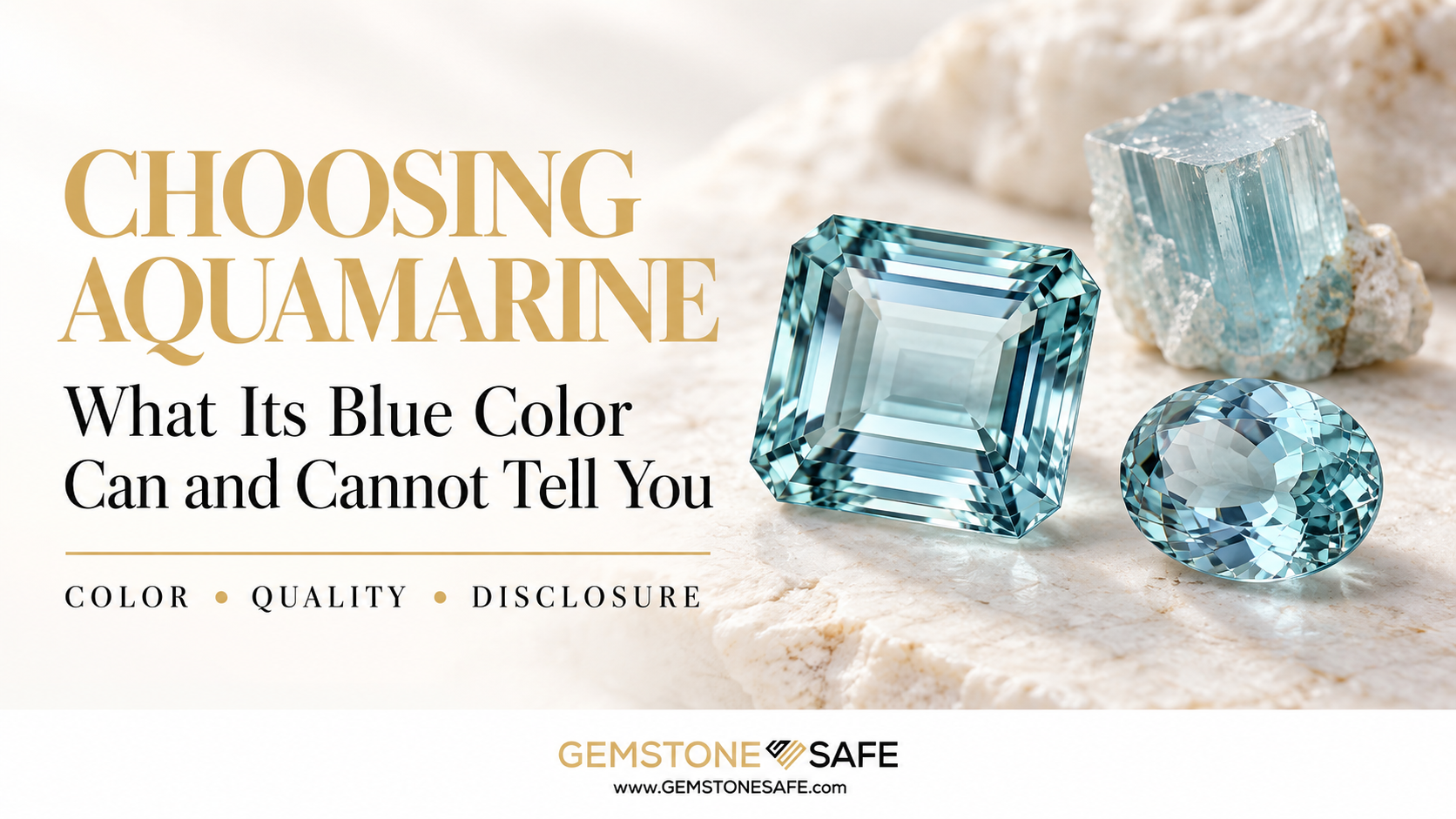
Aquamarine's blue attracts attention, but it cannot independently establish identity, treatment history, or geographic origin. A useful aquamarine buying guide therefore connects appearance with mineral science, cutting, and disclosure. The aim is to choose a stone whose color you enjoy and whose description is supported by evidence.
Aquamarine is the greenish-blue to blue variety of beryl, the same mineral species as emerald. Iron in its crystal structure contributes to its coloration, while crystal orientation, dimensions, and lighting influence the appearance of the finished gem.
Aquamarine is pleochroic: it shows different color intensities in different crystal directions. Cutters consider this when orienting the rough to display a favorable blue. This directional effect should not be confused with the color-change phenomenon seen in gemstones such as alexandrite. The practical implication is that a photograph records only one presentation. View the stone face-up and in motion to understand how its color and brightness work together.
Aquamarine commonly occurs in pegmatites, coarse-grained igneous rocks that can contain cavities lined with crystals. GIA’s study of Pakistani aquamarine describes zoned pegmatites and crystal growth associated with hydrothermal fluids heated mineral-bearing water in cavities or veins. Associated minerals include feldspar, mica, and tourmaline.
This distinction matters: the host rock, mineral-bearing fluid, and space available for crystal growth are related parts of the geological setting. Simply describing aquamarine as a gemstone formed “under pressure” leaves its formation unexplained.
Sources include Brazil’s Minas Gerais region, Pakistan, Madagascar, Nigeria, and Mozambique. Gems may be recovered from original host rocks or weathered deposits. A recovery location provides provenance context, but a famous source cannot establish the quality of an individual stone. Ask what supports the origin claim, then assess appearance separately.
Aquamarine’s name derives from Latin words referring to seawater. Historical traditions associated it with calming waves and protecting sailors; it is also a March birthstone and a traditional nineteenth wedding anniversary gift.
These associations can make jewelry personally meaningful, but they are cultural beliefs rather than demonstrated protective or therapeutic effects. A birth month, connection to the sea, or shared memory is sufficient reason to choose it without attaching scientific claims to symbolism.
Separate hue, the color family, from tone, its lightness or darkness, and saturation, its intensity. Stronger blue generally attracts greater trade demand, although slightly greenish blue can also be desirable. A greenish tint is not automatically a defect.
Compare stones under consistent lighting against a neutral background. Request ordinary-light video and ask whether images have been adjusted. Differences in exposure and white balance can make two photographs unreliable guides to relative color.
Most fine faceted aquamarine is eye-clean, meaning inclusions are not apparent to the unaided eye under normal viewing conditions. This does not mean microscopically flawless. Consider whether inclusions interrupt transparency and whether fractures reach exposed edges.
Assess brightness, polish, and outline symmetry. A window is a see-through area where light escapes instead of returning toward the viewer; a conspicuous central window can weaken color presentation. Compare millimeter dimensions alongside carat weight to understand the stone’s visible size and setting requirements.
Color can strengthen with size, but larger does not automatically mean better. Seller labels such as “AAA” also require interpretation: no standardized aquamarine quality-grading scale supports these commercial descriptions.
Heating commonly reduces greenish coloration to create a bluer appearance. The result is stable, and treatment is generally undetectable through routine gemological testing. Consequently, pure blue cannot prove that a stone is unheated. Request written disclosure and ask what evidence supports an untreated claim.
Similarly, blue topaz can resemble aquamarine but is a different mineral. Color and apparent clarity alone cannot authenticate a stone. A laboratory identification report can establish material identity, distinguish natural from laboratory-grown material, and report detectable treatments. It is not an overall quality grade.
“Detectable” is an important limitation: the absence of a treatment finding does not establish that every possible treatment has been excluded. The report’s scope should match the question you need answered.
Aquamarine measures 7.5–8 on the Mohs hardness scale. This supports jewelry use, but hardness describes scratch resistance, not immunity to chipping. Protect rings from hard knocks and consider settings that shelter exposed corners.
Warm, soapy water is a suitable home-cleaning method. Ultrasonic and steam cleaning require caution when fractures or liquid inclusions are present. Rarely fracture-filled stones should be cleaned only with warm, soapy water.
Visit GEMSTONESAFE to explore aquamarine and enquire about a stone suited to your design. Before purchasing, request clear images, dimensions, treatment information, and relevant documentation. A confident choice combines an appealing blue with transparency about the gemstone behind it.