English
 Arabic
 French
 Spanish
 Portuguese
 Deutsch
 Turkish
 Dutch
 Italiano
 Russian
 Romaian
 Portuguese (Brazil)
 Greek

How Nicotine Awareness Supports Safer Health Decisions
Shopping |
2026-10-24 07:38:24
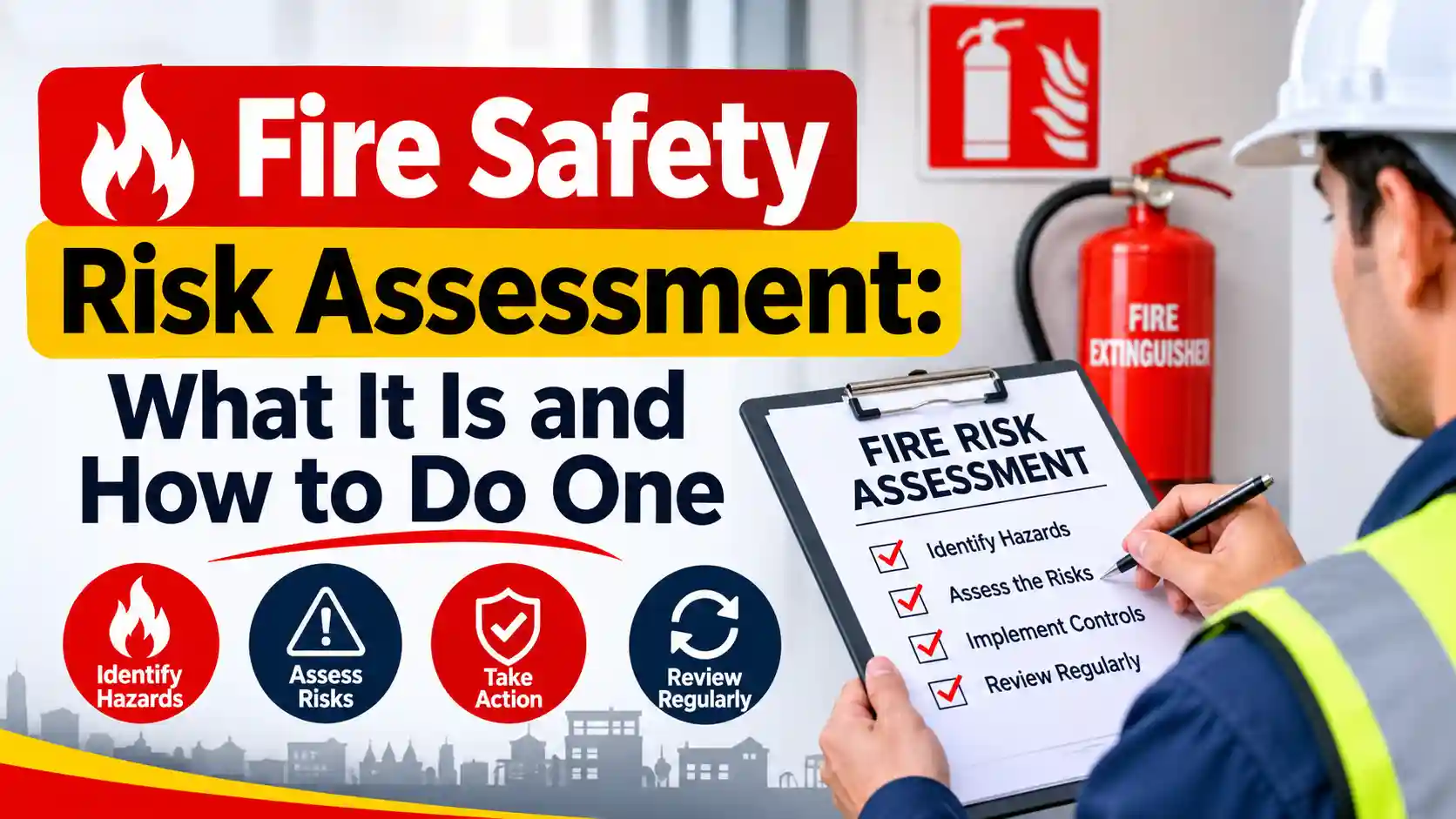
A fire safety risk assessment is a structured review of your workplace that identifies what could start a fire, who could be harmed, and what controls you need to prevent fires and get everyone out safely. You do it in five steps: identify hazards, identify people at risk, evaluate and reduce the risk, record and plan, then review regularly. In most countries the employer or business owner is legally responsible for making sure it is done, and it should be reviewed at least once a year and whenever your premises, processes, or staffing change.
Quick checklist: know your ignition sources and fuels, keep exits clear, install working detection and alarms, provide the right extinguishers, train staff, practise evacuation, write it down, review it.
A fire safety risk assessment (also called a fire risk assessment) is a documented evaluation of the fire hazards in a building or site, the people who could be affected, and the measures in place to prevent, detect, and respond to a fire.
Two definitions keep everything else clear:
• Hazard: anything that can cause harm. Example: a stack of cardboard next to a heater.
• Risk: the chance that the hazard causes harm, combined with how serious the harm would be. Example: cardboard next to a heater in a room with one blocked exit is a high risk.
Fires need three things, known as the fire triangle: heat (ignition source), fuel (anything that burns), and oxygen. Every control in your assessment aims to separate, remove, or manage at least one of these.
In most jurisdictions, yes. The exact rule depends on where you operate:
• United Kingdom: The Regulatory Reform (Fire Safety) Order 2005 requires the "Responsible Person" to carry out a suitable and sufficient fire risk assessment. If you employ five or more people, or your premises are licensed, the significant findings must be recorded in writing.
• United States: OSHA requires many employers to have an emergency action plan (29 CFR 1910.38) and, in certain cases, a fire prevention plan (29 CFR 1910.39). Portable extinguisher rules sit in 29 CFR 1910.157. Local fire codes, usually built on NFPA standards such as NFPA 101 (Life Safety Code), add further requirements.
• Pakistan and other regions: Requirements are set by provincial or municipal fire and building rules, factory safety laws, and fire services such as Rescue 1122. Many businesses also follow NFPA or ISO 45001 as a benchmark. Check with your local authority and your insurer.
Even where a written assessment is not strictly mandated for tiny premises, insurers and inspectors expect to see evidence that you have thought it through.
The employer, owner, or person in control of the premises is responsible. In UK terms this is the "Responsible Person." In shared buildings, the landlord and tenants each hold duties for the parts they control, and contractors working on your site must be included in your planning.
You can do the assessment yourself if the premises are simple and you are competent to do so. For factories, large offices, high-risk processes, or sleeping accommodation (such as worker hostels), hire a qualified fire risk assessor.
Walk the whole site, including storerooms, roof spaces, loading bays, and plant rooms. Look for three categories:
• Sources of ignition: electrical equipment and overloaded sockets, heaters, cooking appliances, welding and cutting (hot work), friction from machinery, static, smoking, faulty wiring, and charging lithium-ion batteries.
• Sources of fuel: paper, packaging, wood, textiles, plastics, flammable liquids and gases, solvents, and combustible dust.
• Sources of oxygen: ventilation and air handling systems, and oxygen or other oxidising cylinders.
Example: A garment workshop finds lint accumulating around dryers, extension leads daisy-chained along walls, and fabric rolls stacked beside the main exit. That is an ignition source, plentiful fuel, and an escape problem in one room.
List who is in the building, where, and when. Include:
• Employees on all shifts, including night shift and lone workers
• Visitors, customers, and contractors
• People who are unfamiliar with the building
• People with disabilities, mobility limits, pregnancy, or hearing or vision impairment (they may need a PEEP, a Personal Emergency Evacuation Plan)
• People working near especially dangerous processes
For each hazard, ask: Can I remove it? If not, can I reduce it? What happens if it ignites? Then check your protection measures:
|
Area |
What to check |
|
Prevention |
Housekeeping, safe storage of flammables, electrical testing, hot work permits, no-smoking rules |
|
Detection and alarm |
Smoke or heat detectors, manual call points, audible alarms that every area can hear, regular testing |
|
Firefighting |
The right extinguisher type for each hazard, placed along escape routes, serviced annually, and staff who know how to use them |
|
Escape routes |
Enough exits, clearly marked, unlocked in operation, unobstructed, with emergency lighting |
|
Containment |
Fire doors that close properly, no wedged-open doors, sealed penetrations through fire walls |
|
Training and drills |
Induction, fire warden training, at least annual drills |
Extinguisher classes in brief: Class A (ordinary solids such as wood and paper), Class B (flammable liquids), Class C (flammable gases), Class D (combustible metals), Class K/F (cooking oils and fats). Electrical fires: de-energise first, then use an extinguisher rated for electrical equipment.
A simple scoring method: rate likelihood (1-5) and severity (1-5), then multiply. A score of 15 or more needs immediate action, 8-14 needs a dated action plan, and below 8 is monitored. This is a common risk matrix approach and you can adjust the thresholds to your site.
Write down:
• Hazards found and who is at risk
• Actions taken and actions still needed, with owner and deadline
• Your emergency plan: alarm procedure, evacuation routes, assembly points, roles of fire wardens, how to account for everyone, how to call the fire service
• Training given and drill dates
Share the key points with staff and keep the record where you can produce it for an inspector or insurer.
Review at least annually. Review immediately after:
• A fire, near miss, or false alarm pattern
• New machinery, processes, or chemicals
• Layout changes, new storage, or building works
• A change in headcount, shift patterns, or tenants
• Findings from an inspection or audit
Higher energy, more fuel, more people, fewer people who can see the whole floor. Focus on:
• Combustible dust (wood, flour, metal, textile, and plastic dust can ignite or explode; control housekeeping and ventilation, and follow NFPA dust standards)
• Flammable liquids and gases: approved storage, bonding and grounding, ventilation
• Hot work permits for welding, grinding, and cutting
• Machinery maintenance to prevent friction and overheating
• Large-site evacuation: multiple exits, clear aisles, a reliable alarm audible over noise, and head counts at assembly points
• Night shifts with fewer trained staff
A real-world reminder: the 2012 Baldia Town factory fire in Karachi killed more than 250 workers. Widely reported contributing factors included blocked or locked exits, barred windows, and inadequate alarms. Those are exactly what a thorough assessment is designed to catch.
Lower fuel, but dense occupancy and complex buildings. Focus on:
• Server and comms rooms, with suitable detection and suppression
• Lithium-ion batteries in laptops, power banks, e-bikes, and scooters, and where they are charged and stored
• Evacuation of high floors, stairwell capacity, and procedures for people who cannot use stairs
• Visitors and hot-desking, so everyone can be accounted for
• Shared buildings: coordinate with the landlord and other tenants
• Fire wardens per floor, with named deputies for absences
Small premises can be riskier than they look because exits are few and storage is tight. Focus on:
• Blocked or locked exits and stock piled on escape routes
• Kitchens: grease build-up, gas appliances, and the right extinguisher plus a fire blanket
• Overloaded sockets and extension leads
• Upstairs storage or living space above the business
• Basic detection and a clear plan that every employee can explain in one minute
At least once a year, and whenever something material changes. Higher-risk sites (factories with flammable materials, premises with sleeping accommodation) often review more frequently and have periodic specialist inspections. Test fire alarms weekly or per your local standard, service extinguishers annually, test emergency lighting on a regular schedule, and run evacuation drills at least yearly.
Cost depends on site size, complexity, and region. A small shop may need a short visit and report, while a multi-building factory may need days on site and specialist input. Ask for quotes that specify what is included: site survey, written report, prioritised action plan, and follow-up review. Choose an assessor with recognised qualifications and relevant industry experience, and check their insurance and references.
1. Treating it as a one-time document. Premises change; the assessment must too.
2. Copying a generic template without walking the site.
3. Ignoring night shifts, contractors, and visitors.
4. Blocked or locked exits and wedged-open fire doors.
5. Poor housekeeping that lets dust, packaging, and rubbish build up.
6. No owner or deadline on actions, so nothing gets done.
7. Untrained staff who do not know the alarm sound, exit routes, or assembly point.
8. Skipping lithium-ion battery charging controls.
9. No evidence of drills, testing, and maintenance when an insurer or inspector asks.
• ☐ Walked the entire site, including storage and plant areas
• ☐ Listed ignition sources, fuels, and oxygen sources
• ☐ Identified everyone at risk, including night staff, visitors, and people needing assistance
• ☐ Checked escape routes are clear, marked, and unlocked
• ☐ Confirmed detection and alarms work and are tested
• ☐ Right extinguishers in place, serviced, and staff trained
• ☐ Fire doors close properly and are never wedged open
• ☐ Emergency lighting working
• ☐ Hot work, flammable storage, and electrical safety controls in place
• ☐ Written plan, action list with owners and deadlines
• ☐ Drill completed and recorded
• ☐ Review date set
The consequences can include enforcement notices, fines, prohibition of use of the premises, and in serious cases criminal prosecution, particularly if people are harmed. Insurers may also reduce or refuse a claim if you cannot show you managed fire risk. Beyond legal exposure, a serious fire can end a small business permanently.
It is a documented review of a workplace that identifies fire hazards, who could be harmed, and the measures needed to prevent fires and ensure safe evacuation. It is the foundation of workplace fire safety.
In most countries, yes. UK law requires one under the Regulatory Reform (Fire Safety) Order 2005, and US employers must meet OSHA emergency and fire prevention plan rules plus local fire codes. Always confirm local requirements.
The employer, owner, or person who controls the premises. In multi-tenant buildings, landlords and tenants share responsibility for their respective areas.
Review it at least every 12 months and any time your building, processes, staff, or occupancy change significantly, or after a fire or near miss.
Yes, if your premises are low-risk and you are competent to do so using official guidance. For factories, complex buildings, or high-hazard processes, use a qualified fire risk assessor.
In the UK, a written record is required for five or more employees. Even where it is not mandatory, a written assessment is strongly advised because it proves due diligence to inspectors and insurers.
Identify fire hazards, identify people at risk, evaluate and reduce the risks, record findings and train people, and review regularly.
A hazard is something that can cause harm, such as flammable solvent. A risk is how likely that harm is and how severe it would be, given your controls.
Combustible dust control, flammable liquid and gas storage, hot work permits, machinery overheating checks, large-site evacuation planning, and night-shift arrangements.
It varies by size, complexity, and location. Get written quotes that detail the survey, report, action plan, and follow-up.
Walk your premises today, check that exits are clear and unlocked, confirm your alarm and extinguishers work, and list your top five hazards. Then book a full assessment or complete the five steps above.