English
 Arabic
 French
 Spanish
 Portuguese
 Deutsch
 Turkish
 Dutch
 Italiano
 Russian
 Romaian
 Portuguese (Brazil)
 Greek

Pharmaceutical Investments Accelerate Innovation in HER2 Antibody Development
Wellness |
2026-11-03 06:09:04
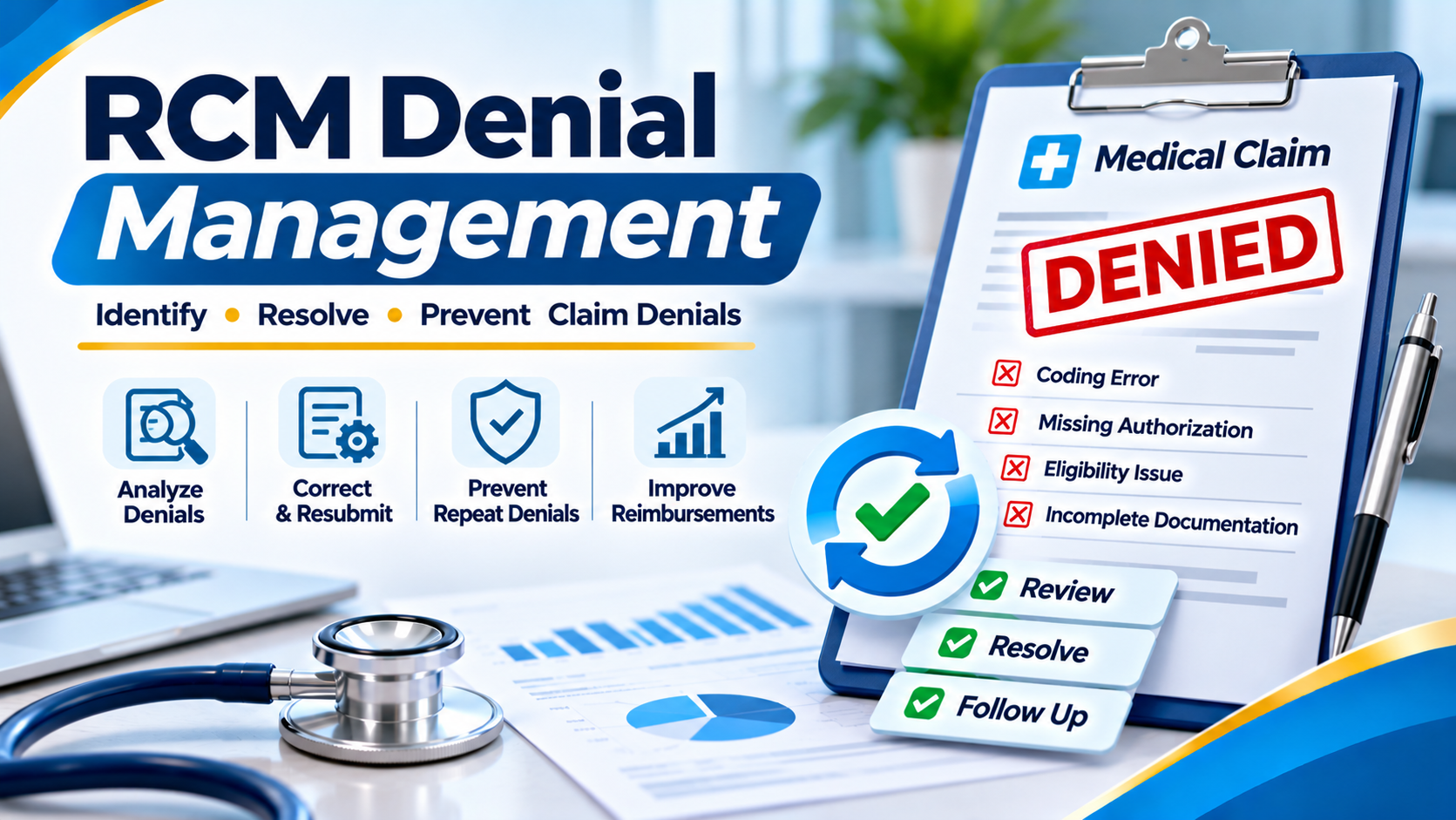
A healthcare practice may submit claims on time and still struggle with unpaid insurance balances. Some claims are denied because of coding mistakes, while others fail due to eligibility issues, missing authorizations or incomplete documentation.
Understanding RCM denial management helps healthcare providers identify reimbursement problems, resolve denied claims and prevent similar errors from affecting future payments.
Revenue cycle management covers the financial processes between patient registration and final payment collection.
Denial management focuses on claims that insurance payers have processed but refused to pay fully or partially.
A rejected claim generally fails initial processing checks, while a denied claim has undergone payer adjudication.
Recognizing this distinction helps billing teams determine whether a claim requires correction, resubmission, reconsideration or an appeal.
Insurance payers communicate payment decisions through an Explanation of Benefits (EOB) or Electronic Remittance Advice (ERA).
These documents may contain two important types of codes:
Claim Adjustment Reason Codes (CARCs): Explain why a claim or service payment was adjusted.
Remittance Advice Remark Codes (RARCs): Provide additional information about adjustments or claim processing.
For example, a claim denied because of missing information requires a different response from one denied for medical necessity.
Reviewing the specific denial codes helps billing teams identify the appropriate resolution.
Repeated denials often indicate problems within the billing workflow rather than isolated claim errors.
Common causes include:
Incorrect CPT, ICD-10-CM or HCPCS codes
Inaccurate insurance eligibility information
Missing prior authorizations
Insufficient clinical documentation
Incorrect provider or modifier information
Claims submitted after payer filing deadlines
For example, repeated authorization denials may indicate that scheduling staff are not consistently verifying approval requirements before procedures.
Correcting the verification process can prevent similar denials.
Effective RCM denial management requires analyzing denial patterns instead of addressing each unpaid claim separately.
Billing teams should categorize denials by payer, reason, specialty and service type.
Practices should also monitor denial rates, appeal outcomes and accounts receivable aging to identify unresolved reimbursement problems.
Claims requiring appeals must be reviewed against applicable payer policies and filing deadlines.
Regular communication between clinical staff and billing departments can also improve documentation accuracy before claim submission.
Medical claim denials can affect cash flow and create unnecessary administrative work.
An effective denial management process identifies the reasons behind unpaid claims, addresses documentation problems and improves future billing accuracy.
By combining denial analysis, preventive claim reviews and timely payer follow-ups, healthcare practices can strengthen revenue cycle performance and reduce avoidable reimbursement delays.