English
 Arabic
 French
 Spanish
 Portuguese
 Deutsch
 Turkish
 Dutch
 Italiano
 Russian
 Romaian
 Portuguese (Brazil)
 Greek

Active Wound Care Market Outlook Points to US$ 5.16 Billion Target by 2033
Other |
2026-11-10 07:26:00
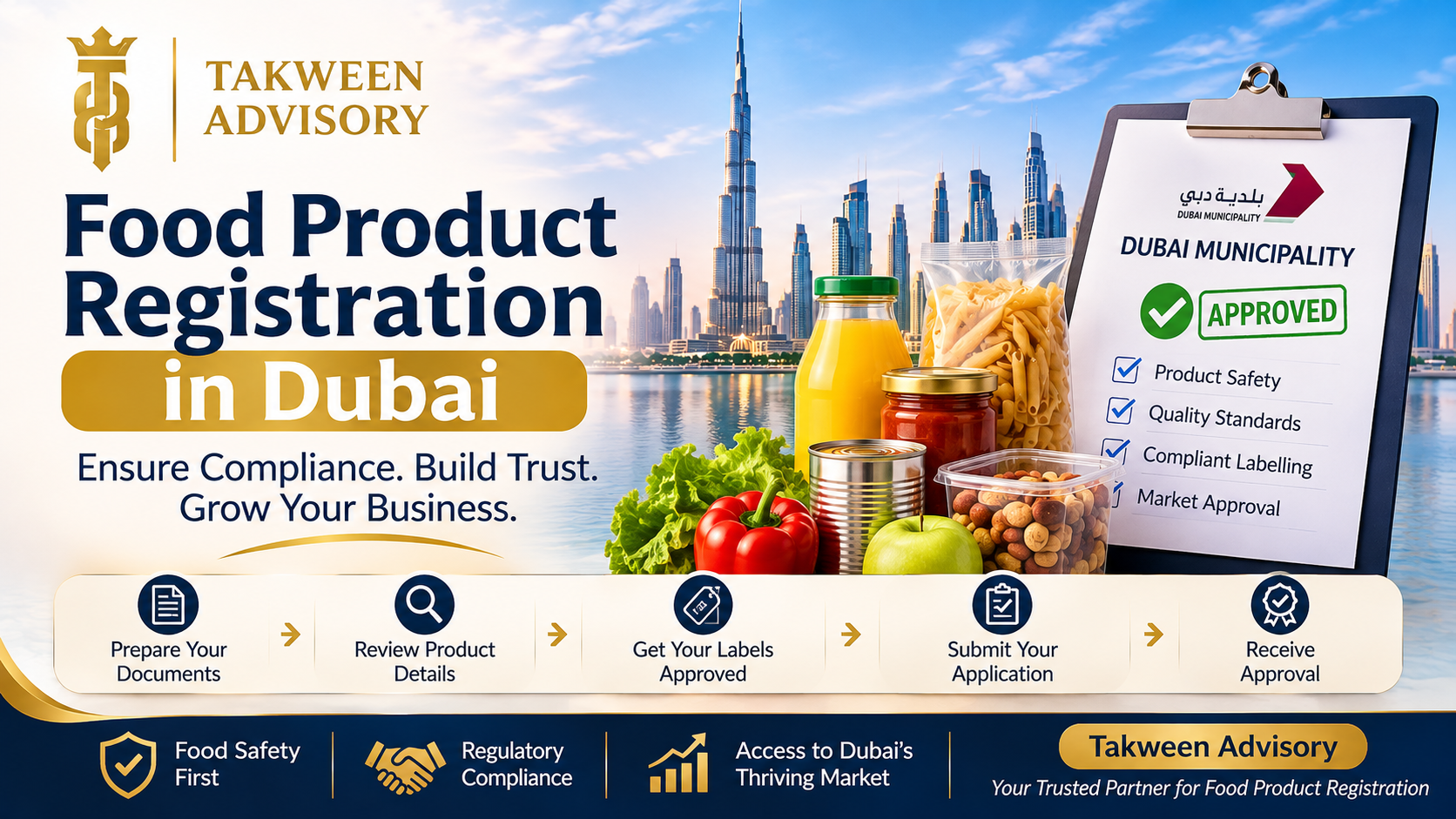
The UAE has developed into an important destination for food manufacturers, distributors, importers, and international brands. Dubai, in particular, offers access to a diverse consumer market and well-established trading infrastructure. However, businesses planning to introduce food products into the market must understand the applicable registration, labelling, and food safety requirements before beginning commercial operations.
Food Product Registration is an important regulatory step that helps ensure food items meet the applicable safety and quality standards before they are marketed. Whether a business imports packaged products, manufactures food locally, or distributes beverages and processed goods, understanding the registration process can help prevent avoidable delays.
With professional guidance from Takween Advisory, businesses can better understand the documentation and compliance considerations involved in registering food products in Dubai.
Food Product Registration is the process of submitting product information to the relevant food safety authority for assessment and approval. The process helps authorities verify product details, ingredients, labelling information, and compliance with applicable food regulations.
In Dubai, food establishments can use Dubai Municipality's services to register and assess food items. Depending on the product and activity, businesses may also need to complete relevant procedures through the Food Import and Re-export System (FIRS).
At the federal level, the UAE also operates the National Food Accreditation and Registration System, known as ZAD, for food product registration. The applicable route should be confirmed according to the product, location, and intended activity.
Registering food products is essential for businesses that want to operate responsibly and meet UAE regulatory expectations. It supports several important objectives:
Food safety: Helps authorities assess whether products meet relevant safety requirements.
Regulatory compliance: Supports businesses in meeting applicable local and federal food regulations.
Market access: Helps establish the necessary regulatory status before products are marketed or distributed.
Consumer confidence: Accurate product information and compliant labels help customers make informed purchasing decisions.
Import preparation: Registration and label assessment help businesses prepare for food import procedures and relevant inspections.
Businesses should confirm the registration requirements before shipping products or planning their market launch.
Food registration requirements can apply to different categories of products, depending on their intended use and regulatory classification. Common examples include:
Packaged and processed food products.
Beverages, juices, and bottled drinks.
Dairy products and dairy-based foods.
Snacks, chocolates, and confectionery.
Frozen and canned food products.
Bakery products and packaged ingredients.
Special dietary and nutritional products.
Each product may be assessed according to its ingredients, composition, packaging, and intended market. Businesses should not assume that approval for one product automatically covers every variant or product in a brand's range.
Preparing complete and accurate documentation is an important part of the application process. The exact requirements depend on the product category, country of origin, and business activity.
Commonly requested documents and information may include:
Valid UAE trade licence with the relevant food-related business activity.
Product name, brand name, and manufacturer details.
Complete ingredient list and product formulation.
Nutritional information and product specifications.
Clear images of the product and its packaging.
Proposed product label artwork.
Country of origin information.
Health or free-sale certificates, where applicable.
Laboratory reports or test certificates, if requested.
Halal certification for applicable products.
Additional documents may be required for specific food categories, claims, or imported consignments. Applicants should verify the latest checklist with the relevant authority.
Although the procedure may vary, businesses can generally expect the following stages.
The first step is to confirm that the company holds the appropriate trade licence and that its business activities cover the intended food operations. The product category should also be identified before preparing the application.
The ingredients, additives, nutritional details, and product specifications should be reviewed against applicable UAE and GCC requirements. Any ingredient or claim requiring additional supporting evidence should be identified early.
Food labels must provide accurate and appropriate information. Depending on the product and applicable standards, details may include ingredients, allergens, nutritional information, net quantity, country of origin, manufacturer details, production and expiry dates, and storage instructions.
Arabic labelling or an approved Arabic translation may be required. Label assessment helps identify issues that could affect regulatory acceptance.
The product information and supporting documents are submitted through the relevant authority's registration service or digital platform. Dubai Municipality provides a service for registering and assessing food items.
Certain products may be selected for laboratory examination or further verification. The authority determines whether additional testing or documentation is necessary based on the product and its risk profile.
After reviewing the application and any required supporting evidence, the authority communicates its decision. Businesses should retain the relevant registration records and follow any conditions attached to the approval.
Incomplete applications and inaccurate product information can create delays. Some common issues include:
Missing ingredient or nutritional details.
Incorrect or incomplete product labels.
Undeclared allergens or additives.
Differences between the product formulation and label information.
Missing supporting certificates.
Incorrect company or manufacturer details.
Failure to confirm requirements for the specific product category.
Reviewing the entire application before submission can help reduce these problems.
Understanding food regulations and preparing documentation can be challenging, especially for international brands entering the Dubai market. Takween Advisory provides business support to help companies understand the food product registration process and its documentation requirements.
From reviewing product information and identifying relevant compliance considerations to assisting with application preparation, professional guidance can make the process more organised. Businesses can also seek assistance in understanding label assessment, supporting certificates, and the requirements associated with importing or distributing food products.
Food Product Registration is an important consideration for businesses planning to manufacture, import, or distribute food products in Dubai. Understanding the applicable authority, preparing accurate documentation, reviewing product labels, and meeting food safety requirements can help businesses approach market entry more confidently.
With appropriate planning and professional guidance from Takween Advisory, food businesses can better navigate registration requirements and prepare for responsible operations in the UAE market.