English
 Arabic
 French
 Spanish
 Portuguese
 Deutsch
 Turkish
 Dutch
 Italiano
 Russian
 Romaian
 Portuguese (Brazil)
 Greek

Weight Loss Treatment: Natural vs. Medical Approaches
Health |
2026-11-12 05:15:19
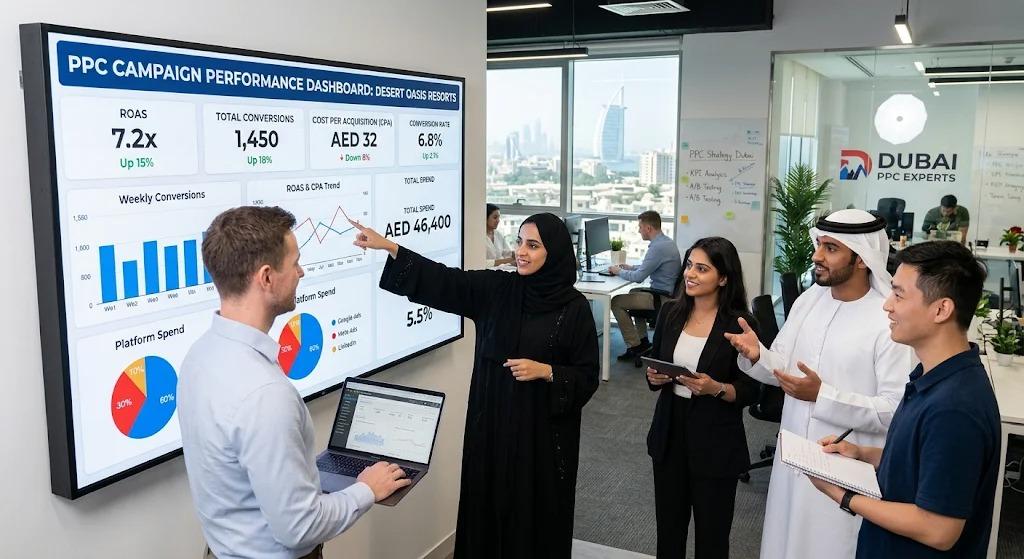
Dubai is one of the most competitive digital markets in the world. Real estate, hospitality, retail, healthcare, and e-commerce brands all fight for the same audience on Google, Meta, LinkedIn, and TikTok. In this environment, spending on ads is easy. Proving that the spend produced real business results is much harder.
A professional PPC company Dubai does not judge a campaign by clicks or impressions alone. It uses a structured measurement framework that connects every dirham spent to leads, sales, and long-term growth. Here is how that works.
Measurement begins before the first ad goes live. A reliable agency starts by asking what success means for your business: more property inquiries, higher online sales, booked appointments, or app installs. Every metric is chosen to serve that goal.
Dubai’s cost-per-click and conversion rates vary widely by industry. A luxury real estate campaign behaves very differently from a food delivery campaign. Agencies set baselines using your past performance, competitor insights, and local market data so that results are judged against realistic targets rather than generic global averages.
CTR shows the percentage of people who saw your ad and clicked it. A strong CTR signals that your ad copy, creative, and targeting match what the audience wants. A low CTR usually points to weak messaging or poorly matched keywords.
CPC is what you pay each time someone clicks. In Dubai’s busy market, CPC can climb quickly for high-intent keywords. Agencies watch it closely and look for ways to lower it without losing quality, such as better Quality Scores and sharper keyword selection.
This is the percentage of visitors who complete the action you want, such as filling in a form, calling, or buying. It is one of the most important metrics because it shows whether your traffic is actually valuable.
CPA tells you how much it costs to win one customer or lead. This metric connects advertising directly to your budget and shows whether the campaign is financially sustainable.
Return on Ad Spend (ROAS) measures how much revenue each dirham of ad spend generates. If you spend AED 10,000 and earn AED 50,000 in sales, your ROAS is 5x. E-commerce and retail brands in Dubai rely heavily on this number to decide where to scale.
ROAS does not include product costs, operating expenses, or overheads. A skilled PPC company goes a step further and calculates true return on investment, so you know whether a campaign is actually profitable and not just generating revenue.
Reliable measurement depends on correct tracking. Agencies set up Google Tag Manager and Google Analytics 4 to record form submissions, button clicks, phone calls, WhatsApp clicks, and purchases. Without this, performance data is guesswork.
Many Dubai customers prefer calling or messaging on WhatsApp instead of filling in forms. A good agency tracks these interactions with call tracking tools and click-to-chat events so that no valuable lead goes unmeasured.
For social campaigns, agencies install the Meta Pixel along with server-side tracking. This keeps data accurate even as privacy changes limit browser-based tracking.
A hundred cheap leads mean little if none of them buy. Leading agencies integrate ad platforms with your CRM so they can see which campaigns, keywords, and audiences produce qualified leads and closed deals.
By sharing feedback from your sales team, such as which leads were serious and which were irrelevant, the agency can refine targeting. This is especially valuable in high-ticket sectors like Dubai real estate, where one qualified buyer is worth far more than dozens of casual inquiries.
On Google Ads, Quality Score affects both your ad position and your cost per click. It is based on expected CTR, ad relevance, and landing page experience. Higher scores mean lower costs and better visibility.
Agencies review search terms, add negative keywords, and rewrite ad copy to improve relevance. They also remove wasted spend, which often makes up a surprising share of unoptimised budgets.
Even a perfect ad fails if the landing page disappoints. Agencies study bounce rate, scroll depth, and time on page to see whether visitors find what they expected.
Testing headlines, images, forms, and calls to action is a regular part of measurement. In a bilingual market like Dubai, agencies may also test English and Arabic versions of pages to see which resonates better with each audience segment.
Reports break results down by age, gender, device, and location within the UAE. You might discover that mobile users in Dubai Marina convert better than desktop users elsewhere, which lets the agency shift budget toward what works.
Dubai’s audience behaves differently during weekends, Ramadan, shopping festivals, and the summer travel period. Measuring performance by time and season helps the agency schedule ads and adjust budgets when your customers are most active.
Customers rarely convert after a single click. They may see a social ad, search on Google, visit your site, and return days later. Attribution models show which touchpoints contributed to the sale, so credit is not given only to the last click.
Reports on assisted conversions reveal the hidden value of upper-funnel campaigns such as video, display, and social awareness ads, which often support conversions that happen later through search.
Modern agencies use tools like Looker Studio to build live dashboards that show spend, leads, CPA, and ROAS in one place. You can check progress at any time without waiting for a monthly report.
The best reports explain what the numbers mean and what actions will follow. A trustworthy PPC company in Dubai presents wins, problems, and a clear plan for the next month in plain language.
Measurement is not a final step. It feeds a cycle of testing, learning, and improving. Agencies test new keywords, audiences, creatives, and bidding strategies, then scale the ones that prove profitable.
Data also tells the agency when to stop. Campaigns that fail to meet targets after proper testing are paused or restructured so budget moves to higher-performing channels.
Measuring PPC success is about far more than watching clicks and impressions. A professional PPC company in Dubai combines clear goals, accurate tracking, quality metrics, CRM integration, attribution, and transparent reporting to show exactly how your advertising supports revenue.