English
 Arabic
 French
 Spanish
 Portuguese
 Deutsch
 Turkish
 Dutch
 Italiano
 Russian
 Romaian
 Portuguese (Brazil)
 Greek

Acoustic Microscopy Market to Reach US$ 3.47 Billion With High-Resolution Imaging
Other |
2026-11-10 05:43:53
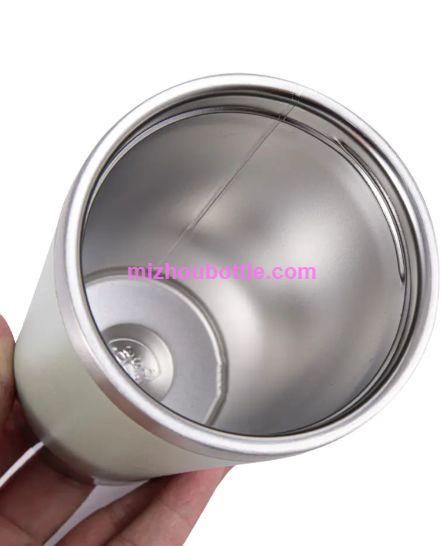
What started this was a morning of wedging a tall flask into the cup holder of my car, where it tilted, rattled over every bump, and finally slid out onto the passenger mat with a thud that startled me at a red light. Nothing was damaged, though it made me notice how little attention a roomy vessel gets on outline before volume, so I spent a week measuring and handling a Large Capacity Insulated Bottle and a few similar ones against the places they are expected to sit.
Height and width are the first measurements worth writing down, because a vessel that is generous in volume usually arrives either lanky or broad, and each choice suits a different space. A slim barrel slides into a bag pocket or a drink holder, whereas a wide one stands steadily on a desk but may refuse to enter anything with a narrow opening. Measure the spot where it will live, lay a tape along the piece you are testing, and include the lid and any carry loop in the height, since those add a surprising amount.
The underside deserves a slow inspection. A flat, slightly recessed bottom sits quietly on a table and does not ring against hard surfaces, while one with a raised rim can wobble on a sloping dashboard. I press down on one edge of a test piece standing on a desk and watch whether it rocks, and a ring of rubber or silicone under it, where fitted, takes away the clatter that annoys everyone in a quiet office. Narrow footprints tip easily when full, which is exactly what I kept fighting in my vehicle.
Carry points change how a heavy item sits in the grip. A fixed loop at the shoulder looks tidy and lets a strap pass through, a folding bail lies flat in storage, and a molded recess in the side suits a wide palm. Run a fingertip along the join where it meets the shell and feel for a raised seam or a sharp burr, since a rough joint is what snags a sleeve. Threads on the cap should turn with a smooth whisper, the cap should sit level with no visible gap, and its top should be rounded enough that a thumb can rest there without discomfort. Weight when full changes the picture, so lift it with water inside before judging a grip.
On the table that week was a unit from MIRZOI, whose maker, Zhejiang Mizhou Technology Co., Ltd., handles research, development, production and sales, and provides customized solutions for international customers. Seeing it beside a few others made differences in profile easy to spot, and the customization point raised a plain question worth putting in writing, namely whether the height, the carry style, or the printed surface can be changed for a particular order. Durability and heat retention are separate topics that I will leave alone here.
Finish decides how the flask appears after a month of use. A matte powder coat hides fingerprints and small scuffs, a glossy one gleams on a shelf but shows every smear, and a brushed metal skin reads honest and cool though it can pick up fine scratches from keys. Hold the unit against a window and sight along the barrel for ripples, uneven color near the seam, or a patch where the coating seems thin. Once I found a tiny drip of paint under a handle recess, and it was the first thing I noticed, long before the color.
Think about where the vessel will actually spend its days. On a kitchen counter a wide form looks sturdy beside mugs, on a bedside table a slim one claims little room, and in a backpack a tapered profile slides clear of a laptop. Shades behave differently in each place too: deep blue seems calm on a dark workbench, pale cream glows in a bright kitchen, and bold red can feel loud in a small office. Ceiling height under a cabinet matters as well, since a tall form that clears a shelf at the shop can bump it at home. Stand the piece where it will live and step back a few paces.
A listing at https://www.mizhoubottle.com can show shape and shade in photographs, yet the grip of a carry point and the roundness of a rim only appear with a unit in your fingers. Even then my checks have a limit, because a Large Capacity Insulated Bottle measured on a bench says nothing about how it behaves on a bumpy road with a full load, and a rack that suits one vehicle can still reject the same form in another.