English
 Arabic
 French
 Spanish
 Portuguese
 Deutsch
 Turkish
 Dutch
 Italiano
 Russian
 Romaian
 Portuguese (Brazil)
 Greek
How Often Should You Check Your Range Rover for Hidden Engine Faults?
Luxury Automotive & Transportation |
2026-10-13 14:05:02
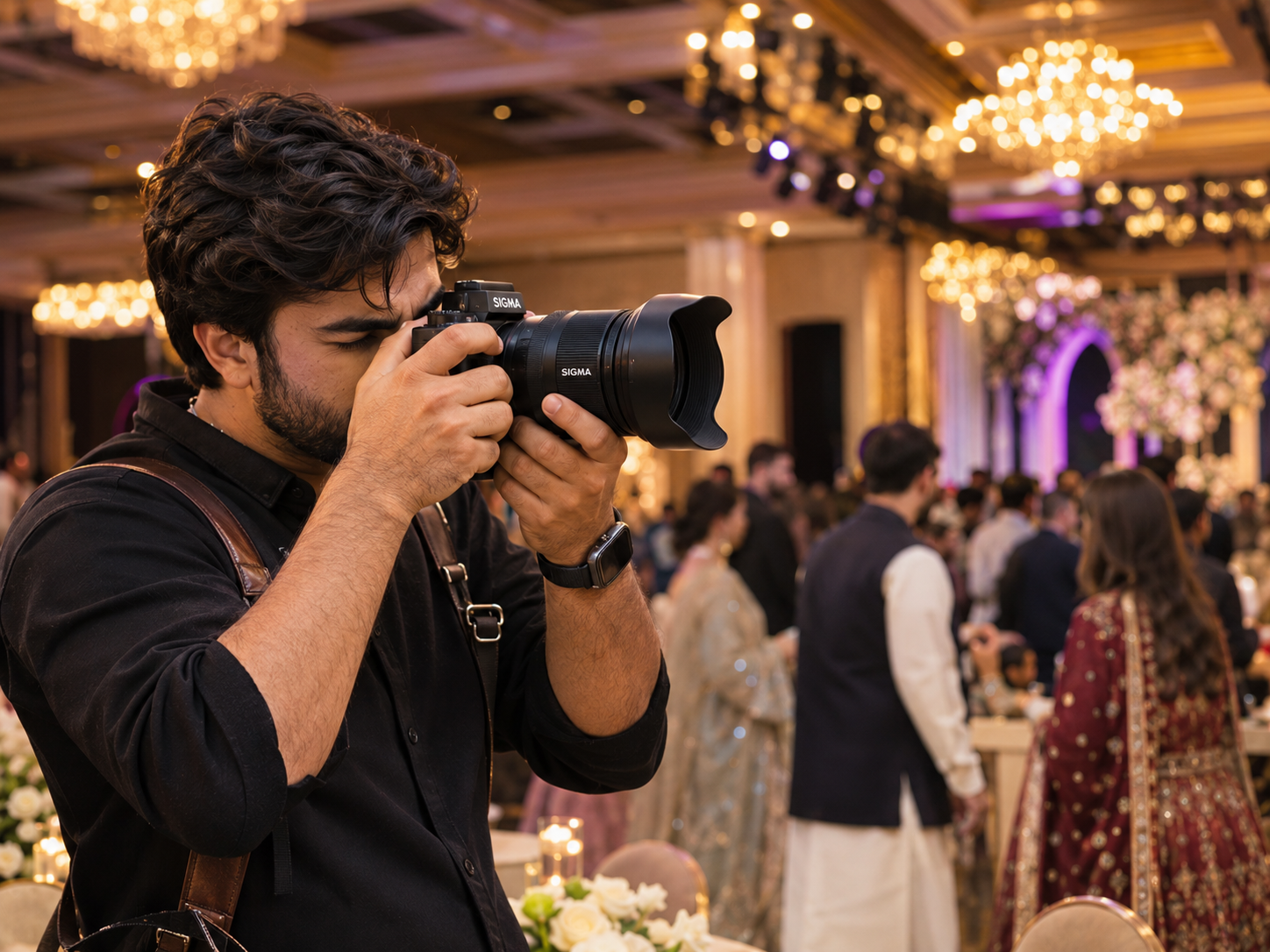
Low-light photography is one of the situations where lens choice can directly affect how comfortably a photographer works. Indoor weddings, corporate events, award ceremonies, conferences, concerts, restaurants, stage performances, and evening receptions often provide less light than outdoor photography while subjects continue to move.
A professional cannot always slow the shutter speed or ask guests to remain still. Raising ISO can help, but there are practical limits. This is why photographers often consider Sigma lenses with F2.8, F1.8, F1.4, or wider maximum apertures when building an indoor-event kit.
The right lens, however, is not simply the one with the widest aperture. Focal length, autofocus, working distance, venue size, camera system, subject movement, and how quickly compositions change are equally important.
A strong indoor-event lens should help the photographer work efficiently when lighting and subject position are unpredictable.
Important factors include:
Wide maximum aperture
Useful focal-length coverage
Reliable autofocus
Practical working distance
Manageable size and weight
Good handling during long assignments
Correct sensor and mount compatibility
Flexibility for moving subjects
A bright prime may collect more light, while an F2.8 zoom may give the photographer faster control over composition. The better choice depends on the assignment.
Maximum aperture determines how wide the lens can open.
A lens at F1.4 can pass substantially more light than the same exposure at F2.8. That extra light can allow the photographer to use a faster shutter speed, lower ISO, or a combination of both.
This becomes useful when photographing moving subjects such as:
Guests entering a venue
Speakers walking across a stage
Wedding entrances
Dance performances
Award presentations
Candid conversations
Children moving around an event
Performers under limited stage lighting
A wide aperture can also create shallow depth of field, helping separate a subject from a busy indoor background.
However, the widest aperture is not always the correct setting. A group photograph may require greater depth of field, while an individual portrait can often use a wider aperture safely.
For many professional event photographers, the standard F2.8 zoom is the most practical starting point.
The SIGMA 24–70mm F2.8 DG DN II | Art covers a useful range for full-frame mirrorless event photography. At 24mm, a photographer can include more of the venue, groups, stage, or surrounding environment. Moving toward 50mm and 70mm provides more natural framing for people, portraits, speakers, and candid moments.
This type of lens is useful for:
Corporate conferences
Wedding receptions
Indoor ceremonies
Birthday events
Award functions
Stage coverage from moderate distances
Group photographs
General documentary coverage
Its biggest advantage is speed of composition.
During an event, the photographer may have only seconds to move from a group photograph to a candid expression or speaker. A standard zoom reduces the need to change lenses.
The F2.8 aperture is not as bright as F1.4, but the flexibility of the zoom range often makes it more practical for fast-moving assignments.
A lens such as the SIGMA 28–45mm F1.8 DG DN | Art provides an interesting middle ground between fast primes and traditional event zooms.
Its F1.8 maximum aperture offers more light-gathering flexibility than an F2.8 zoom, while the zoom range allows the photographer to adjust composition without changing lenses.
The 28–45mm range can work particularly well for:
Indoor documentary photography
Dance floors
Small event spaces
Stage-side photography
Environmental portraits
Behind-the-scenes coverage
Video and hybrid event work
The limitation is reach.
A photographer working far from a stage may need a longer lens. But in compact halls or situations where the photographer can remain relatively close to the action, a bright wide-to-standard zoom can be highly useful.
A 35mm F1.4 lens is one of the most useful prime-lens options for environmental event photography.
It allows the photographer to include the subject and enough surrounding context to tell the story of the event.
The SIGMA 35mm F1.4 Art range is particularly relevant for situations such as:
Mehndi events
Dance floors
Small wedding halls
Restaurants
Corporate networking
Backstage photography
Indoor lifestyle events
Available-light portraits
The F1.4 aperture gives the photographer more exposure flexibility when ambient lighting is weak.
Because 35mm is relatively wide, composition matters. Moving too close to a face can exaggerate perspective, while placing people at the extreme edges of the frame can make them appear stretched.
Used at an appropriate working distance, however, a 35mm can produce immersive event images that feel more connected to the environment.
A 50mm prime provides a more neutral perspective than a wide-angle lens while still remaining practical in many indoor spaces.
SIGMA offers fast 50mm options within its current full-frame lineup, including F1.2 and F1.4 Art lenses.
These focal lengths can suit:
Individual portraits
Couple photographs
Speakers
Candid conversations
Small performances
Detail shots
Corporate portraits
Low-light documentary work
A 50mm prime is particularly useful when the photographer wants a brighter aperture without moving to a longer portrait focal length.
It can also complement a 24–70mm zoom. The zoom handles unpredictable moments, while the fast 50mm can be used when lighting becomes more difficult or when stronger subject separation is desired.
An 85mm F1.4 lens serves a more specialized role.
The SIGMA 85mm F1.4 DG DN | Art can provide tighter framing from greater working distance, making it useful for portraits and selected event situations.
It can work well for:
Speaker portraits
Bridal portraits
Award recipients
Stage details
Performers
Candid expressions from a distance
Formal corporate portraits
The wide aperture helps in low light, while the longer focal length can simplify distracting backgrounds.
However, 85mm can become difficult in small rooms. If the photographer cannot move far enough back, framing may become too tight.
The lens is therefore strongest when there is enough physical space to use it properly.
Not every low-light event happens at close range.
Large halls, conferences, concerts, and stage performances may prevent photographers from moving close to the subject.
A 70–200mm F2.8-class lens becomes useful when reach is more important than maximum aperture.
The SIGMA 70–200mm F2.8 DG DN OS | Sports can help with:
Stage performances
Speakers
Award presentations
Large wedding venues
Concert-style events
Candid moments from a distance
Tight portraits
The F2.8 aperture is still relatively bright for a telephoto zoom, while the longer focal range allows photographers to work without interfering with the event.
The trade-off is size and weight. Professionals covering long assignments should consider whether they genuinely need the extra reach.
Both approaches have strong advantages.
Fast primes provide wider apertures and can perform well when ambient light is very limited.
F2.8 zooms provide faster framing changes and reduce lens swaps.
A photographer who controls the session, such as during formal portraits, can comfortably use primes.
A photographer documenting unpredictable event activity may benefit more from zoom flexibility.
Many professionals combine both.
A practical setup might include a 24–70mm F2.8 as the main lens and one fast prime such as a 35mm, 50mm, or 85mm for darker conditions and creative portraits.
|
Indoor Situation |
Lens Direction |
Main Advantage |
|
General event coverage |
24–70mm F2.8 |
Flexible framing |
|
Dark documentary scenes |
35mm F1.4 |
Wide aperture and context |
|
Portraits and candids |
50mm F1.4 |
Balanced perspective |
|
Formal portraits |
85mm F1.4 |
Strong subject separation |
|
Large stage events |
70–200mm F2.8 |
Long working distance |
|
Small venue photo/video |
28–45mm F1.8 |
Bright zoom flexibility |
A fast lens helps, but exposure still depends on the complete camera setup.
Photographers should balance:
Aperture
Shutter speed
ISO
Subject movement
Camera movement
Available light
Flash or supplemental lighting
If the shutter speed becomes too slow, moving subjects may blur even when the lens is sharp.
If ISO is pushed unnecessarily high, image quality may decline depending on the camera.
Professional low-light photography therefore requires balancing exposure settings rather than simply shooting every image at the widest aperture.
Autofocus systems can face more difficulty when contrast is low.
Indoor photographers often work with:
Dim corners
Colored LEDs
Backlighting
Rapid subject movement
Changing stage lights
Dark clothing against dark backgrounds
Lens performance should therefore be evaluated according to real event conditions, not only static studio tests.
A slightly slower lens that focuses reliably may sometimes produce more usable photographs than a brighter lens that does not suit the working environment.
Low-light event photography is not limited to full-frame systems.
SIGMA’s APS-C lineup includes bright primes such as the 16mm F1.4 DC DN, 23mm F1.4 DC DN, 30mm F1.4 DC DN, and 56mm F1.4 DC DN Contemporary.
These options provide different fields of view for wide event coverage, standard framing, and portraits.
The SIGMA 18–50mm F2.8 DC DN Contemporary can also provide a compact general-purpose zoom for APS-C photographers who want flexibility without carrying several lenses.
Sensor format should influence lens selection, because the same focal length provides a different field of view on APS-C compared with full frame.
Do not buy several lenses simply because they are marketed for low light.
Ask:
How large are the venues I usually cover?
Can I move close to the subject?
Do I photograph individuals or groups?
Does my work involve fast-moving moments?
Do I need one camera or two?
Is weight important during long events?
Do I shoot stills, video, or both?
A corporate event photographer may rely heavily on a 24–70mm F2.8.
A documentary photographer may prefer a 35mm F1.4.
A stage photographer may need a 70–200mm F2.8.
A portrait-focused event photographer may get more value from an 85mm F1.4.
There is no universal low-light kit.
Before purchasing any Sigma lens, confirm:
Exact camera model
Sensor format
Exact lens model
Correct mount version
Required autofocus and electronic functions
SIGMA uses DG for full-frame coverage, DC for APS-C-oriented lenses, and DN for mirrorless lens designs.
Choosing the correct version is just as important as choosing the right focal length or aperture.
Low-light photography and indoor events demand a balance between aperture, focal length, speed, and working distance.
A 24–70mm F2.8 provides strong all-round flexibility for professional events. A 35mm F1.4 offers immersive storytelling in darker spaces, while a fast 50mm provides a versatile middle ground. An 85mm F1.4 is particularly useful for portraits and selective candid work, and a 70–200mm F2.8 becomes valuable when subjects are farther away.
The right Sigma lens is therefore not automatically the brightest lens available.
Choose according to the event space, subject movement, camera system, lighting, working distance, and the type of photographs clients expect you to deliver.
A carefully planned kit will usually perform better than carrying several overlapping lenses with no clear purpose.
For general event coverage, a 24–70mm F2.8-class lens provides useful flexibility. In very low light, a fast prime such as a 35mm F1.4 or 50mm F1.4 can provide additional exposure flexibility.
F1.4 allows more light and shallower depth of field, but F2.8 zooms provide more framing flexibility. The better choice depends on subject movement, venue size, and the photographer’s workflow.
A 35mm includes more of the environment and is useful in tight spaces. A 50mm provides tighter, more neutral framing for portraits and candid photographs.
Only when the venue or assignment requires longer working distances. It is particularly useful for stages, conferences, large wedding halls, performances, and events where photographers cannot move close to the subject.
Yes. APS-C photographers can use bright F1.4 primes or constant-aperture F2.8 zooms. The important factors are focal length, aperture, autofocus, camera performance, and shooting technique rather than sensor format alone.