English
 Arabic
 French
 Spanish
 Portuguese
 Deutsch
 Turkish
 Dutch
 Italiano
 Russian
 Romaian
 Portuguese (Brazil)
 Greek
Asthma Inhaler Device Market Witnesses Strong Demand for Precision Drug Delivery
Other |
2026-11-11 12:24:56
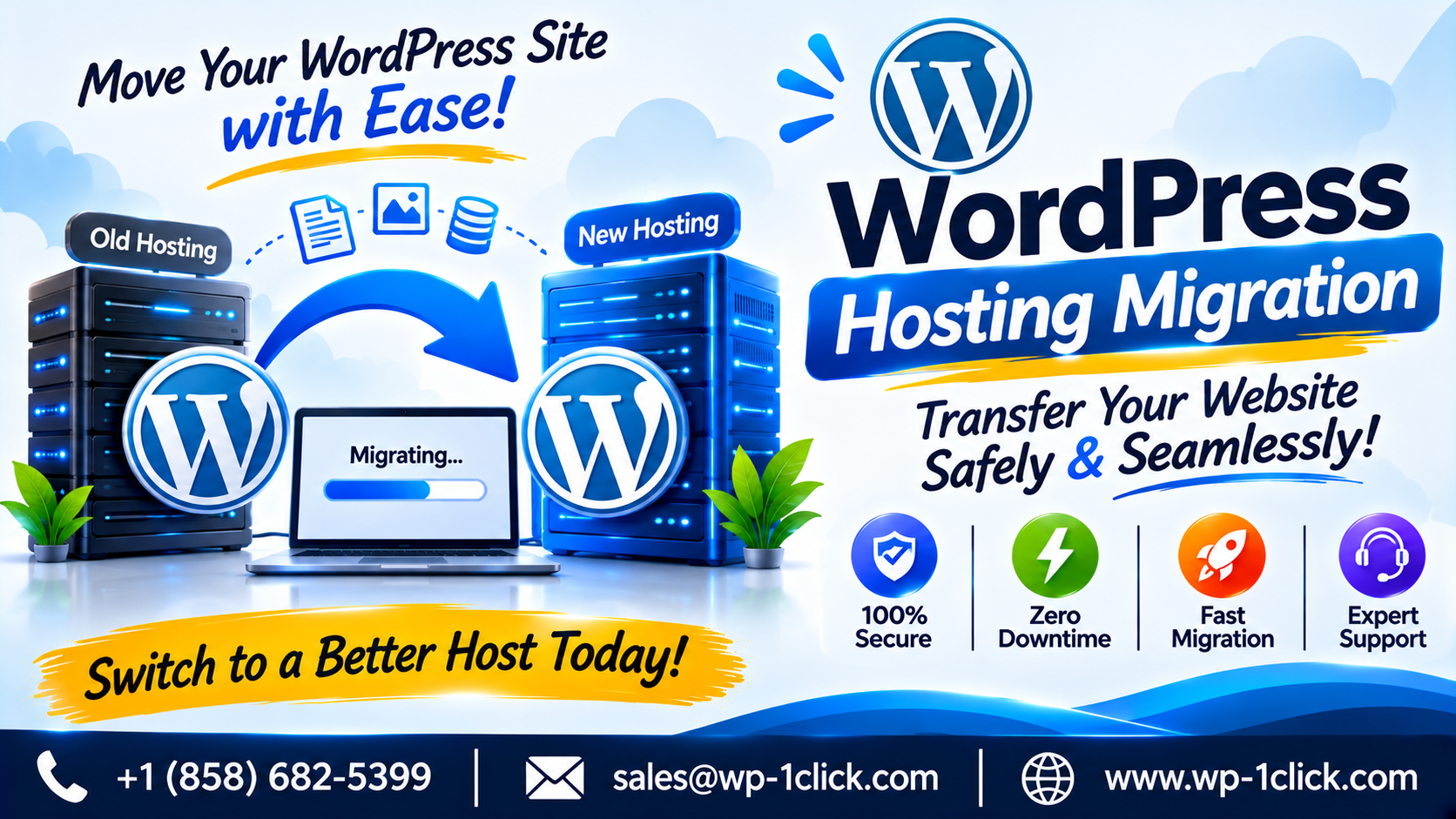
Choosing the right hosting provider is essential for maintaining a fast, secure, and reliable WordPress website. As your website grows, you may experience slow loading speeds, frequent downtime, limited server resources, or increasing hosting costs. These issues can affect your website performance, customer experience, and search engine rankings.
This is why WordPress Hosting Migration is an important consideration for website owners who want a better hosting environment.
Whether you want to perform a WordPress website migration, switch hosting providers, or improve your website's overall performance, the migration process needs proper planning and execution.
A successful migration involves transferring website files, databases, themes, plugins, and configurations without losing important data. It also requires careful testing to ensure your website continues working correctly after the move.
In this comprehensive guide, we will explain how WordPress hosting migration works, why you might need it, how to migrate WordPress to a new host, and how to protect your website SEO during the process.
WordPress hosting migration is the process of transferring your existing WordPress website from one hosting provider or server to another.
This process is also known as a WordPress hosting transfer because it involves moving your website's complete hosting environment while keeping its content and functionality intact.
A typical WordPress migration includes transferring:
WordPress core files
Website themes and plugins
Images and media files
WordPress database
Website configuration files
User accounts and website content
SSL and security configurations
Domain and DNS settings, when required
The main purpose of WordPress hosting migration is to move your website to a better hosting environment without affecting its existing functionality.
For example, if your current hosting provider cannot handle increasing website traffic, you can migrate your website to a more powerful hosting solution.
Similarly, businesses may consider migration to improve loading speed, strengthen security, reduce downtime, or access better technical support.
There are several reasons why website owners decide to migrate their WordPress websites to another hosting provider.
Let's explore the most common reasons.
Website speed plays an important role in user experience and search engine performance.
If your website takes too long to load, visitors may leave before exploring your content or services. Slow loading speeds can also affect conversions and customer satisfaction.
A better hosting environment may offer:
Faster SSD or NVMe storage
Optimized server configurations
Advanced caching technology
Improved PHP performance
Better server resource allocation
A properly planned WordPress website migration can help you move to an infrastructure that better supports your website performance requirements.
Website downtime can result in lost visitors, missed business opportunities, and reduced customer trust.
If your existing hosting provider frequently experiences server problems, migrating to a more reliable hosting environment may help improve website availability.
Look for hosting providers that offer reliable infrastructure, regular monitoring, backup facilities, and responsive technical support.
Website security should always be a priority, especially if you operate a business website, eCommerce store, or membership platform.
A suitable hosting environment may provide:
SSL certificate support
Server-level firewalls
Malware scanning
Automated backups
Security monitoring
Protection against common attacks
Moving your website to a hosting provider with better security features can strengthen your overall website protection.
As your website becomes more popular, your existing hosting plan may struggle to handle increasing visitor numbers.
This can lead to slow performance, resource limitations, and unexpected downtime.
A WordPress hosting transfer gives you the opportunity to choose a hosting plan with better resources and scalability.
This is especially useful for growing businesses, online stores, blogs, and websites that experience seasonal traffic increases.
Technical problems can happen at any time.
If your current hosting provider takes too long to resolve issues, managing your website can become difficult.
Moving to a hosting provider with knowledgeable WordPress support can make website management easier and help resolve technical issues more efficiently.
Before starting the migration process, it is important to prepare your website properly.
Good preparation reduces the possibility of data loss, compatibility problems, and unexpected downtime.
Start by identifying a hosting provider that meets your website's requirements.
Consider the following factors:
Server speed and reliability
Available storage and bandwidth
WordPress compatibility
Security features
Backup availability
Customer support
Pricing and scalability
Do not select a hosting provider based only on its introductory pricing. Consider the long-term value and resources included in the hosting plan.
A complete WordPress website backup is one of the most important requirements before migration.
Your backup should include all website files and the complete WordPress database.
Make sure you save:
WordPress core files
Themes and plugins
Uploaded images and media
Database tables
Configuration files
Important custom settings
Store your backup in a separate and secure location rather than relying only on your existing hosting account.
If something goes wrong during migration, you can use the backup to restore your original website.
Before transferring your website, review its current technical configuration.
Check the following:
WordPress version
PHP version
Database version
Installed plugins
Active theme
Website storage requirements
Custom code and configurations
This information can help you identify compatibility issues before they affect the migration.
Your domain name does not necessarily need to change when migrating hosting providers.
However, you may need to update DNS records or nameservers to point your domain toward the new hosting server.
Plan this step carefully because DNS propagation can take time.
Keeping your old hosting account active during this period can help reduce migration-related disruption.
Once your preparation is complete, you can begin the actual migration.
Here is a step-by-step explanation of how to migrate WordPress to new host successfully.
Purchase your new hosting plan and configure your hosting account.
Make sure the server supports the technical requirements of your existing WordPress website.
Create the necessary database, database user, website directory, and server configurations before transferring your files.
Download your existing WordPress website files from your old hosting account.
You can generally use:
FTP clients
Hosting control panels
File Manager
WordPress migration plugins
Upload the downloaded files to the appropriate directory on your new hosting server.
Pay particular attention to the wp-content folder because it contains your themes, plugins, and uploaded media files.
Your WordPress database stores important website information, including posts, pages, comments, user accounts, and settings.
First, export your existing database using a database management tool.
Next, create a new database on your destination hosting server and import the exported database file.
After importing the database, update the database connection details in the wp-config.php file if necessary.
Make sure the database name, username, password, and database host are correct.
After transferring your website files and database, verify that your WordPress installation is connected to the correct database.
If you are changing your domain name, you may also need to update website URLs throughout the database.
Use a WordPress-compatible search-and-replace tool to avoid damaging serialized database data.
If you are keeping the same domain name, most existing URLs should remain unchanged.
Before pointing your domain toward the new server, thoroughly test the migrated website.
Check the following:
Homepage and internal pages
WordPress admin dashboard
Images and media files
Contact forms
Installed plugins
Theme functionality
Login and registration features
Shopping cart and checkout pages
SSL certificate and HTTPS functionality
This testing stage is essential for identifying problems before visitors start accessing your new hosting environment.
Once your new website is working correctly, update the necessary DNS records or nameservers.
DNS propagation may take several hours and sometimes longer, depending on DNS caching and configuration.
Keep your old hosting account active during this transition to avoid losing access to important website data.
After the DNS changes have taken effect, visit your website using different devices and browsers.
Verify that all pages load correctly and that important website features are working.
Also, check website speed, SSL configuration, redirects, and search engine indexing settings.
One of the biggest concerns during website migration is downtime.
Businesses cannot always afford to make their websites unavailable, especially when they depend on online sales, customer inquiries, or website traffic.
Although completely guaranteeing zero downtime is difficult, proper planning can significantly reduce service interruptions.
Here are some useful practices for achieving WordPress migration without downtime.
Do not cancel your existing hosting account before setting up the new server.
Prepare your new hosting environment while your original website remains operational.
A complete backup ensures that you have a recovery option if any migration problem occurs.
Always back up both website files and database information.
Complete the website transfer before changing your domain's DNS settings.
This allows you to test the new installation without immediately directing visitors away from your old server.
Check every important page and feature before switching DNS.
Pay special attention to contact forms, login systems, checkout functionality, and custom integrations.
If your website continues receiving new comments, orders, registrations, or form submissions during migration, those changes may not automatically appear in the transferred database.
For dynamic websites, arrange a final database synchronization or a brief maintenance window before switching traffic.
Do not immediately delete your original hosting environment.
Keep it available until you confirm that the new website is working correctly and all important data has been transferred.
Following these steps can significantly reduce the risk of downtime during WordPress hosting migration.
Even a small mistake can affect your website functionality or performance.
Here are some common migration problems to avoid.
Never begin a migration without creating a complete WordPress website backup.
A backup provides a recovery option if files become corrupted or database problems occur.
Your website may continue pointing toward the old hosting server if DNS settings are not updated correctly.
Always verify your domain's DNS configuration after migration.
An incorrectly configured SSL certificate can cause browser security warnings and HTTPS errors.
Make sure your new hosting environment supports HTTPS and that the SSL certificate is properly installed.
Website migration can sometimes create broken internal links, missing images, or incorrect URL references.
Use a website crawling tool to identify broken URLs and fix them.
Do not immediately cancel your old hosting account after transferring your website.
Keep it active until you have confirmed that the new website is fully functional and the transition is complete.
Your website's SEO configuration should remain consistent after migration.
Check your robots.txt file, XML sitemap, canonical URLs, permalink settings, and indexing permissions.
A successful WordPress SEO migration requires more than simply moving website files and databases.
You also need to protect your existing search engine visibility.
Hosting migration does not automatically damage your search rankings. However, technical mistakes can affect how search engines access and understand your website.
Follow these recommendations to protect your SEO.
Whenever possible, keep your existing website URLs unchanged.
Avoid unnecessary permalink changes because they can create broken links and redirect problems.
Your existing SEO titles and meta descriptions should remain consistent after migration.
Make sure your SEO plugin settings and metadata are transferred correctly.
Review your website's internal links after migration.
Make sure navigation menus, blog links, images, and important page references work properly.
Check that your XML sitemap is accessible and contains the correct website URLs.
If necessary, regenerate your sitemap and submit it through Google Search Console.
Sometimes staging or development configurations accidentally prevent search engines from accessing a migrated website.
Verify that your robots.txt file and WordPress search engine visibility settings allow indexing.
After completing the migration, monitor Google Search Console for:
Indexing errors
Server connectivity problems
Page availability issues
Sitemap errors
Unexpected changes in indexed URLs
Regular monitoring helps identify and resolve technical SEO problems early.
A WordPress migration service can be useful if you do not have the technical knowledge or time to manage the transfer yourself.
Although simple WordPress websites can often be migrated using plugins, more complicated websites require additional attention.
Professional migration assistance may be beneficial for:
Large WordPress websites
WooCommerce stores
Membership websites
Websites with custom plugins
Websites with large databases
Business-critical websites
Websites requiring minimal downtime
A professional migration process generally involves website backups, file transfers, database migration, server configuration, DNS updates, and post-migration testing.
Choosing an experienced migration provider can help reduce technical complications and make the transition easier.
At wp1click, the focus is on helping website owners make their WordPress experience easier and more manageable.
Visit wp1click to explore the brand and its WordPress-related solutions.
The time required for WordPress hosting migration depends on several factors.
These include:
Website size
Database complexity
Number of installed plugins
Server performance
Network transfer speed
DNS configuration
Custom website functionality
A small business website may be migrated relatively quickly, while a large eCommerce website may require additional preparation and testing.
It is always better to prioritize website stability and data accuracy instead of rushing the migration process.
WordPress hosting migration is the process of moving a WordPress website from one hosting provider or server to another. It involves transferring website files, databases, themes, plugins, and configurations while preserving existing website functionality.
You can migrate WordPress to a new host by creating a complete website backup, transferring website files, exporting and importing the database, updating configurations, testing the new installation, and changing DNS records.
Yes, you can significantly reduce downtime by preparing your new hosting environment in advance, transferring and testing your website before changing DNS, and keeping your old hosting account active during the transition.
However, zero downtime cannot be guaranteed in every situation.
A WordPress website backup protects your website data during migration. If something goes wrong, you can use the backup to restore your original website files and database.
A typical WordPress migration service may include website file transfers, database migration, hosting configuration, domain and DNS updates, SSL verification, and post-migration testing.
The exact services depend on the provider.
A WordPress hosting transfer does not automatically affect your search rankings. However, broken links, incorrect redirects, indexing issues, and missing content can negatively affect SEO.
Following proper WordPress SEO migration practices helps protect your existing search visibility.
Yes. You can move your WordPress website to another hosting provider while keeping the same domain name. In most cases, you only need to update the relevant DNS records.
It depends on your technical experience and website complexity. A small blog may be manageable using a migration plugin, while a large business website or WooCommerce store may benefit from professional migration assistance.
Your migration is successful when all website pages load correctly, images display properly, plugins function as expected, database connections work, SSL is active, forms operate correctly, and visitors can access the new hosting environment without unexpected errors.
WordPress Hosting Migration is an important step when your existing hosting environment no longer meets your website's requirements.
Whether you want better website speed, stronger security, improved reliability, or more resources for future growth, migrating to a suitable hosting provider can make a meaningful difference.
The key to successful migration is proper preparation, a complete WordPress website backup, careful file and database transfers, correct DNS configuration, and thorough testing.
If you want to migrate WordPress to a new host visit wp1click, take the time to understand the migration process and protect your website data before making changes.
By following the right approach, you can complete a smooth WordPress hosting transfer, minimize downtime, and protect your existing SEO performance.