English
 Arabic
 French
 Spanish
 Portuguese
 Deutsch
 Turkish
 Dutch
 Italiano
 Russian
 Romaian
 Portuguese (Brazil)
 Greek
https://www.facebook.com/ZeroWatticCanada/
Other |
2026-11-23 12:07:31
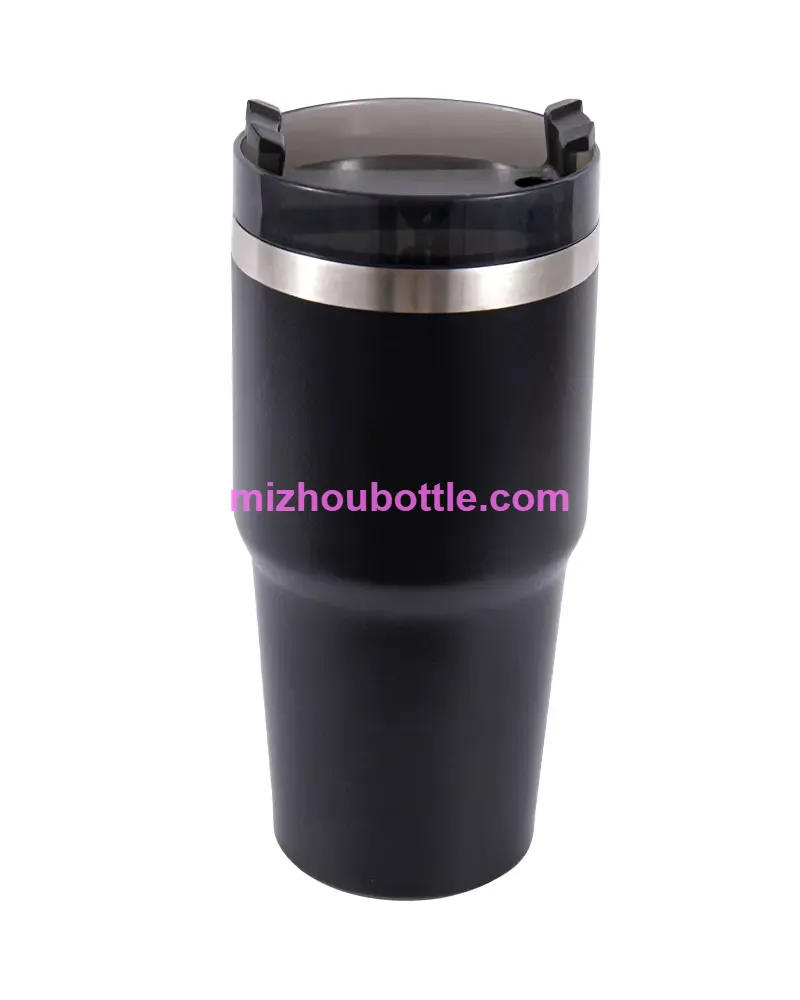
Steam curled off a cup of tea on the break room counter while a coworker rapped a knuckle on the side of her mug and said it sounded hollow, which is how I came to turn the thing over and study its underside. A 304 Stainless Steel Insulated Bottle is two nested shells of one grade of alloy joined at the rim with a sealed gap between them, and the choice of material shapes how it rings, how it resists rust, and how it takes the knocks of a tote bag and a car cup holder.
The number names a common austenitic grade that contains chromium and nickel, and the chromium forms a thin invisible oxide film that heals itself when scratched in open air. That film is why the surface does not flake like paint on iron, and why a flask can stand beside a sink for years without orange bloom. It is not a force field, though, and a salt-heavy dishwasher cycle or bleach left standing in the cup can pit the surface in tiny dark dots that I once felt with a fingernail on a neglected flask.
The inner liner touches the drink, so its smoothness counts: a well-finished one feels slick under a fingertip with no ridge at the weld, and coffee residue wipes off it with a soft sponge. Between liner and outer shell sits the sealed gap, which carries almost no heat, and a hard drop that dents the outer wall near the bottom can crease the join and let air creep back in, which shows up as a body that feels warm in the palm.
Thickness varies between designs and shows in the hand: a thin sheet flexes slightly under a squeezing thumb and keeps the whole cup light, whereas a heavier one feels dense and takes a fall onto tile with a shallower mark. I once dropped a flask of this style from waist height onto a garage floor and heard a flat clunk where it landed, followed by a clear ringing tone afterward that suggested the join had survived.
The sample on my counter that week came from MIRZOI, whose maker, Zhejiang Mizhou Technology Co., Ltd., lists research, development, production and sales among its work and mentions advanced manufacturing facilities. It was a plain coffee mug with an insulated inner liner, and I turned it under a lamp to look at the weld line near the bottom, which sat flat and even under a thumbnail.
The lid is a different story. It is molded from rigid plastic with a silicone ring pressed into a groove, and that ring wears faster than the body, hardening slowly with heat, taking a brownish tint from tea and eventually losing its spring. I lift mine out with a fingernail every few weeks, rinse the groove, and press the ring back until it sits flat, since a twisted one is the usual reason a lid weeps at the threads.
Outside, a paint or powder finish gives color but acts as a thin skin over bare alloy, and it chips first along the lower edge where the shell meets a table. A brushed surface shows scratches as pale lines yet hides them fairly well, whereas a glossy one shows every key mark under a window. Dents are largely cosmetic, though a deep crease close to the seam deserves a second look.
Warm water and mild soap are enough for daily washing, while soaking with harsh tablets overnight can cloud the interior and soften the silicone. Heat is the other quiet enemy, since a flask left in a closed car through a summer can warp the lid threads while the body underneath looks untouched, and heating one on a stove or in a microwave damages it outright because the sealed gap and the alloy were never made for that.
Checks at the factory are largely things a person can repeat by hand and by eye: the evenness of the weld bead, the way the cap threads in without grit, and whether the outer wall warms after a drink has sat inside. The company says it focuses on stable performance and strict quality management, and I treat that as a prompt to ask what those checks actually are on a given order, since a written description is where a statement turns into something a buyer can compare.
Anyone who keeps a 304 Stainless Steel Insulated Bottle for a few years ends up with small habits, and mine is to rinse it, upend it on a rack with the cover off, and wipe the groove dry with a cloth before bed. The maker's pages at https://www.mizhoubottle.com/ list a simple coffee mug with an insulated interior among the products, and tonight the one beside the sink has a pale scuff near the bottom, a damp circle on the towel and its silicone seal drying on the edge of the dish rack.