English
 Arabic
 French
 Spanish
 Portuguese
 Deutsch
 Turkish
 Dutch
 Italiano
 Russian
 Romaian
 Portuguese (Brazil)
 Greek
Ni-MH Battery Market Trends: Improved Efficiency and Enhanced Lifecycle Performance
Health |
2026-11-18 10:31:07
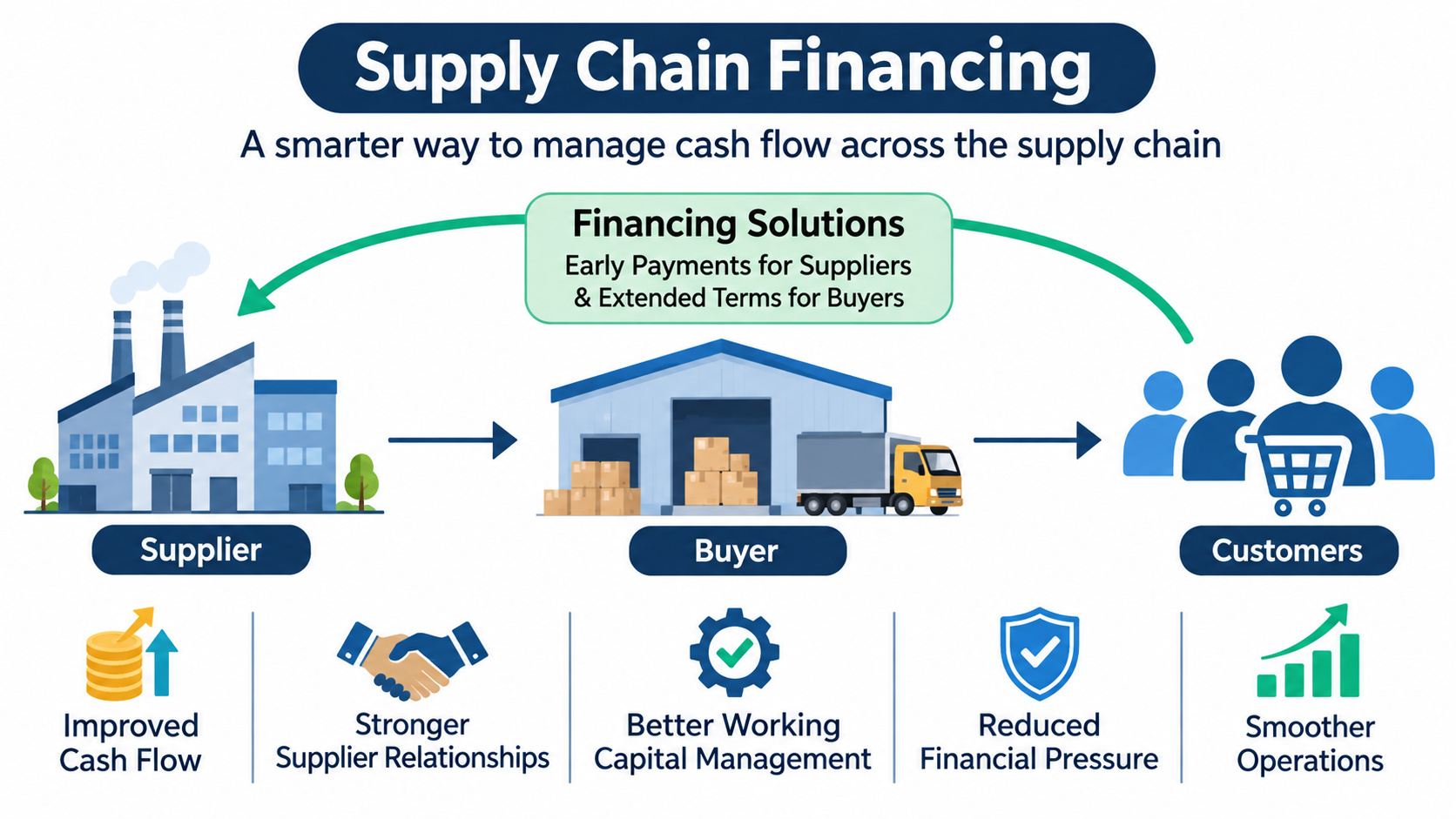
Financial efficiency is one of the most important factors contributing to business success in today's competitive global marketplace. Organizations must manage cash flow, control operational expenses, maintain sufficient inventory, and ensure timely payments to suppliers while meeting customer expectations. As supply chains become more complex, businesses need effective financial strategies to improve liquidity, reduce costs, and maintain operational stability. Supply chain financing has emerged as a valuable solution for achieving these objectives.
Supply chain financing helps businesses improve financial efficiency by connecting buyers, suppliers, and financial institutions through flexible payment and financing arrangements. It allows suppliers to access funds earlier while buyers maintain control over their working capital and payment schedules. By improving the movement of funds throughout the supply chain, this financing approach supports stronger financial management, better supplier relationships, and sustainable business growth.
Financial efficiency refers to how effectively an organization manages its financial resources to achieve business objectives. Across the supply chain, it involves managing payments, controlling procurement costs, maintaining inventory levels, and ensuring that sufficient working capital is available for daily operations.
A financially efficient supply chain allows businesses to reduce unnecessary expenses, improve cash flow, and avoid delays caused by financial shortages.
However, traditional supply chain operations often involve long payment cycles, manual invoice processing, limited financial visibility, and complicated transactions between business partners. These challenges can increase administrative costs and create liquidity problems for suppliers.
Supply chain financing addresses these issues by providing structured financial arrangements that improve payment flexibility and optimize working capital.
Supply chain financing is a financial arrangement that enables businesses to improve cash flow management through cooperation between buyers, suppliers, and financing providers.
One common example is reverse factoring. Under this arrangement, a buyer approves an invoice issued by a supplier. A financial institution then offers the supplier early payment based on the approved invoice. The buyer pays the financial institution at the agreed maturity date.
This arrangement provides several financial advantages. Suppliers receive payments earlier, buyers can preserve cash for longer periods, and financial institutions earn revenue through financing services.
Other financing methods include dynamic discounting, receivables financing, inventory financing, and payables financing.
Each solution serves different business requirements, allowing organizations to choose arrangements that align with their financial strategies and operational needs.
Working capital management is essential for maintaining financial stability. Businesses need sufficient liquidity to pay employees, purchase materials, manage transportation expenses, and cover other operational costs.
When payment cycles are not properly managed, organizations may experience cash flow shortages that affect their ability to operate efficiently.
Supply chain financing helps optimize working capital by improving the timing of payments between buyers and suppliers.
Buyers can maintain liquidity for longer periods under agreed payment terms, while suppliers gain access to early payments through financing providers.
This creates additional financial flexibility for both parties.
For buyers, preserved cash can be directed toward business expansion, technology investments, inventory management, and other strategic activities.
For suppliers, faster access to funds supports daily operations and reduces dependence on expensive short-term borrowing.
As a result, supply chain financing contributes to better cash flow planning and more effective financial resource allocation.
Financial inefficiency often results from complicated payment procedures, manual invoice verification, and repeated administrative activities.
Traditional invoice processing can involve multiple departments, extensive documentation, and lengthy approval procedures. These processes increase operational expenses and may delay payments to suppliers.
Modern supply chain financing solutions can simplify these activities through digital platforms and automated workflows.
Automated invoice verification helps reduce errors, while centralized financial systems improve communication between buyers, suppliers, and financing providers.
Businesses can also reduce the time required to process transactions and manage outstanding payments.
Lower administrative costs allow finance teams to focus on more important activities, including financial planning, risk management, and strategic decision-making.
By improving financial processes, organizations can achieve greater efficiency across their supply chain operations.
Suppliers are important participants in every supply chain. Their financial stability directly affects production capacity, delivery performance, product quality, and business continuity.
However, suppliers may experience cash flow difficulties when buyers operate with extended payment terms.
These challenges can prevent suppliers from purchasing raw materials, paying employees, maintaining equipment, and meeting customer demand.
Supply chain financing provides suppliers with access to early payments against approved invoices. This improves liquidity and helps them manage financial obligations more effectively.
Financially stable suppliers are better positioned to maintain consistent operations, invest in production improvements, and fulfill orders on time.
For buyers, stronger supplier performance can reduce delivery disruptions, improve product availability, and create more reliable business relationships.
Therefore, supply chain financing improves financial efficiency not only for individual organizations but also throughout the wider supplier network.
Digital technology plays an increasingly important role in improving financial efficiency across supply chains.
Modern supply chain financing platforms provide businesses with centralized systems for managing invoices, monitoring payment schedules, and accessing financing information.
These platforms improve financial transparency by allowing buyers and suppliers to track transactions and review payment statuses in real time.
Automation can simplify invoice approval, reduce manual errors, and improve transaction accuracy.
Artificial intelligence and data analytics can also support better financial decisions by identifying payment trends, forecasting cash flow requirements, and highlighting potential financial risks.
Cloud-based platforms make it easier for businesses to share financial information and coordinate activities across different locations.
By adopting digital supply chain financing solutions, organizations can improve financial visibility, reduce administrative complexity, and make faster decisions.
Financial risks can affect businesses at every stage of the supply chain. Delayed customer payments, supplier insolvency, changing interest rates, and unexpected operating expenses can create financial pressure.
These challenges may affect production schedules, inventory availability, and the ability to fulfill customer orders.
Supply chain financing helps reduce certain financial risks by improving liquidity and supporting more predictable payment arrangements.
When suppliers have access to reliable financing, they can manage their expenses more effectively and maintain business operations during periods of financial pressure.
Buyers also benefit from improved visibility into payment obligations and stronger relationships with critical suppliers.
However, organizations must carefully evaluate financing costs, contractual obligations, credit exposure, and the financial condition of participating suppliers.
Effective risk management ensures that financing programs remain affordable, transparent, and beneficial over the long term.
Inventory and procurement management are closely connected to financial efficiency.
Holding excessive inventory can increase storage expenses and tie up valuable working capital. On the other hand, insufficient inventory can create production delays and reduce customer satisfaction.
Supply chain financing can help organizations manage these challenges by improving liquidity and supporting more flexible procurement strategies.
With better access to working capital, suppliers can purchase materials and maintain appropriate inventory levels without relying entirely on immediate customer payments.
Buyers can also preserve financial resources for procurement activities and respond more effectively to changing market demand.
Improved coordination between procurement and finance departments helps businesses balance inventory requirements with cash flow objectives.
This creates a more efficient supply chain with better resource utilization and reduced financial pressure.
To maximize the benefits of supply chain financing, organizations should follow a structured implementation strategy.
1. Analyze Existing Financial Processes: Review payment cycles, invoice approval procedures, supplier requirements, and working capital performance to identify inefficiencies.
2. Select Appropriate Financing Solutions: Choose financing arrangements that match business objectives, supplier needs, and available financial resources.
3. Partner With Reliable Financing Providers: Work with financial institutions that offer transparent terms, competitive rates, and flexible financing options.
4. Adopt Digital Financial Platforms: Use technology to automate invoice management, monitor transactions, and improve financial reporting.
5. Strengthen Supplier Communication: Maintain transparent communication about payment terms, financing opportunities, and financial responsibilities.
6. Monitor Financial Performance: Measure improvements through working capital requirements, payment processing times, financing costs, supplier participation, and operational efficiency.
Regular evaluation helps organizations identify opportunities for improvement and maintain sustainable financial performance.
The future of supply chain financial management will increasingly depend on digital transformation, financial innovation, and stronger collaboration between business partners.
Automation, artificial intelligence, advanced analytics, and integrated financial platforms will continue to improve how organizations manage payments and access financing.
Businesses will also focus on creating more resilient supplier networks by improving liquidity and supporting smaller suppliers.
As global markets become more competitive, organizations that invest in modern supply chain financing solutions will have greater opportunities to improve financial performance and respond to changing business requirements.
The integration of technology and financial services will make supply chain financing an increasingly important component of effective business management.
Enhancing financial efficiency across the supply chain requires effective cash flow management, reliable supplier relationships, transparent payment processes, and appropriate financial planning.
Supply chain financing provides businesses with a practical approach to achieving these objectives. It improves working capital management, supports supplier liquidity, reduces administrative costs, and creates greater financial flexibility.
By combining innovative financing arrangements with digital technology and responsible risk management, organizations can improve financial performance throughout their supply networks.
Ultimately, supply chain financing is more than a payment management strategy. It is an important tool for building financially efficient operations, strengthening supplier partnerships, and supporting sustainable business growth in an increasingly competitive global economy.