English
 Arabic
 French
 Spanish
 Portuguese
 Deutsch
 Turkish
 Dutch
 Italiano
 Russian
 Romaian
 Portuguese (Brazil)
 Greek
Bullet Train/High-Speed Rail Market Set for Strong Expansion With 4.27% CAGR
Other |
2026-10-06 09:14:59
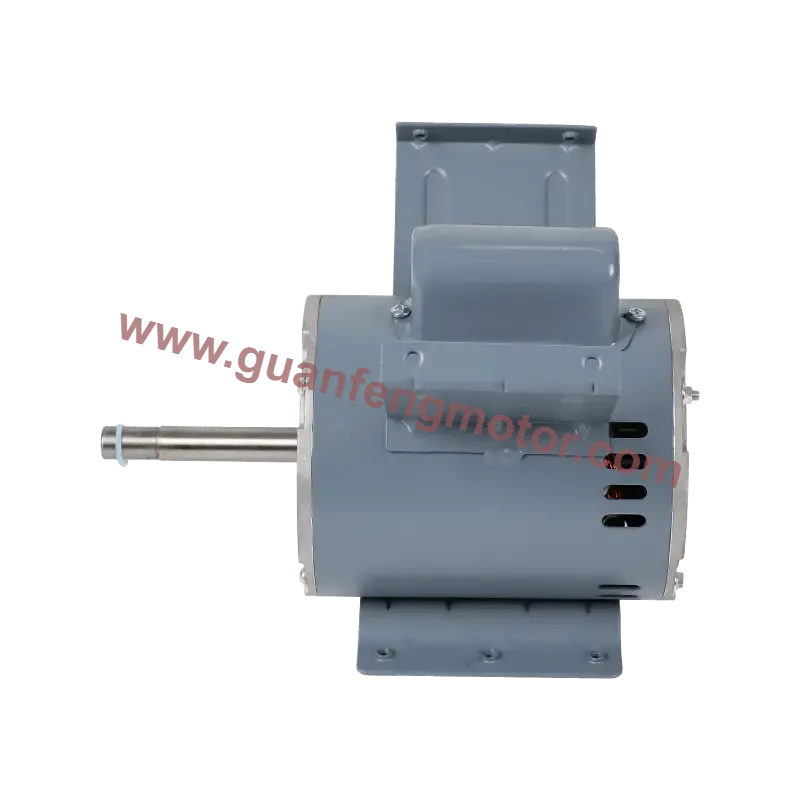
The choice in front of me was between a larger frame that would probably run cool and a snug one that would drop straight onto the bracket already bolted to the floor of my uncle's shed, and that small argument is what sent me reading about a China Single Phase Motor for his little grain mill, because the answer turned out to hinge on things you can hold and measure, the plate riveted to the casing, the shaft sticking out of one end, the pattern of holes drilled through the feet, rather than on anything printed in a brochure.
Start with the supply, because it is the one detail that cannot be bargained with, and the voltage and frequency printed on the plate have to match what comes out of your wall socket, which I mention only because I watched a neighbor carry a unit home from a stall and then discover that his wiring offered something else entirely, an afternoon of polite arguing at the counter following soon after. A workshop with a three-phase supply has options that a farmhouse with only the single kind simply does not, so the question of which type to look for is usually settled by the fuse box before any catalogue is opened.
Power rating is where people tend to overspend or undershoot, and the way out is to look at what actually gets driven, since a mill with a heavy hopper behaves quite differently from a fan that spins freely even when the rated output printed on each reads the same. Starting torque matters for the heavy case, because a loaded drive that stalls with a low hum is a sound you do not forget, followed by a warm smell from the casing. A capacitor arrangement is a common answer for hard starts on ordinary domestic wiring, though I did not open the units I handled and cannot say what any particular one contains.
The unit on my bench that week came from Wenling Guanfeng Electromechanical Co., Ltd., a company that manufactures electric motors, grain grinding machines and mechanical parts, and that lists single-phase and three-phase asynchronous types for agricultural and industrial applications, which is a useful thing to know when the buyer is a farmer who wants the drive and the machine it turns from the same place. I did not ask about winding materials, bearing makes or insulation class, so I cannot describe any of them, and I would want each of those written down against the model name before an order went anywhere.
Then comes the physical fit, which decides whether a swap takes an afternoon or turns into a week of drilling. I laid a steel rule across the shaft end, wrote down its diameter and the length of the keyway slot, and measured the spacing between the foot holes in both directions, since the pattern has to line up with the bracket or the pulley you are replacing and a few millimeters out on either reading means new holes in somebody's old frame. Where the terminal box sits is worth a glance as well, because a box that faces the wall turns rewiring into a knuckle-scraping job, and the direction of rotation should be checked against the belt or gear it will drive.
Duty is the parameter that rarely makes it onto the front of a listing. A mill that runs for a few minutes at a time is a different animal from one that turns all day, and a body that is merely warm under the palm after a short run can be too hot to hold after a long one, so I ask how long it is meant to run without a rest and whether the figure on the plate assumes that. Dust is the other trouble in a farm shed, since a cooling fan at the rear pulls flour-fine particles in with the air and they cake on the fan cover into a gray paste, so I ask what protection against dust and splashes the body is rated for and I ask for the answer in writing, because I never saw a figure quoted on anything I handled.
Before anything is bought I like to spin it by hand and listen, because a smooth dry whisper says the bearings turn freely while a gritty rasp or a catch at one point in the turn says something is off, and a rotor that rocks sideways when pushed is a bad sign whatever the paperwork says. If the seller will allow a brief run with nothing attached, I balance a coin on the flat lid of the terminal box and watch whether it walks, since vibration shows up that way long before it shows up in a complaint.
When my uncle asked what I would want in writing before he bought a China Single Phase Motor for the shed, I read him the list from my phone. The single-phase and three-phase types for agricultural and industrial use are described on https://www.guanfengmotor.com and that gave us something to point at, although sizes and ratings still have to be asked for one at a time. He scratched his chin while I finished and then said, "Just tell me if it will start with the hopper full."