English
 Arabic
 French
 Spanish
 Portuguese
 Deutsch
 Turkish
 Dutch
 Italiano
 Russian
 Romaian
 Portuguese (Brazil)
 Greek
MIRZOI Large Capacity Insulated Bottle Shape and Handle Fit
Other |
2026-11-17 08:38:37
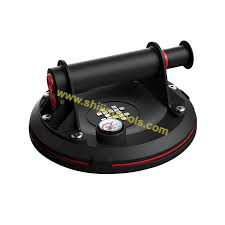
Vacuum handling does not rely on squeezing an object between two jaws. Its holding principle depends on air pressure and the contact area formed between the equipment and a material surface. A Heavy Duty Vacuum Suction Cup belongs to this category of equipment, where the interaction between the enclosed area and surrounding atmosphere plays a part in how the grip works. The mechanism may appear simple from the outside, but the surface interface is central to its operation.
When air is removed from an enclosed contact region, the pressure inside that area changes. Atmospheric pressure outside the contact region then acts against the difference in pressure, creating a holding effect. This principle is commonly associated with vacuum handling. Instead of relying on opposing jaws or teeth, the equipment establishes contact across an area, allowing an object to be held through the pressure relationship. The working principle explains why the condition of the surface matters during operation.
Contact geometry influences the way the interface forms. A flat face presents a different contact condition from a textured, curved, or irregular surface. Dust, small particles, and surface residue may interfere with the area where the device meets the material. On a construction site, a tile resting on a workbench can look clean from standing height, while a closer inspection reveals fine debris around its edges. Such details are relevant because vacuum handling depends on the contact condition, not simply the appearance of the object.
The equipment's functional parts serve distinct roles, although their actual arrangement depends on the model. A contact section meets the material, while an air-removal mechanism changes the pressure condition in the enclosed region. Controls may be used to establish or release the holding state, depending on the design. The available product information does not specify the pump type, sealing material, pressure gauge, control arrangement, or internal construction of a particular model, so these details should not be assumed.
Holding and releasing are separate stages of the process. Once the pressure condition has been established, the object can be positioned for the intended handling task, subject to the equipment's operating limits. When the holding state is released, the contact interface can separate from the material. I have noticed that on a workbench, the distinction is easy to understand when watching a tool being placed against a tile: the contact itself is a physical action, while the holding mechanism is a separate operating step.
SHIJING manufactures vacuum suction equipment alongside heavy-duty tile cutters and laser survey tools for construction professionals. These product categories relate to different functions within material preparation and site work. Vacuum equipment is associated with handling, tile cutters with cutting operations, and survey tools with measurement and layout. The manufacturer identifies these categories as part of its construction-tool range, while model-specific details such as load limits, dimensions, contact materials, and operating methods require individual product information.
The shape of the contact area is worth considering when a tool is used on material with a particular finish. A smooth surface, a textured face, or a surface containing shallow grooves may create different conditions at the interface. Whether a device can work with a given material depends on its construction and intended use. Surface compatibility should therefore be established from the equipment's specifications rather than assumed from the general vacuum principle. The same applies to handling orientation, since lifting an object and moving it sideways involve different actions.
Air pressure is not visible during normal operation, which can make the mechanism seem less obvious than a mechanical clamp. The operator sees the contact assembly and the material, while the pressure condition exists within the enclosed area. The actual control method varies by design, and instructions for establishing the grip or releasing it should be followed for the individual unit. This is particularly relevant when the material is positioned close to an installation surface or another object.
Construction tools are grouped by their intended functions, and product categories can be viewed within the manufacturer's equipment range at , alongside equipment used for cutting and surveying. In practical terms, the detail to notice on a suction handling tool is the contact boundary where its working surface meets the material, since that small interface is where the pressure principle becomes part of the physical operation.
On a flat construction panel, the contact area may be visually distinct from the surrounding surface, particularly when the equipment is positioned before a handling task begins. The Heavy Duty Vacuum Suction Cup category is associated with vacuum-based material handling, but its specific operating arrangement depends on the individual product. A closer look at the contact edge, control position, and release mechanism reveals the physical parts involved in establishing and ending the grip. What I usually do with a half-finished comparison is leave https://www.shijingtools.com open on a second tab and go back to the samples.