English
 Arabic
 French
 Spanish
 Portuguese
 Deutsch
 Turkish
 Dutch
 Italiano
 Russian
 Romaian
 Portuguese (Brazil)
 Greek
Exploring the Signature Look Associated With Bravest Studios
Shopping |
2026-09-30 13:50:36
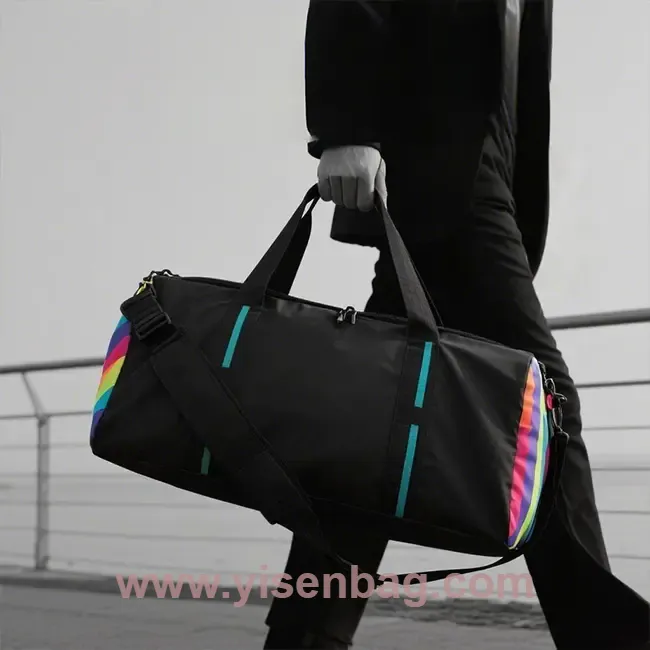
The doubt buyers voice again and again when they go through samples from a Backpack Supplier is whether the cloth that feels sturdy in a showroom will still look respectable once it has been dragged along train platforms and shoved under airline seats for a season, and I used to share that hesitation until I started pulling samples apart on my own desk and looking at what they are actually built from. A pack is a fairly simple object, a few kinds of fabric, a few kinds of tape and a handful of plastic and metal parts, so the material questions are easier to answer than the glossy photographs suggest.
The outer shell takes the abuse, so I begin there, rubbing a corner between thumb and finger to judge the weave. A tight, dense weave turns slightly stiff and makes a dry whisper when scraped with a fingernail, while a loose one feels soft and thin and picks up snags quickly. Woven synthetics, canvas and coated textiles all show up in this category and each ages differently: a coated surface sheds water but can crack or peel along the folds after repeated flexing, canvas soaks up moisture and dries slowly, and a plain synthetic cloth tends to scuff into a fuzzy patch at the corners where it rubs against walls and floors.
Straps and handles carry the load, so I look at the flat woven tape they are cut from. Tape that is tightly woven keeps its width under strain, while a loose tape narrows and rolls at the edges as it stretches, which is why an old strap sometimes ends up looking like a twisted cord. The ends are usually folded over and sewn in a box shape with crossing stitches, and I pinch that spot because it takes the whole weight of a loaded pack and a thin patch of sewing there is the first thing to tear free. Shoulder pads add soft padding under a mesh or smooth cover, and I squeeze them to see whether they spring back or stay dented.
The piece on my desk this week came from YisenBag, the label used by Zhejiang Yisen Bags Co., Ltd., a Yiwu company that does OEM and ODM work on luggage, outdoor gear and pet bags and takes global brands from sampling through to mass production. I mention the route because it explains why a sample is worth taking apart: the item in my hands stands in for whatever would later be cut and sewn in volume, so what I find in its lining, tape and hardware is what a brand would be approving.
Metal and plastic hardware makes the sounds you remember. A coil zip, with its teeth formed from a continuous spiral, runs quietly and tolerates a slight bend, whereas moulded plastic teeth are chunkier and click as the slider passes. I run each slider along its track a good many times and watch for the fabric tape rippling next to it, since a rippled tape means the chain is not sitting flat. Plastic buckles can crack in cold weather if the resin is brittle and the springy arms go first, while a metal ring or hook is heavy but rarely fails abruptly, though it can scratch paint on whatever it knocks against.
Inside, the lining is thinner than the shell, often a smooth woven material with a faint sheen, and it takes a beating from keys, bottles and pens poking at the surface. Lighter colours show stains and darker ones hide them, and a coated lining wipes clean with a damp sponge while a bare one holds onto spills. I scratch a corner with a thumbnail to check whether the coating flakes, and I sniff the interior because a sharp chemical smell hints at fresh coatings that need airing out for a while before they go near clothes.
Sewing decides how long all the materials stay together. Thread weight, stitch length and the way seams are finished all matter, because short, even stitches hold while long loose ones let the cloth pucker and gape. I turn the pack inside out and look at the raw edges: a binding tape or folded hem keeps threads from unravelling, whereas cut edges left bare shed lint and fray at the corners. The base, where the bottom panel meets the sides, is the stress point, so I press a knuckle into it and feel whether it gives or holds its shape.
Wear shows up in predictable places. The base and lower corners scuff first, the zip pulls loosen, and the shoulder strap anchor points sag a little after a season of heavy loads. A dried-out coating turns tacky or flaky when it is stored in a hot cupboard, and a damp bag left shut in the dark grows a musty smell within days. I rinse mud off with lukewarm water and a soft brush, hang the thing upside down to dry in shade, and avoid a washing machine because tumbling twists the padding and strains the seams.
Whatever a Backpack Supplier says about a given style, the material facts sit in the hand, in the weight of the shell and the width of the tape. The company page at https://www.yisenbag.com describes OEM and ODM work on luggage, outdoor gear and pet bags, and it carries no figures on textile density or thread weight, so those details have to come from something you can hold. On the piece in front of me the lower hem of the shell is folded under and sewn through twice, with the row of sewing sitting in a shallow groove along the base.