English
 Arabic
 French
 Spanish
 Portuguese
 Deutsch
 Turkish
 Dutch
 Italiano
 Russian
 Romaian
 Portuguese (Brazil)
 Greek
How IT Training Can Support Students with Different Skill Levels
Networking |
2026-10-30 12:44:45
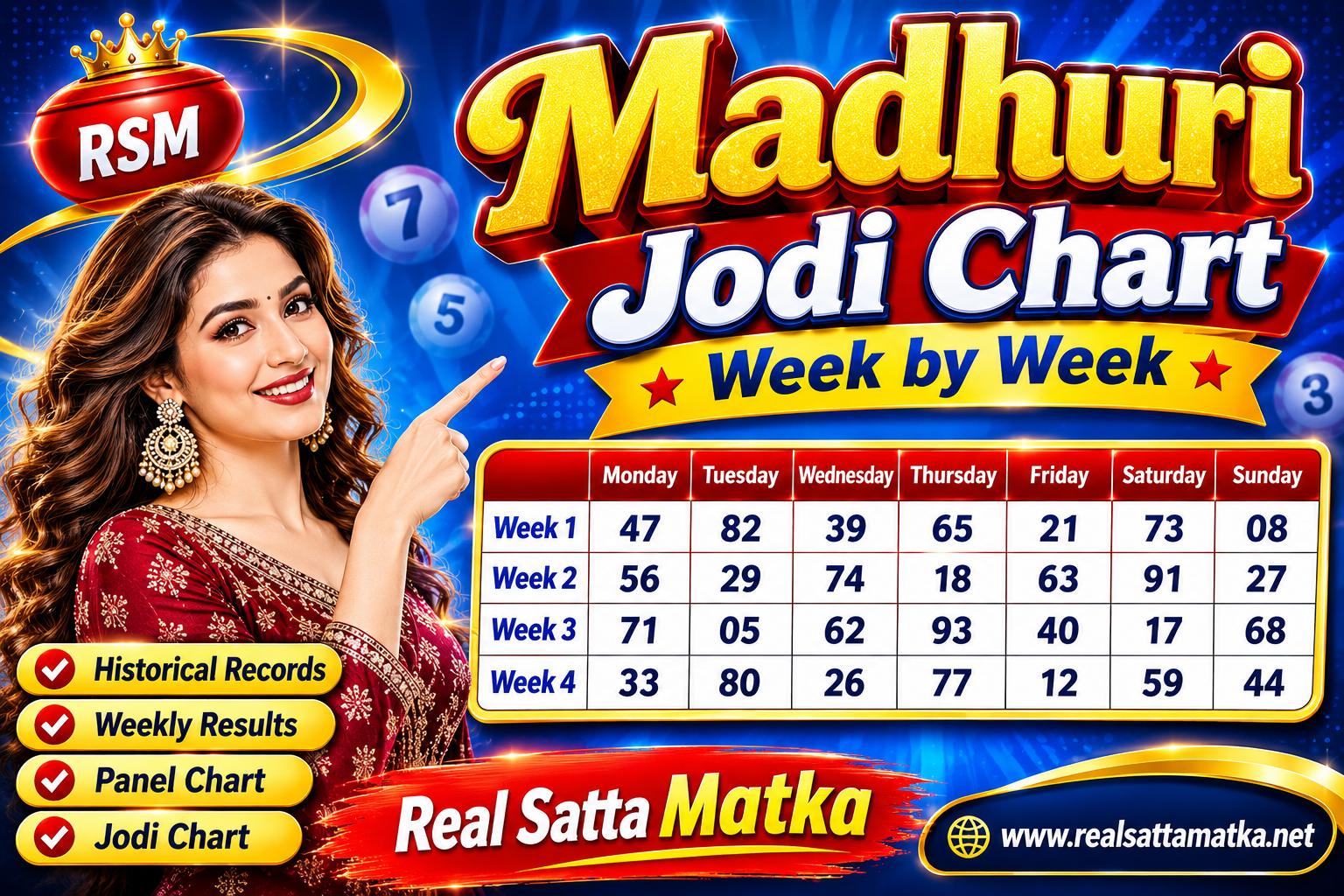
When people explore traditional Matka charts, they often need more than a single result. They want an organized record that helps them understand previous entries, identify dates and compare weekly information. The Madhuri Jodi Chart provides a structured way to review historical two-digit records from Monday to Sunday.
Real Satta Matka offers a dedicated Madhuri chart page where visitors can explore weekly entries, understand the relationship between open and close numbers, and access related chart information. Its organized layout makes historical information easier to navigate on desktop and mobile devices.
Readers can visit the Madhuri Jodi Chart to explore the available records.
A Jodi Chart displays two-digit numbers associated with a particular market. Each entry represents the jodi declared for a specific day.
The Madhuri Jodi Chart follows a weekly arrangement. Instead of displaying every result in a long, unorganized list, it groups daily entries into individual weeks.
The chart generally includes:
Monday
Tuesday
Wednesday
Thursday
Friday
Saturday
Sunday
This format allows readers to locate historical entries according to their dates and weekdays.
Understanding the weekly chart becomes easier when readers follow a consistent approach.
Step 1: Select the year
Choose the required year to explore its historical records.
Step 2: Find the date range
Identify the week that contains the date you want to review.
Step 3: Locate the weekday
Move across the table to find Monday, Tuesday, Wednesday or another required day.
Step 4: Read the Jodi
Check the two-digit entry displayed in the corresponding cell.
Step 5: Verify the record
Compare the date and available information before treating an entry as a historical record.
One useful detail is that the chart can contain empty cells. These spaces indicate that an entry is unavailable for that particular day. Readers should not interpret missing information as a declared result.
Traditional Matka charts use terms such as panna, ank and jodi. Understanding these terms helps readers interpret the information displayed in different chart formats.
A panna represents a three-digit number. An ank represents the final single digit obtained by adding the digits of a panna.
For example:
Open panna: 156
Calculation: 1 + 5 + 6 = 12
Open ank: 2
Similarly:
Close panna: 137
Calculation: 1 + 3 + 7 = 11
Close ank: 1
Combining the open ank and close ank produces the two-digit jodi: 21.
This example explains the traditional chart structure. It does not indicate or predict any future result.
Readers interested in panna combinations can also explore the 220 Patti Chart, which provides additional information about panna numbers and their corresponding anks.
Both chart formats provide related information, but they present it differently.
The Jodi Chart displays two-digit entries in a compact weekly table. It works well when someone wants to locate a particular day's historical entry without reviewing additional number details.
The Panel Chart provides the complete recorded number structure. It displays the opening panna, jodi and closing panna together.
For example, a complete panel entry can help readers understand how the opening and closing three-digit numbers correspond to the two-digit jodi.
Visitors can explore the Jodi and Panel Charts section to find chart information for Madhuri and other available markets.
Market schedules provide useful context when reviewing result information.
According to the Madhuri page on Real Satta Matka, the listed schedule is:
| Market detail | Listed time |
|---|---|
| Opening time | 11:45 AM IST |
| Closing time | 12:45 PM IST |
These timings help readers understand the market's listed schedule. However, schedules can change, so visitors should verify the latest information before relying on previously saved details.
The Matka Result Timings page provides a dedicated reference for market opening and closing schedules across the website.
A well-structured historical chart makes information easier to understand. Readers can locate older entries, compare dates and distinguish between available and missing records.
Here are some practical benefits of weekly chart organization:
1. Convenient date navigation
Weekly rows help visitors locate the required date without scrolling through an unstructured collection of results.
2. Better readability
A consistent Monday-to-Sunday format makes it easier to identify the correct weekday.
3. Historical comparison
Readers can review records from different weeks and years in one organized location.
4. Clearer number information
The Jodi and Panel formats separate compact two-digit records from complete panna details.
5. Mobile-friendly browsing
A structured chart makes it easier to locate information on smaller screens.
These benefits depend on accurate records, clear date labels and regular updates.
Finding different types of chart information becomes easier when related resources are available through one website.
Real Satta Matka provides several sections that help visitors understand market information and traditional chart terminology.
Some useful sections include:
Real Satta Matka Homepage: Access the main website and its live result board.
Madhuri Jodi Chart: Review Madhuri's weekly historical jodi records.
Jodi and Panel Charts: Explore historical chart formats for different markets.
Matka Result Timings: Check listed market opening and closing schedules.
Real Satta Matka Result Guide: Understand common result terms and number structures.
220 Patti Chart: Learn more about panna and ank information.
Using these resources together gives readers a more organized way to understand the website's different information sections.
The Madhuri Jodi Chart provides an organized way to review weekly historical entries and understand traditional Matka chart terminology. Its Monday-to-Sunday structure makes date-wise navigation straightforward, while the related Panel Chart provides additional details about recorded numbers.
Real Satta Matka brings these resources together through dedicated market pages, historical charts, result timings and educational information.
Readers should remember that historical records describe previous entries only. They cannot reliably predict future outcomes or guarantee any result. Always approach number-related information responsibly and avoid treating historical patterns as assured predictions.