English
 Arabic
 French
 Spanish
 Portuguese
 Deutsch
 Turkish
 Dutch
 Italiano
 Russian
 Romaian
 Portuguese (Brazil)
 Greek
Practical Tips for Restoring Smooth and Beautiful Walls
Other |
2026-10-15 16:11:57
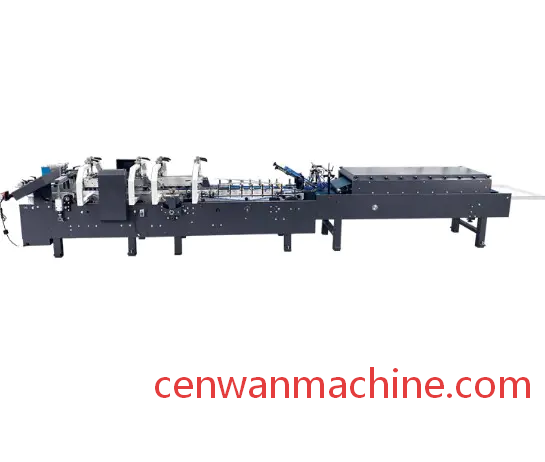
The choice that stalls a lot of buyers is width, because a frame that takes the large end of what you might ever run costs floor space and money that a frame sized for an ordinary week would not, and nobody can tell you in advance which regret to live with. I sat with a packaging shop owner over a pile of sample blanks while he tried to settle exactly that, and it became clear that the spec sheet for an automatic folding gluing machine only helps once you have measured your own cartons, laid them flat and written the small and large extremes on one page.
Size is the first figure to pin down, and it arrives as a range with a minimum and a maximum in both directions, length along the feed and width across it. Short pieces are the ones that surprise people, because a piece that cannot bridge the gap between two sets of belts will skew or stall halfway through. When I laid a tuck-end sleeve next to a tall shipping carton on the owner's bench, he admitted that the short jobs were the ones he had never put on paper, so he wrote both extremes on a strip of masking tape and stuck it to the hopper wall.
Board thickness and type come next. Paperboard folds on a light crease, whereas corrugated is stiff and springy and needs a wide feeder gap and a gentle path to settle its folds, so a shop that runs both should ask what the stated thickness limits cover in practice and whether they assume a scored crease. Coated or varnished surfaces change how adhesive behaves too, and I would hand over real samples of the awkward stock rather than quote a catalogue name.
Cenwan Machine designs and manufactures folder gluer and box gluing equipment in Wenzhou, China, and on equipment of this kind the folding sections that are fitted decide which styles will run at all. A pre-folding section starts the crease on bottoms that lock, a plain straight-line fold asks very little of it, and a crash lock bottom that springs flat again is where a missing section shows up on the first trial. List the styles you actually run and ask for each to be confirmed against a physical sample, since a general reassurance about folding says nothing about your own jobs.
Compression is the stage buyers skip, though it decides whether a seam is still shut when it reaches the delivery table. A long zone holds the join while the adhesive grips, which matters for varnished stock and for thick board that wants to spring open, and a short zone suits light work with quick-setting glue. On a sample run I stood at the delivery end and pressed a seam open with my thumbnails to feel how much it resisted, which told me more than the brochure did about the zone. Glue application deserves its own question: a wheel with a metering gauge suits flaps, nozzle guns suit dots and lines, and I would ask whether the head lifts out for cleaning and slides sideways without tools.
Quoted speed is the figure brochures like, and I treat it as a ceiling that applies to a single run on a good day. What a shop lives with is changeover time, because small orders mean resetting the gap, rails and belts again and again, so ask whether stored settings are available, whether the scales on the handwheels read clearly from standing height, and how a misfeed is cleared once a sensor has stopped the drive. I watched the owner time an operator with a stopwatch while she reset the guides for a new size, and he wrote the result on the back of a blank.
Then comes the room. Measure from the hopper wall to where the delivery conveyor would end, add a lane for the operator and clearance for opening the side covers, and mark it on the floor with string, which is what he did before he signed anything. Power supply, extraction for the adhesive smell and any compressed air all sit outside the frame yet still need answers from whoever is quoting. I also ask what belts, straps and glue wheels cost as spares and how long they take to arrive, since wear parts are what a workshop will actually order in the months after installation.
When a supplier talks about an automatic folding gluing machine, I ask which kind of work it was sized around before any price comes up, since a quote built around someone else's jobs tells you little about your own. The folder gluer and box gluing equipment described at https://www.cenwanmachine.com/ comes from a company with over 10 years of engineering behind it, and that page is a starting point for these questions, while the trial on real board still has to be done on your own floor. The owner put it in one line while rolling up his string: "I was never buying a speed, I was buying the right width."