English
 Arabic
 French
 Spanish
 Portuguese
 Deutsch
 Turkish
 Dutch
 Italiano
 Russian
 Romaian
 Portuguese (Brazil)
 Greek
Professional Embroidery Digitizing for Better Results
Art |
2026-10-06 13:07:55
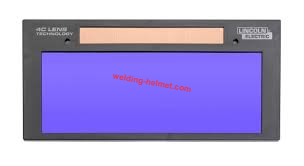
The first thing that surprised me about an auto tint welding lens was how ordinary it looks when nobody is welding: I held one up to a workshop window expecting a dark green plate and found a pale, slightly yellowish window I could read a newspaper through, which made me wonder how something so clear could protect an eye a second later. The answer is that it reacts to brightness and not to heat or sound, and it does so within a fraction of a blink, so what looks like a passive piece of glass is really a small set of parts waiting for one particular kind of flash.
Behind a replaceable cover plate that takes the spatter, the working part is a thin stack of layers: polarising films on either side of a liquid crystal cell, a small circuit board, and a few sensors set into the upper edge of the frame that look like tiny dark beads. While the cell is idle the crystals let daylight pass, and when the circuit applies a voltage the molecules twist and the stack blocks a great deal of the glare, which is why the change reads as a sudden drop from pale to deep green or grey instead of a slow fade. Nothing mechanical moves, and that is the reason it can react within a fraction of a blink.
Darkness itself is a setting, and that is where the dials come in. Thin material and cutting call for a low shade number while thick, high-current jobs call for a high one, so a knob or a pair of buttons on the frame lets the welder pick from a printed range. A second control sets sensitivity: turned up, it responds to a faint arc, and turned down, it ignores bright surroundings. I once stood in a roller door opening with the sensitivity cranked up and the window flickered each time a car passed outside and threw sunshine off its bonnet, which taught me a lot about that dial.
The sample on my bench came from RLINGD, a brand of Taizhou Ruiling Optoelectronics Technology Co., Ltd., a high-tech enterprise that describes its work as research and development, production and sales of welding products, and the series in front of me was made up of automatic light welding masks. The same series is offered to OEM and ODM customers according to their requirements, and products have gone to Europe, South America, the Middle East and Southeast Asia, so I would expect the knob layout and labelling to differ from one variant to the next, and the manual for the exact unit is worth reading before trusting any dial.
A third setting, usually labelled delay, controls how long the cell stays dark after welding stops, and it exists because a fresh bead keeps glowing for a moment and can still dazzle. A short setting suits tack welds where you want to glance at the joint again quickly, and a long one suits heavy current, where the pool takes time to dim. I tend to leave it in the middle until my eyes complain, which is crude, but the glow on the metal is easy to read once you know what to look for.
Power usually comes from a small solar cell on the front, a replaceable battery or both, and the demand is modest because the crystals draw very little. The sensors are the part people forget, since they look at the arc directly, so when a joint is awkward and the glare sits behind a workpiece or a pipe, or when a sleeve or a hood brim shadows them, the cell may not switch when expected. A cover plate crusted with spatter hides everything behind it, and I wipe mine with a soft cloth before every session as a matter of habit.
Looking through the window changes with the angle too. Liquid crystal is not equally dark from every direction, so when I tilt my head to read a joint at the edge of the view the picture brightens and shifts a little, which is normal for this kind of cell and the reason welders try to face the work squarely. Many models add a grinding position that holds the cell at a fixed shade without switching, because sparks from a grinder are not the arc and should not trigger it, and the mode switch is usually a small slider that people forget to move back.
Next time you pick up an auto tint welding lens, hold it toward a window, turn your head slowly from side to side and watch how the clear window changes at the edges. The series of automatic masks described at https://www.welding-helmet.com/product comes in frames with their own shapes, and what I would look at in each photograph is where the little sensor beads sit along the upper edge, since a brim or a hood seam above them is the thing that blocks their view.