English
 Arabic
 French
 Spanish
 Portuguese
 Deutsch
 Turkish
 Dutch
 Italiano
 Russian
 Romaian
 Portuguese (Brazil)
 Greek
US Microplate Washer Market Trends: Rising Adoption of Advanced Laboratory Automation Systems
Health |
2026-11-16 11:58:17
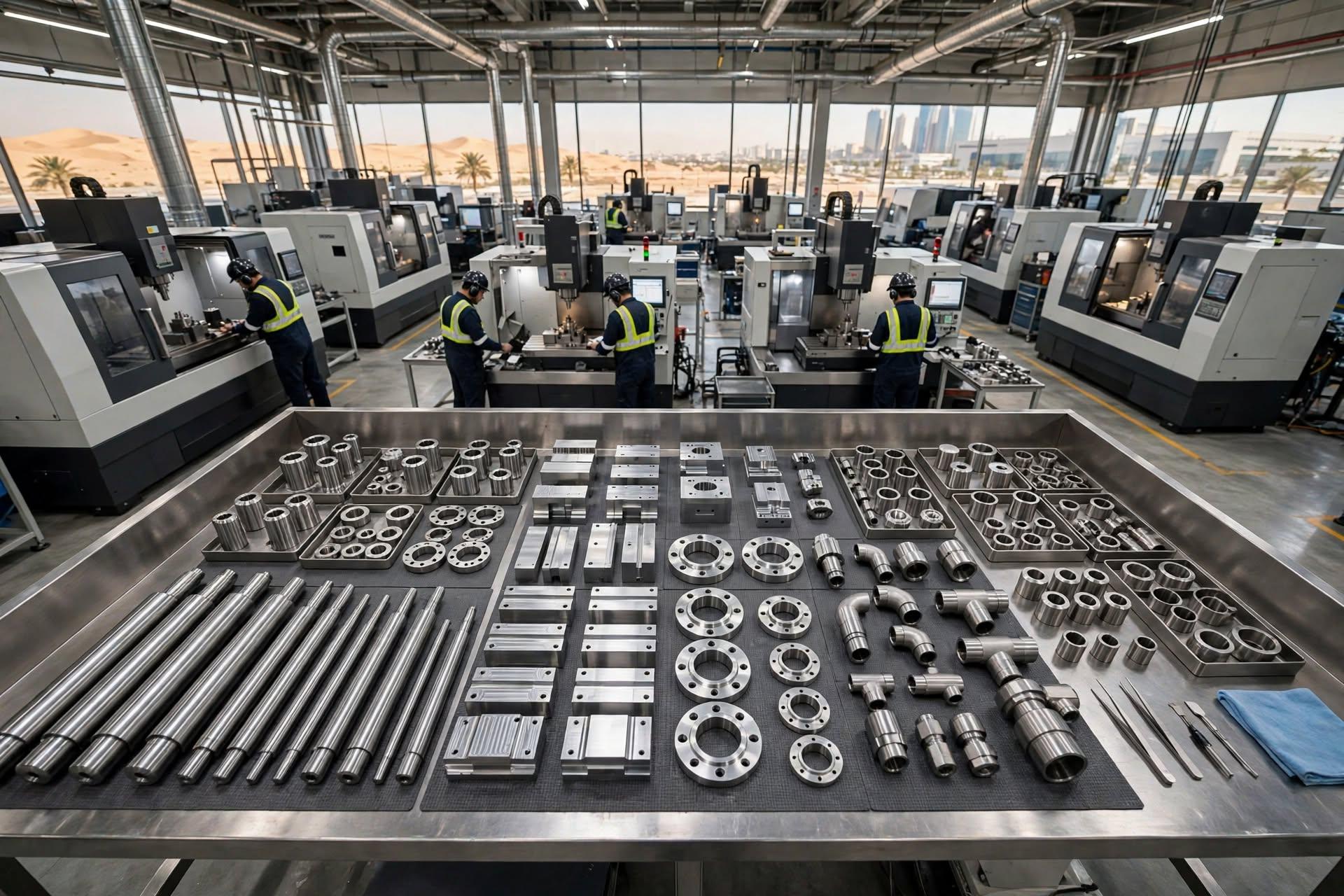
Manufacturing facilities depend on machinery that operates continuously and maintains consistent output. When a component becomes damaged, worn or outdated, the entire production process can experience delays. Finding suitable cnc machined parts in uae can help industrial businesses address replacement requirements without depending entirely on standard imported components.
Every machine has its own technical requirements. A replacement part must match the dimensions, connection points and functional characteristics of the original component. Using an incorrectly sized part may create alignment problems, additional wear or unnecessary maintenance work.
Custom machining provides an alternative when an original component is unavailable or does not meet the requirements of the current application. Manufacturers can work from engineering drawings or physical samples to produce components with the required geometry.
This approach is useful for factories managing older equipment, specialised machinery and production systems with customised components.
Industrial requirements are not always limited to large production orders. Maintenance departments may need one replacement shaft, while an engineering project may require several prototypes before approving a complete production batch.
A flexible manufacturing facility should be capable of handling different order sizes without compromising the required specifications.
cnc machined parts in uae supports this flexibility through programmed production. Once a component design and machining process are approved, the same instructions can be used for repeat manufacturing. This makes it easier to maintain consistency between individual components and future orders.
Different machining methods also provide flexibility for different component designs.
CNC milling is suitable for brackets, plates, housings, mounting blocks and components with complex surfaces. Turning is useful for cylindrical parts, including shafts, pins, sleeves and threaded components.
For more complicated designs, multiple operations may be required. Proper planning helps manufacturers determine the most appropriate sequence and avoid unnecessary handling.
The operating environment should guide material selection. A component used in a general industrial machine may have different requirements from one installed in equipment exposed to moisture, chemicals or high mechanical loads.
Aluminium is commonly considered when reduced weight and machinability are important. Stainless steel is useful where corrosion resistance is required. Carbon and alloy steels can be selected for applications involving specific strength and wear requirements.
Engineering plastics also have important manufacturing applications. Materials such as nylon, POM and PTFE can be suitable for selected bushings, guides, spacers and other components.
Before production begins, the engineering team should consider:
Expected mechanical loads and operating conditions.
Temperature and environmental exposure.
Required dimensional tolerances.
Surface finish and contact requirements.
Availability and cost of the selected material.
Genesis-MFG provides custom machining solutions involving different metals and engineering plastics. Its manufacturing services include CNC milling, turning, replacement parts and prototype production.
A manufactured component should be checked against the approved drawing before being used in industrial equipment. Quality control is particularly important when parts must fit with existing assemblies or work alongside other precision components.
Dimensional inspection helps verify important measurements such as lengths, diameters, hole positions and surface features. Inspection requirements should be established according to the component's intended application.
A supplier with established quality procedures can also help customers maintain better control over repeat orders.
Genesis-MFG operates in Hamriyah Free Zone, Sharjah, and holds ISO 9001 and API Spec Q1 certifications. These quality credentials support its manufacturing operations and quality management approach.
Factory maintenance requires dependable replacement components that match the technical requirements of existing machinery. Custom machining offers flexibility when standard parts are unavailable, unsuitable or difficult to source. By considering material properties, machining methods and inspection requirements, businesses can make better manufacturing decisions. Businesses evaluating a cnc precision machining company should consider its technical equipment, inspection capabilities and ability to understand detailed engineering requirements. Genesis-MFG provides machining and custom manufacturing services for different industrial applications, supporting projects that require carefully produced components and consistent production standards.
Factories may need custom components when original parts are discontinued, unavailable or unsuitable for their equipment.
Yes. CNC machining can support single components, prototypes, small batches and larger production requirements.
Suppliers generally require engineering drawings, dimensions, material specifications, quantities and surface finish requirements.
A suitable physical sample or engineering drawing can be used to understand the component's dimensions and manufacturing requirements.