English
 Arabic
 French
 Spanish
 Portuguese
 Deutsch
 Turkish
 Dutch
 Italiano
 Russian
 Romaian
 Portuguese (Brazil)
 Greek
How to Choose the Most Comfortable Crutches for Daily Use
Health |
2026-10-08 13:10:31
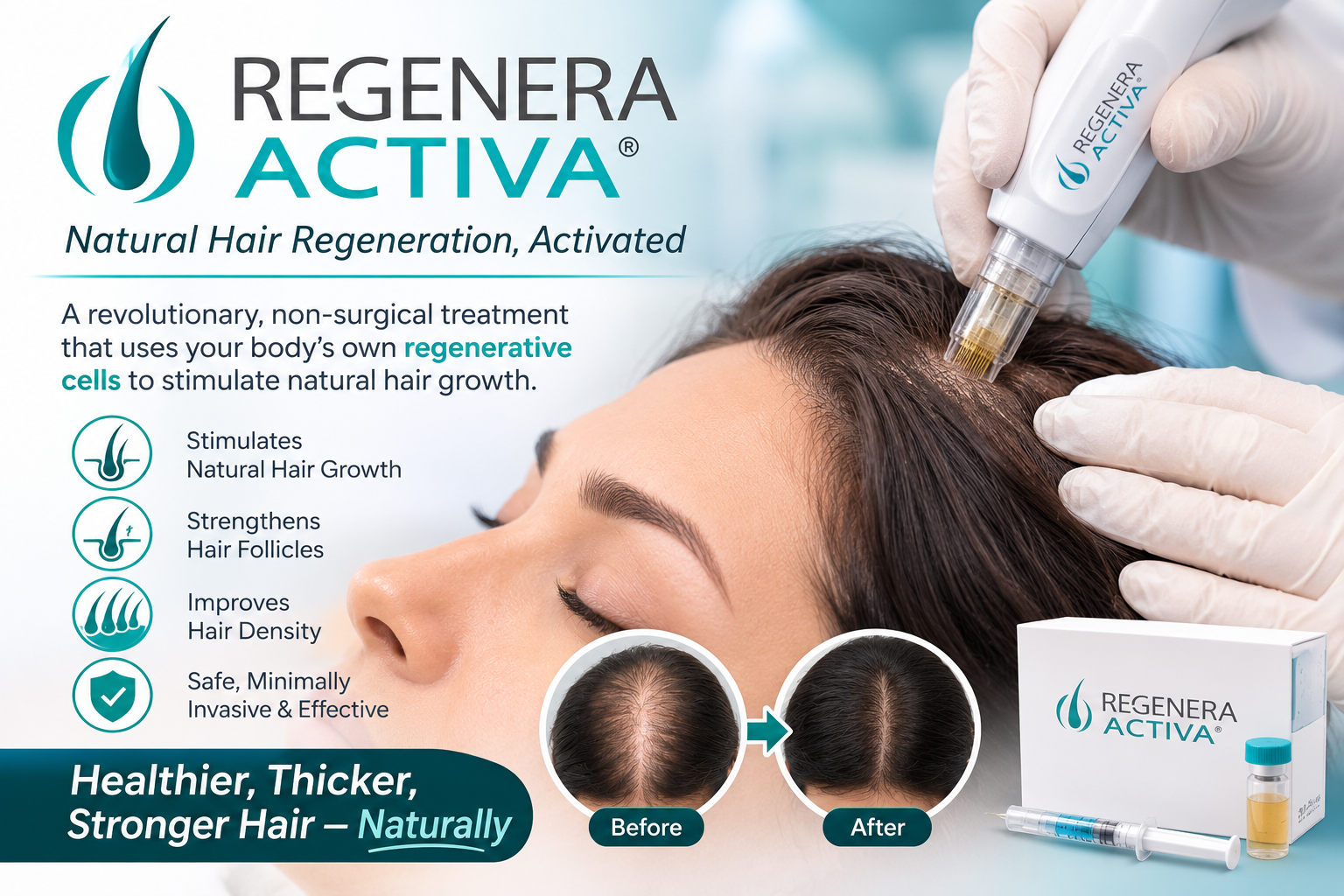
Hair loss is a growing concern for both men and women. Whether caused by genetics, hormonal changes, ageing, stress, or other health conditions, hair thinning can affect confidence and overall appearance. With advancements in modern hair restoration technology, people now have access to several innovative treatments designed to support healthier hair growth. One treatment attracting increasing attention is Regenera Activa.
Regenera Activa is a minimally invasive hair restoration procedure that uses the patient's own scalp tissue to obtain micrografts containing biological components. The treatment aims to support existing hair follicles and improve the scalp environment. Unlike traditional hair transplant surgery, it focuses on the regenerative potential of the body's own tissue.
If you are considering this treatment, understanding how Regenera Activa works, its benefits, treatment process, recovery, and expected results can help you make an informed decision. This guide covers everything you need to know about Regenera Activa hair treatment.
Regenera Activa is an autologous regenerative treatment designed to support hair restoration in individuals experiencing certain types of hair thinning.
The procedure involves collecting a small tissue sample from a suitable donor area of the scalp, usually at the back of the head. This tissue is processed using a specialised medical device to obtain a suspension of micrografts containing different cellular components and biological signals.
The prepared suspension is then injected into selected areas of the scalp affected by hair thinning.
The primary goal of Regenera Activa is to support existing hair follicles and encourage a healthier scalp environment. Rather than transplanting individual follicles, the procedure focuses on the regenerative potential of the patient's own tissue.
It is important to understand that Regenera Activa does not create new hair follicles. Its potential benefits are focused on supporting existing follicles that are still capable of producing hair.
Understanding how Regenera Activa works can help patients become more familiar with the treatment.
The procedure generally involves three main stages.
The first step involves collecting a small tissue sample from the donor area of the scalp. The back of the head is commonly selected because hair follicles in this region are generally less sensitive to the hormones associated with genetic hair loss.
Local anaesthesia is usually administered to minimise discomfort during the collection process.
The collected tissue is processed using specialised equipment designed to obtain a suspension of micrografts.
These micrografts contain different cellular components and associated biological signals that may contribute to regenerative activity.
Once the preparation is complete, the suspension is injected into selected areas experiencing hair thinning.
The aim is to support the biological environment surrounding existing hair follicles and potentially improve their activity.
The treatment is performed by a trained medical professional in a clinical setting.
Regenera Activa offers several potential advantages for individuals looking for minimally invasive hair restoration options.
One of the main characteristics of Regenera Activa is its autologous approach. The procedure uses tissue collected from the patient's own scalp instead of tissue from another individual.
Unlike traditional hair transplant surgery, Regenera Activa does not require extensive surgical intervention. It involves a small tissue collection followed by injections into the scalp.
The treatment is designed to support existing follicles that may be weakening or producing thinner hair. In suitable patients, it may help improve hair quality and maintain existing hair density.
Both men and women experiencing certain types of hair thinning may be considered for Regenera Activa. A professional scalp examination is necessary to determine suitability.
The procedure is generally completed during a single clinical session. The exact duration depends on the patient's condition and the clinic's treatment protocol.
Individuals who are not ready for surgical hair restoration may consider Regenera Activa as another option after discussing its potential benefits and limitations with a specialist.
Regenera Activa may be considered for individuals experiencing early-stage androgenetic alopecia, commonly known as pattern hair loss.
People with mild to moderate hair thinning and existing active hair follicles may be more suitable candidates than those with completely bald areas.
Potential candidates include:
Men experiencing early male pattern baldness.
Women noticing gradual hair thinning.
Individuals experiencing reduced hair density.
People looking for minimally invasive hair restoration options.
Patients interested in supporting their existing hair follicles.
However, not all forms of hair loss respond to regenerative treatments.
Hair loss caused by nutritional deficiencies, thyroid disorders, autoimmune conditions, scalp infections, and inflammatory diseases requires appropriate diagnosis and treatment.
A dermatologist or qualified hair restoration specialist should assess the scalp and identify the underlying cause before recommending Regenera Activa.
Knowing what to expect during treatment can help patients feel more prepared.
The procedure begins with a detailed consultation. The medical professional examines the scalp, assesses hair density, reviews medical history, and discusses treatment goals.
A suitable area at the back of the scalp is selected for tissue collection. Local anaesthesia is generally used to improve comfort.
A small tissue sample is collected from the selected donor area. The procedure is minimally invasive and performed using specialised medical equipment.
The collected tissue is processed to prepare a suspension containing micrografts and associated biological components.
The prepared suspension is injected into selected areas experiencing hair thinning. The injections are administered according to the patient's individual requirements.
After the procedure, patients receive instructions regarding scalp care, washing, physical activity, and recovery. Follow-up consultations may be recommended to monitor progress.
Hair restoration is a gradual process, and patients should not expect immediate results after treatment.
Some individuals may notice improvements in hair quality, thickness, or shedding patterns over the following months. However, the outcome varies depending on individual biological factors.
Important factors influencing results include:
The underlying cause of hair loss.
The severity of hair thinning.
The condition of existing hair follicles.
Age and genetics.
General health and lifestyle.
Individual response to treatment.
Regenera Activa does not guarantee hair regrowth or prevent every type of hair loss. Clinical evidence is still developing, and further high-quality research is needed to establish its long-term effectiveness.
Patients should discuss realistic expectations with their healthcare professional before starting treatment.
Recovery following Regenera Activa is generally straightforward because the procedure is minimally invasive. However, some patients may experience temporary redness, tenderness, mild swelling, or discomfort around the treated areas.
Following the clinic's aftercare instructions can help support recovery.
General recommendations may include:
Keep the scalp clean according to medical instructions.
Avoid scratching or rubbing the treated areas.
Avoid strenuous exercise for the recommended period.
Follow the recommended hair washing routine.
Avoid applying unapproved scalp products immediately after treatment.
Attend scheduled follow-up appointments.
If unusual pain, increasing redness, swelling, or signs of infection occur, contact your healthcare professional.
Regenera Activa and traditional hair transplantation are different hair restoration approaches.
A traditional hair transplant involves surgically moving individual hair follicles from a donor area to areas affected by hair loss. It is generally considered for individuals with more established hair loss and sufficient donor hair.
Regenera Activa uses micrografts obtained from the patient's own scalp to support existing follicles. It does not involve transferring individual hair follicles or creating new ones.
The most appropriate option depends on the patient's hair loss condition, donor hair availability, medical history, and treatment goals.
Other established hair loss treatments, including topical minoxidil and suitable prescription medications, may also be considered as part of a personalised treatment plan.
Regenera Activa may be worth exploring for people experiencing early-stage hair thinning who are interested in minimally invasive regenerative treatment options.
Its use of the patient's own tissue and focus on existing hair follicles make it an interesting approach to hair restoration. However, it is essential to understand that treatment outcomes vary and long-term effectiveness is not yet fully established.
Before choosing Regenera Activa, discuss the procedure, potential risks, expected results, costs, and alternative treatments with a qualified medical professional.
Regenera Activa hair treatment represents an innovative approach to hair restoration by using the body's own biological resources to support existing hair follicles. Its minimally invasive procedure, personalised treatment process, and regenerative concept make it an option worth discussing for individuals experiencing certain types of hair thinning.
From the initial consultation and tissue collection to micrograft preparation and scalp injections, understanding every stage of the treatment helps patients make informed decisions.
If you are considering Regenera Activa, begin with a professional scalp assessment to identify the underlying cause of hair loss and determine whether the treatment is suitable for your condition. A personalised treatment plan, realistic expectations, and professional medical guidance are essential for making the right hair restoration decision.