English
 Arabic
 French
 Spanish
 Portuguese
 Deutsch
 Turkish
 Dutch
 Italiano
 Russian
 Romaian
 Portuguese (Brazil)
 Greek
Perforated Packaging Film Valuation Expected to Reach US$ 4.29 Billion
Other |
2026-11-17 10:07:55
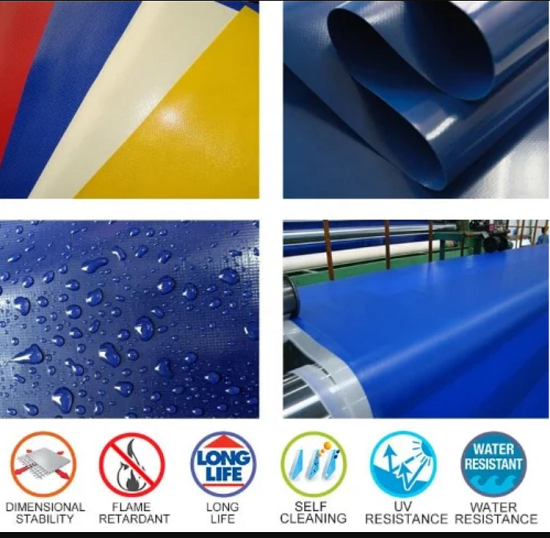
Flexible industrial fabrics are used in transport, construction, agriculture, advertising and building design. Although many materials may look similar in a roll, their construction and performance can be very different. Selecting the right fabric starts with understanding whether the project needs a solid protective surface, an open mesh, a flexible polymer sheet or a high-performance architectural membrane.
PVC Tarpaulin: A Durable Material for Protective Covers
PVC tarpaulin fabrics are generally made by coating or laminating PVC onto a textile reinforcement, commonly polyester. The reinforcement contributes strength, while the PVC surface helps create a flexible material for fabrication. Depending on the grade, these fabrics can be used for truck covers, side curtains, storage covers, tents, equipment protection and other made-to-measure products.
When comparing PVC tarpaulin, buyers should review fabric weight, thickness, base-fabric construction, surface finish, roll width and the intended joining method. Coated and laminated materials are not identical: coating forms a surface over the textile, while lamination bonds PVC film layers to a reinforced base. Requesting a specification sheet and testing a sample can help confirm whether the material suits cutting, sewing or welding requirements.
PVC Mesh Fabric: Airflow and Partial Coverage
PVC mesh fabrics retain openings within the textile structure, creating a different balance of coverage and airflow from a solid sheet. PVC-coated mesh is often considered for fence screens, privacy and wind screens, outdoor shade, industrial partitions and printed mesh banners. The open construction can reduce visual blockage and allow air to pass through, while the coated yarns provide a finished surface.
The most suitable PVC mesh fabric depends on the opening size, yarn arrangement, weight, width and the intended application. For graphic use, check that the selected mesh is designed for printing and that the finished image will remain legible across the open pattern. For screens and covers, compare openness and strength with the exposure conditions and installation method. Product-specific performance should always be confirmed from the grade’s technical data.
PVC Film: Flexible Sheets for Clear or Opaque Applications
PVC films are flexible polymer sheets that do not necessarily include a woven textile base. Clear grades can provide visibility for windows, transparent panels and flexible enclosures, while opaque grades offer a non-transparent surface for a range of fabricated products. Film is also used in applications such as table coverings, curtain materials and lamination, depending on its formulation and thickness.
Choosing a PVC film requires attention to transparency, thickness, width, surface appearance and fabrication compatibility. A film may look similar to a reinforced tarpaulin, but its construction and mechanical behavior can be different. Before production, confirm the grade’s suitability for the planned forming, joining or installation process, especially when clarity or dimensional consistency is important.
PTFE-Coated Fiberglass Fabrics for Architectural Membranes
For demanding roof and facade projects, PTFE coated fiberglass fabrics combine a woven fiberglass base with a multilayer PTFE coating. Closed membrane constructions can be used for tensile roofs, canopies and architectural panels, while open PTFE mesh is suited to facade screens and architectural shading. These materials are selected for projects where the design calls for a specialized membrane rather than a general-purpose cover fabric.
Architectural selection should consider tensile properties in both directions, roll dimensions, panel layout, seam design, fabrication equipment and the relevant fire-performance documentation. The supplied grade and installed assembly must be evaluated for the actual project; a material classification alone does not certify the complete structure. Trial seams and coordination with the fabricator are valuable steps before full-scale production.
How to Compare Materials Before Ordering
A practical comparison begins with the end use. Ask whether the project needs waterproof coverage, airflow, transparency, shading or structural membrane performance. Then compare reinforcement, weight, thickness, roll width, finish and processing requirements. Confirm environmental exposure, cleaning expectations and any applicable testing or compliance needs.
Working from the manufacturer’s individual product specifications helps avoid choosing by material name alone. Share drawings, target dimensions, quantity, preferred finish and fabrication details when requesting a quotation or sample. This allows the supplier to recommend a grade that matches the project instead of relying on a broad category description.
Conclusion
PVC tarpaulin, PVC mesh fabric, PVC film and PTFE-coated fiberglass fabrics serve different purposes. Solid reinforced tarpaulin supports protective covers, mesh balances coverage with airflow, PVC film provides flexible sheet options, and PTFE-coated fiberglass is designed for specialized architectural membrane applications. By matching construction and technical specifications to the intended use, buyers can make a more informed material decision and improve the likelihood of a successful fabrication result.