English
 Arabic
 French
 Spanish
 Portuguese
 Deutsch
 Turkish
 Dutch
Dutch
 Italiano
 Russian
 Romaian
 Portuguese (Brazil)
 Greek
Greek

Automotive Radar Market Advances as Vehicle Safety Systems Drive 22.4% CAGR Growth
Other |
2026-10-01 09:11:40
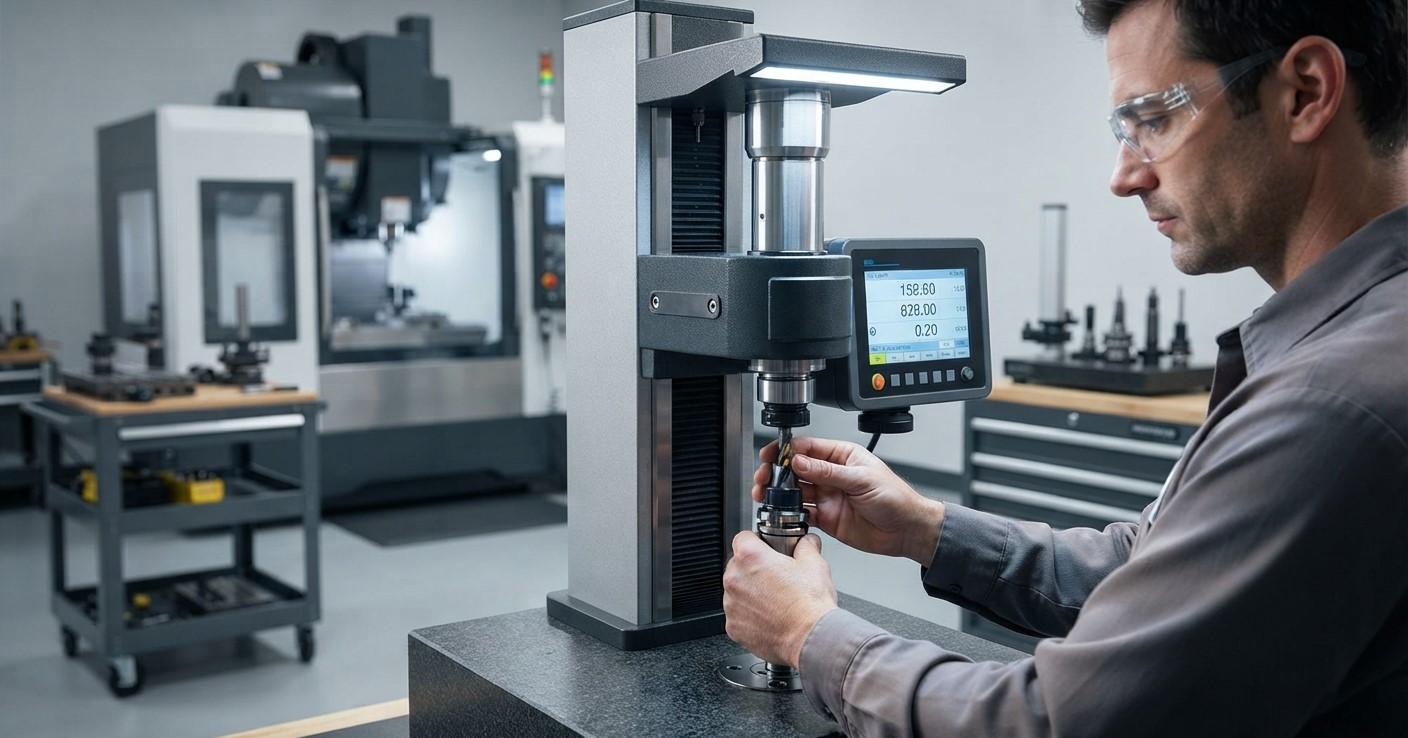
CNC machining depends on precision, consistency, and accurate tool positioning. Even a small error in tool length, diameter, or offset can affect part dimensions, surface finish, tool life, and overall production quality. This is why CNC tool presetting has become an important part of modern machining operations.
For workshops looking to improve machining accuracy and reduce setup-related errors, working with the right tooling and measurement equipment is essential. Khokhawala Trading LLC, an Industrial Tools Supplier in Dubai, supports industrial and engineering requirements with tools and equipment designed for accurate and efficient workshop operations.
But what exactly is CNC tool presetting, and why is it important?
What Is CNC Tool Presetting?
How Does CNC Tool Presetting Work?
What Measurements Are Taken During Tool Presetting?
Why Is CNC Tool Presetting Important?
Benefits of CNC Tool Presetting
CNC Tool Presetting vs Manual Tool Setting
Common Applications of Tool Presetting
Factors to Consider When Selecting a Tool Presetter
Common Tool Presetting Mistakes
Best Practices for Accurate Tool Presetting
Frequently Asked Questions
Conclusion and CTA
CNC tool presetting is the process of measuring and preparing cutting tools before they are installed and used in a CNC machine.
A tool presetter can measure important tool dimensions such as:
Tool length
Tool diameter
Cutting-edge position
Radius and geometry
Tool runout
Tool condition
The measured information is then used to establish accurate tool offsets in the CNC machine.
Instead of installing a tool first and spending valuable machine time measuring it, the tool can be prepared separately. This makes the CNC setup process more controlled and repeatable.
Tool presetting is particularly useful in production environments where multiple tools need to be prepared for different machining operations.
Although the exact procedure varies depending on the equipment, CNC tool presetting generally follows a straightforward process.
The cutting tool is assembled into its tool holder in the same configuration that will be used on the CNC machine.
Proper assembly is important because incorrect seating or clamping can change the measured tool position.
The assembled tool is placed into the presetter.
Depending on the type of equipment, contact probes, optical systems, cameras, or other measurement technologies can be used to determine tool dimensions.
The system measures the tool length and diameter according to the required reference points.
For certain applications, additional geometry or cutting-edge measurements may also be checked.
The measured values are converted into the tool offset information required by the CNC control.
This information can be entered manually or transferred through an integrated tool management system, depending on the setup.
Once the tool has been measured and verified, it can be installed in the CNC machine with its corresponding offset information.
This reduces the amount of measurement work that needs to be performed at the machine.
The measurements required depend on the machining operation and tooling system.
Tool length is one of the most important measurements because it determines the position of the cutting edge relative to the machine reference point.
An incorrect length offset can result in excessive or insufficient cutting depth.
Accurate diameter measurement is important for milling, profiling, finishing, and other operations where dimensional accuracy is required.
A diameter error can directly affect the size of machined features.
For certain milling and contouring operations, the cutting radius or corner radius can influence toolpath compensation and finished geometry.
Runout describes the amount by which the cutting tool deviates from its intended rotational center.
Excessive runout can contribute to uneven cutting, premature tool wear, poor surface finish, and dimensional variation.
Some advanced presetting systems can also help inspect cutting edges and identify visible damage or wear before the tool reaches the machine.
CNC machines are capable of extremely accurate movements, but the machine can only produce accurate results when the tool data supplied to it is correct.
If the tool length or diameter is entered incorrectly, even a highly precise CNC machine may produce an incorrect part.
Tool presetting helps establish accurate tool information before machining begins. This provides several important advantages.
Accurate tool measurements help ensure that the CNC machine knows the actual position and dimensions of the cutting tool.
This is especially important when machining components with tight dimensional requirements.
Measuring tools outside the CNC machine can reduce the amount of setup work performed while the machine is waiting.
Prepared tools can be organized in advance and installed when required.
Standardized tool measurement procedures can reduce variations between different setups, operators, and production batches.
This is valuable for manufacturers producing the same component repeatedly.
Manually measuring and entering tool data can introduce errors.
A controlled presetting procedure helps reduce incorrect tool-length and diameter information.
When tool preparation takes place away from the CNC machine, the machine can spend more time performing machining operations.
This can be particularly beneficial in workshops handling frequent tool changes.
Presetting can become part of a wider tool management system.
Tool information can be recorded, organized, and reused for future jobs, making production preparation more systematic.
Checking tools before production provides an opportunity to identify damaged, incorrectly assembled, or worn tools before they affect a workpiece.
Traditional manual tool setting often involves installing a tool into the CNC machine and then determining its length or position using the machine itself.
CNC tool presetting moves much of this preparation away from the machine.
| Feature | Manual Tool Setting | CNC Tool Presetting |
|---|---|---|
| Tool measurement | Usually performed at machine | Often performed offline |
| Setup consistency | Depends heavily on operator | More standardized |
| Machine downtime | Can be higher | Can be reduced |
| Tool inspection | Limited during setup | More opportunities for inspection |
| Tool data management | Often manual | Can be integrated digitally |
| Repeatability | Operator-dependent | More controlled |
The appropriate method depends on the machine, production volume, tooling requirements, and required accuracy.
CNC tool presetting can be useful across many machining environments.
End mills, drills, face mills, reamers, and other milling tools can be measured before installation.
Turning tools and other tooling assemblies can be checked for their required dimensions and cutting positions.
When many tools and frequent tool changes are involved, presetting can help organize production and reduce repetitive setup work.
Industries requiring consistent dimensional control can benefit from accurately measured tool offsets.
A standardized presetting process can help prepare tooling for different CNC machines while maintaining consistent measurement procedures.
Not every workshop needs the same type of presetting equipment.
Before selecting a system, consider the following factors.
Determine the measurement accuracy and repeatability required for your machining operations.
High-precision applications may require more advanced measurement systems.
Consider the maximum and minimum tool diameters and lengths that your workshop regularly uses.
Make sure the presetter can accommodate your tooling, including milling cutters, drills, boring tools, holders, and other assemblies.
Contact and non-contact measurement systems are available. The best choice depends on the tools, applications, and required measurement capability.
For advanced CNC operations, digital transfer of tool data can help reduce manual data-entry errors and improve workflow.
The presetter should be maintained and calibrated according to the manufacturer's recommendations to ensure reliable measurements.
Even with a good presetter, incorrect procedures can reduce accuracy.
Dirt, chips, oil, and other contamination can affect tool seating and measurements.
Always clean the tool holder and relevant reference surfaces before measurement.
The tool should be assembled exactly as it will be used in the CNC machine.
Changing the clamping position after measurement can change the tool length.
The measurement reference used by the presetter must correspond correctly with the CNC machine's tool offset system.
A tool may have the correct nominal diameter but still produce inconsistent results if excessive runout is present.
Incorrectly transferring measurements into the CNC control can defeat the purpose of accurate presetting.
Regular calibration and verification are important for maintaining reliable measurements over time.
For consistent results, workshops should establish a standardized tool presetting procedure.
Key practices include:
Clean tools and holders before measurement.
Use consistent tool assembly procedures.
Verify tool length and diameter carefully.
Check runout when required.
Maintain accurate tool records.
Keep presetting equipment properly calibrated.
Train operators on the correct measurement procedure.
Use consistent reference points between the presetter and CNC machine.
Verify critical offsets before production.
Inspect tools for damage and wear before use.
A consistent process helps transform tool presetting from a simple measurement task into an important part of CNC quality control.
CNC tool presetting is the process of measuring cutting tools before they are installed in a CNC machine. The measurements are used to establish accurate tool offsets for machining.
Depending on the system, a tool presetter can measure tool length, diameter, radius, cutting-edge geometry, and runout.
Accurate tool measurements can improve setup consistency and reduce errors caused by incorrect tool offsets. However, overall machining accuracy also depends on the machine, workholding, tooling, programming, material, and other process conditions.
Yes. Measuring tools before they reach the CNC machine can reduce the amount of measurement and adjustment required during machine setup.
It can be useful when a workshop has frequent tool changes, multiple CNC machines, or precision machining requirements. The value depends on production volume and setup requirements.
Calibration intervals depend on the equipment manufacturer, usage, environmental conditions, and required accuracy. Workshops should follow the manufacturer's recommended calibration schedule and verify measurement performance regularly.
A tool presetter generally measures and prepares tools outside the CNC machine. A tool setter is commonly installed on or inside the machine and can be used for tool measurement, offset updates, or tool condition checks depending on the system.
CNC tool presetting is an important part of achieving consistent and accurate machining results. By measuring tool length, diameter, geometry, and other relevant characteristics before production, workshops can establish more reliable tool offsets and reduce setup-related errors.
Presetting can also help reduce machine downtime, improve repeatability, support tool management, and provide an additional opportunity to inspect tools before machining begins.
For workshops looking for dependable industrial tooling and measurement solutions, Khokhawala Trading LLC provides industrial equipment and tooling support for a wide range of workshop and machining requirements. As an Industrial Tools Supplier in Dubai, the company can help businesses identify suitable tools and equipment for their operational needs.
Whether your workshop handles CNC milling, turning, precision machining, or general industrial work, proper tool measurement and preparation can play an important role in maintaining machining quality and production efficiency.
Looking for reliable industrial tools and machining equipment for your workshop?
Contact Khokhawala Trading LLC, your Industrial Tools Supplier in Dubai, to explore suitable industrial tooling and equipment for your machining and workshop requirements.