English
 Arabic
 French
 Spanish
 Portuguese
 Deutsch
 Turkish
 Dutch
 Italiano
 Russian
 Romaian
 Portuguese (Brazil)
 Greek

Triangle Luxe Cleaning: Expert Move Out Cleaning Services
Home |
2026-09-28 16:16:07
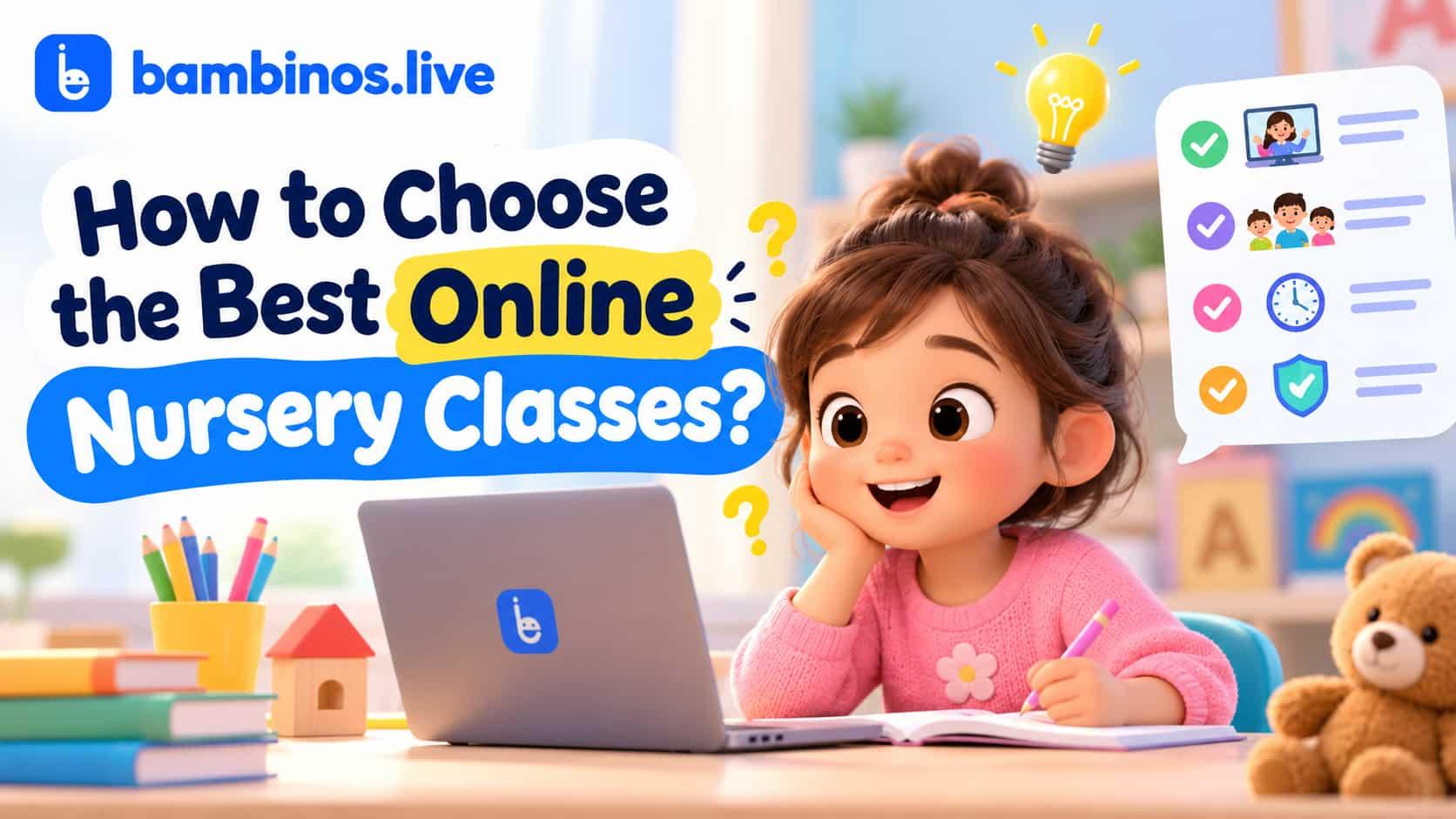
Online nursery classes work for three-to-five-year-olds only when the format respects their age: short sessions, a live teacher, songs and play, and a parent nearby. This guide covers the five checks to run before enrolling, how long sessions should last per official Government of India guidance, and what a strong learning path looks like once your child outgrows the nursery stage.
Online nursery classes are short, live, play-based learning sessions for children aged three to five, covering rhymes, letter sounds, early vocabulary, colours, numbers, and simple social routines. The good ones feel like circle time on a screen, not a lecture. They differ from learning apps in one decisive way: a teacher sees your child, says their name, and waits for an answer — exactly what this age group needs to stay engaged.
Parents choose the right online nursery classes by checking five things before paying:
Platforms like online nursery classes at Bambinos.live run live groups capped at six children from age four, so the first two checks take exactly one trial to verify — Book a Demo and watch a real session before deciding.
Online nursery classes should run for no more than 30 minutes a day. The Government of India’s PRAGYATA Guidelines on Digital Education (Ministry of Education — official release, 2020) recommend screen interaction of not more than 30 minutes daily for pre-primary children. One short, rich session beats a long one every time at this age — short daily exposure is also why phonics online classes for kids outperform long weekly marathons for early readers.
Kids learn pre-reading, speaking, and number foundations in online nursery classes, built through play:
For three-to-five-year-olds, live classes beat apps on the one thing that matters most at this age: a human response. Apps drill shapes and letters; a teacher builds conversation, patience, and turn-taking. Most online classes for kids under six fail when they copy school formats — the best online learning for kids at nursery age is interactive and playful, never self-serve. Keep that filter handy; the same test applies when you later compare full online learning platforms for kids.
The path widens at six. Structured online classes for kids add reading, writing, and reasoning, and families comparing online classes for kids in India typically start with English and maths — many online classes for kids in India now also offer chess, Kannada, and science from age six. From there, spoken English classes for kids formalise what nursery rhymes started. By age eight or nine, communication takes centre stage: public speaking classes for kids work best once basic fluency is in place, and public speaking classes for kids turn sentence-speakers into storytellers. “Learn public speaking online for kids” is now a peak parent search at this stage, and children can learn public speaking online for kids aged 9–15 through structured communicator tracks. Compare the best online public speaking classes for kids on showcases, debates, and recorded progress — and judge the best online public speaking classes for kids by the same rule as nurseries: six kids, every voice heard, every session. When you graduate to bigger decisions, the same filters find the right online learning platforms for kids at every age.
Shortlist two providers, attend both trials in the same week, and judge one thing: did your child answer the teacher? Then re-check batch size, session length, teacher consistency, and refund terms. That habit — trial, observe, count responses — finds the best online learning for kids at every stage. When a provider clears all five checks, Book a Demo and watch your little one raise a hand from your living room.